
Search Results:
Search Results:
Search Results:
Search Results:
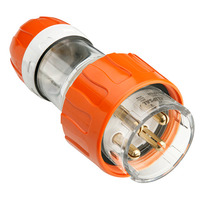
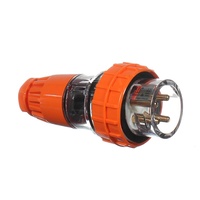
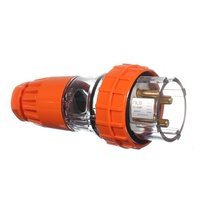
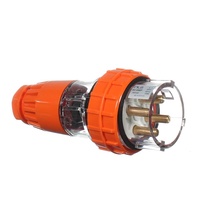
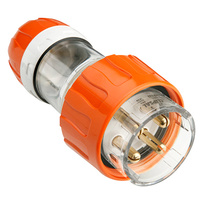
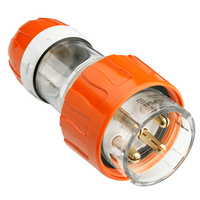
A 4-pin straight plug is an industrial connector with four cylindrical contact pins arranged in a fixed pattern inside a sealed housing. The cable enters straight along the plug's axis, hence the name "straight". This contrasts with angled designs, where the cable exits at 90 degrees to the pins. Straight plugs are the standard choice when the cable runs in line with the socket, such as on extension leads or fixed equipment cords.
In a 4-pin industrial plug compliant with AS/NZS 3123, the four pins typically carry three active phases plus one earth, supporting three-phase loads up to 40A. Some 4-pin variants instead deliver single-phase circuits with active, neutral, and two earths, or active, neutral, earth, and a control conductor. The pin arrangement is keyed so the plug only mates with a socket of identical voltage and current rating, preventing dangerous mismatches.
Industrial sites depend on 4-pin straight plugs to move three-phase power between fixed switchboards and portable plant. Welders, large compressors, water pumps, mixers, and conveyors all draw enough current to require three-phase supply, and the standardised plug interface lets operators relocate equipment safely without recabling. The robust housing also protects connections in environments where standard domestic plugs would fail within weeks.
Industrial 4-pin straight plugs are sold primarily through electrical wholesalers like Sparky Direct, not general electronics suppliers. The reason is compliance: these connectors must meet AS/NZS 3123 and carry RCM certification, which wholesalers verify before stocking. General electronics resellers often stock unbranded import connectors that lack Australian approval and cannot legally be used on jobsite installations.
A trade-grade supplier provides full product traceability, RCM-marked stock, technical datasheets, and matching socket and inlet ranges. Look for current ratings clearly stated on every listing, IP66 ratings backed by manufacturer documentation, and brand names recognised by Australian electricians, including NLS, Clipsal, and Legrand.
Project work often requires ten or more matched plug and socket pairs in a single order. Ordering through a trade-focused wholesaler typically secures pricing breaks, same-day dispatch, and consistent stock from a single batch, which matters when colour and pin arrangement need to match across a fleet of equipment. Sparky Direct ships nationwide and stocks the full IP66 4-Pin Industrial Outlets and Sockets range in matching ratings.
Inside the plug, each pin connects to a terminal screw that clamps the corresponding cable conductor. The pins themselves are precision-machined brass or copper alloy, often nickel-plated for corrosion resistance. When inserted into a matching socket, the pins make spring-loaded contact with sleeve receptacles, completing the circuit. Pin diameter and spacing follow AS/NZS 3123 so plugs and sockets from different manufacturers remain interchangeable.
Standard 4-pin industrial plugs handle power only. However, some control-circuit variants include a fourth pin for low-voltage signals, such as a pilot wire used to confirm plug engagement before the main contactor closes. This arrangement is common on cranes and large machine tools where unplugging a live circuit would create an arc flash risk.
Plug and socket pairs are coded by colour and keyway position. A 5-hour clock position indicates 380 to 480V three-phase, while other positions cover lower voltages. The colour and key system means a 32A plug cannot be forced into a 20A socket, protecting both the equipment and the operator from overcurrent damage.
IEC 60309 is the international standard underpinning AS/NZS 3123. Plugs to this standard use round pins in a circular housing with a defined keyway. They are the dominant format in Australian industry, available in 10A, 16A, 20A, 32A, and 40A versions for three-phase applications. Sparky Direct stocks the NLS 66P range across all five common ratings.
JST and printed circuit board connectors are small 4-pin formats used inside electronics, instrumentation, and LED drivers. They handle low-current signals and DC power, typically below 5A. While branded as 4-pin connectors, they sit in a different product category from industrial straight plugs and are not interchangeable.
Deutsch DT 4-pin connectors are sealed automotive and heavy-machinery connectors used on trailers, agricultural equipment, and mobile plant. They feature waterproof gaskets and locking wedges to survive vibration. They are not used for fixed building installations and are sold through automotive specialists rather than electrical wholesalers.
For three-phase mains-voltage work in Australia, AS/NZS 3123 industrial round-pin plugs are the only compliant choice. JST and Deutsch connectors serve electronics and automotive needs respectively, and using one type in place of another invites both safety hazards and code violations.
The straight format keeps the cable in line with the socket, ideal for fixed equipment cords and inline extensions. The angled plug turns the cable 90 degrees, useful when the socket sits close to a wall or where vertical clearance is limited. Both styles cover the same voltage and current ratings; the choice depends only on cable routing.
A 3-pin straight plug handles single-phase circuits with active, neutral, and earth. The 4-pin format adds a third active conductor for three-phase power without neutral, suiting motors and resistive loads. A 5-pin straight plug adds neutral to the 4-pin layout, giving full three-phase plus neutral, which is required for switchgear and equipment that needs both 240V and 415V supplies.
| Pin Count | Configuration | Typical Use | Voltage |
|---|---|---|---|
| 3-pin | Active, neutral, earth | Single-phase tools, lighting | 240V |
| 4-pin | 3 active + earth | Three-phase motors, welders | 415V |
| 5-pin | 3 active + neutral + earth | Switchboards, mixed-voltage plant | 240V/415V |
AS/NZS 3123 industrial plugs use a circular housing for fast, weatherproof mating. Rectangular multi-pin connectors, such as Harting Han series, suit panel mounting and high-density industrial automation. For portable three-phase power, the round IEC 60309 format remains the Australian standard and the only widely supported choice.
4-pin straight plugs cover the 380 to 480V three-phase range under AS/NZS 3123, which suits standard Australian 415V supplies. Lower-voltage variants exist for 100 to 130V and 200 to 250V applications, identifiable by their colour codes (yellow for 110V, blue for 230V, red for 415V). The colour and keyway prevent cross-connection between voltage groups.
Always select a plug rated at or above the equipment's full-load current, with a margin for inrush and starting currents. A 25A motor typically requires a 32A plug to handle starting surges without overheating contacts. Undersized plugs run hot, lose contact pressure over time, and can melt the housing, so erring upward on rating is standard practice.
Manufacturer ratings assume an ambient temperature around 40°C. In hot enclosures, sun-exposed locations, or alongside heat-emitting equipment, derate the plug by 10 to 20 per cent. The same applies to bundled cables in conduit, which trap heat. Consult the manufacturer datasheet for derating curves before final selection.
Common Australian 4-pin straight plug ratings: 10A (NLS 66P410), 20A (NLS 66P420), 32A (NLS 66P432), 40A (NLS 66P440). All four ratings carry IP66 sealing and meet AS/NZS 3123 for industrial use.
The IP (Ingress Protection) code defines a connector's resistance to dust and water. IP20 protects against fingers but not water, suiting indoor switchboards. IP44 resists splashing water from any direction, suitable for sheltered outdoor use. IP67 withstands temporary submersion to 1m, while IP68 covers continuous submersion. Industrial 4-pin straight plugs from Sparky Direct are rated IP66, which means full protection against dust and powerful water jets.
For indoor workshops and sheltered locations, IP44 is usually adequate. Outdoor sites, washdown areas, food processing plants, and construction yards demand IP66 or higher. The IP66 rating tolerates direct hose-down cleaning and rain exposure without water ingress, provided the plug is fully mated and the cap is secured when disconnected.
IP66 plugs use silicone or nitrile O-rings at the cable gland and the socket interface. The gland clamps the cable jacket to maintain the seal even under tension. When unplugged, a hinged or screw-on cap covers the pin assembly to keep contaminants out. Damaged seals are the most common cause of IP failure and should trigger immediate replacement of the affected component.
Industrial plug contacts are typically machined brass or copper alloy, plated with nickel or tin to resist corrosion. Gold plating appears on signal connectors but is uneconomic for power applications because the wear from repeated mating cycles strips thin gold layers within months. Nickel-plated brass remains the workhorse choice for industrial 4-pin plugs.
Plug housings are moulded from impact-resistant polycarbonate or glass-filled nylon. Polycarbonate offers better optical clarity for indicator windows but is sensitive to certain solvents. Glass-filled nylon resists chemicals and impact better, making it the preferred choice for harsh sites. Both materials are flame-retardant to UL 94 V-0 or equivalent.
Coastal and chemical environments accelerate metal corrosion. Look for plugs with sealed contact chambers and stainless-steel screws rather than zinc-plated steel. The cable gland is another corrosion point: brass glands resist seawater far better than die-cast zinc. For long service in marine settings, specify stainless or brass throughout.
4-pin industrial plugs typically use a threaded coupling ring that screws onto the matching socket. This provides positive retention against vibration and accidental disconnection. Some lighter-duty connectors use snap locks or pure friction fit, but the threaded design is the standard for portable three-phase plant and complies with the retention requirements of AS/NZS 3123.
Welders, compressors, and pumps generate continuous vibration that loosens unsecured connections. The threaded coupling on a 4-pin plug stays tight under vibration when fully engaged. Periodic checks confirm the ring remains hand-tight; a loose connection can arc internally and damage both plug and socket within hours.
On busy sites, cables get pulled, snagged, and stepped on. The combined keyway and threaded ring mean a sharp pull cannot disconnect a 4-pin plug accidentally. For added security on critical equipment, secondary cable clamps or tethered plug caps prevent the plug from flapping freely when disconnected.
Start with the equipment nameplate. Identify the supply voltage (typically 415V three-phase in Australia), full-load current, and starting current. Match the plug's voltage colour code to the supply, and select a current rating equal to or above the running current with margin for inrush.
Indoor workshop, outdoor jobsite, washdown bay, and coastal location all demand different IP ratings and material choices. IP66 covers most outdoor and harsh-environment uses. For chemical exposure, verify housing compatibility with the specific solvents present.
Straight plugs need clearance behind the socket equal to the cable bend radius plus the plug body length. In tight spaces, an angled plug from the matching Easy56 Straight and Angled Plugs range may be preferable. Verify cable diameter falls within the gland's clamping range before specification.
The most frequent errors are undersizing the current rating, ignoring derating in hot environments, and assuming all 4-pin plugs are interchangeable. They are not. Voltage colour codes and keyway positions enforce compatibility, so a 415V plug will not mate with a 230V socket even if the pin count matches.
Industrial 4-pin straight plugs use screw terminals inside the plug body. Strip the conductor to the manufacturer's specified length, insert into the terminal, and torque the screw to the value listed in the datasheet. Crimp lugs are not used in standard IEC plugs; soldering is prohibited because heat softens the housing and creates fatigue points.
Strip the outer jacket back enough to allow each conductor to reach its terminal without tension, with a small loop for service slack. Strip individual conductors to the depth specified by the plug manufacturer, typically 8 to 12mm. Over-stripping leaves bare conductor exposed inside the housing, creating a short-circuit risk.
Tighten the cable gland firmly on the cable jacket, not the conductors. The gland provides strain relief, preventing pull on the terminal connections. Assemble the housing only after verifying every screw is fully torqued and no stray strands protrude from any terminal.
Under AS/NZS 3000:2018, all fixed-wiring work and the installation of permanent socket outlets must be carried out by a licensed electrician. Replacing a damaged plug on an existing flexible cord may be permitted as minor repair work in some jurisdictions, but only by qualified personnel. When in doubt, engage a licensed electrician to ensure compliance and safety.
Safety Warning: All three-phase work must be carried out by a licensed electrician. Three-phase faults are more dangerous than single-phase and have caused serious injury and death where unqualified people have attempted DIY repairs. Always isolate and lock out the supply before opening any plug or socket.
AS/NZS 3123 is the Australian and New Zealand standard for industrial plugs, socket outlets, and couplers. It defines pin dimensions, voltage ranges, current ratings, IP classifications, and the colour and keyway coding system. Every 4-pin straight plug sold legally for industrial use in Australia must comply with this standard.
The Regulatory Compliance Mark (RCM) shows that a product meets Australian electrical safety requirements. Look for the RCM logo on the plug body or packaging. Genuine RCM products carry a supplier code linked to a registered Australian responsible supplier, providing accountability if a fault occurs.
Non-compliant plugs may have undersized contacts, inadequate insulation, or fake IP ratings. Failures range from nuisance tripping and overheating to fires and electrocution. Insurance claims and worksite incident investigations will both check connector certification. Stick to brands sold through reputable wholesalers and avoid unmarked import stock.
Low contact resistance keeps the plug cool under load. Quality plugs measure under 1 milliohm per contact when new. As contacts wear and oxidise, resistance climbs, generating heat. A plug that runs warm to the touch under normal load is approaching the end of its service life.
Industrial plugs are typically rated for 1,000 to 5,000 mating cycles. Heavy daily use, such as connecting and disconnecting site equipment many times each shift, can reach 5,000 cycles within a year. Plan replacement schedules accordingly rather than waiting for visible failure.
UV exposure, ozone, salt spray, and chemical contact all degrade housings and seals over time. Outdoor plugs lose seal integrity faster than indoor units. Inspect IP-rated plugs every six months in harsh conditions, looking for cracking, discolouration, or hardened gaskets.
Established brands invest in long-term reliability testing and back products with warranty support. Sparky Direct stocks plugs from Major Tech, NLS, Clipsal, and other recognised manufacturers, all of which carry full Australian certification and replacement-part availability.
A plug running hotter than ambient by more than 30°C indicates a problem. Common causes are undersized current rating, loose terminal screws, or worn contacts losing pressure. Disconnect the load, isolate the supply, and inspect both plug and socket. Replace any component showing heat damage or discolouration.
Tarnished or oxidised pins create high-resistance joints that cause arcing and intermittent power. Light surface tarnish can be cleaned with a non-abrasive contact cleaner; pitted or corroded contacts require complete plug replacement. Never file or sand pins, as this removes the protective plating.
Forcing a plug into the wrong socket damages the keyway and pins. If a plug will not mate easily, check the voltage colour code and keyway position before applying force. Cross-mating between voltage groups is not just inconvenient; it can connect equipment to the wrong supply with destructive results.
Cracked O-rings or hardened gland seals admit water and dust, dropping the IP rating to effectively IP20. Visible water inside an unplugged plug means the seal has failed. Replace the entire plug; partial seal repairs are unreliable and risk recurrence.
Schedule visual inspections every three to six months on critical plugs. Check for cracked housings, damaged cable glands, loose threaded rings, and any signs of heat marking around the pins. Cables should show no exposed insulation at the gland entry, and plug caps should fit cleanly when disconnected.
Wipe housings with a damp cloth and mild detergent. For pin cleaning, use a contact cleaner spray rated for electrical use; never use solvents containing chlorinated compounds, which attack polycarbonate. Allow the plug to dry fully before reconnecting to live supply.
Pin wear shows as flattening of the pin tip and reduced spring force when mated. A loose mating fit, where the plug rocks inside the socket, indicates one or both components need replacement. Heat marking on terminal screws suggests undersized rating or loose connections at installation.
Heavy-duty industrial plugs typically need replacement every 3 to 7 years depending on use and environment. Critical safety circuits should be replaced on a planned schedule rather than run to failure. Keep spare matched plug and socket pairs in stock to avoid downtime when replacement becomes urgent.
Licensed electricians fitting industrial supply circuits select plugs based on the connected equipment's nameplate rating, the supply voltage, and the IP requirement of the location. Most contractors keep a stock of common ratings (20A and 32A in particular) to handle service work and equipment moves without ordering delays.
Maintenance crews replace damaged plugs as part of routine equipment service. Standardising on one brand across a site simplifies parts stocking and ensures consistent fit between plug and socket. Sparky Direct supplies single units and bulk packs to suit both casual and high-volume buyers.
Equipment manufacturers fitting plugs to finished products specify high-cycle ratings, certified materials, and consistent supplier lead times. Bulk pricing and consignment stock arrangements often apply at OEM volumes; contact Sparky Direct's trade desk for pricing on production quantities.
Large construction projects may need 50 or more matched plug and socket pairs. Bulk orders give pricing leverage and ensure all plugs come from the same production batch, which matters for visual consistency and serial-number traceability on QA records. Confirm stock availability before committing to project schedules.
Budget 4-pin plugs may cost half as much as premium brands but typically carry shorter warranties, lower mating-cycle ratings, and fewer spare parts. For high-cycle or critical applications, premium plugs pay back through longer service life and lower replacement labour costs.
A failed plug on critical plant means downtime, lost production, and emergency callout charges. The cost of a quality plug is small compared to the cost of an unplanned shutdown, especially where equipment is essential. Specifying premium connectors on critical circuits is generally good economics.
Ordering project quantities in a single transaction reduces per-unit cost, freight, and administrative overhead. It also locks in a single batch, avoiding subtle variations in colour or fit between batches. For sites with 10+ outlets, bulk procurement is the standard approach.
The total cost of ownership includes purchase price, installation labour, expected service life, replacement labour, and downtime cost. Reliable plugs from established brands minimise the long-term costs even when their initial price is higher. Cheap plugs that need annual replacement are rarely the cheaper choice over a five-year horizon.
Club Clipsal is Australia's largest electrician community offering trade rewards, business support, and exclusive benefits. When you nominate Sparky Direct as your preferred wholesaler, we automatically apply your Clipsal spend points to your Club Clipsal account daily.
Entry-level offering coaching, mentoring, and training discounts
Unlock exclusive industry tools and networking events
Access Toyota fleet offers and business software discounts
Maximum benefits, including VIP experiences and rewards
1. Sign Up: Create your Club Clipsal account at clipsal.com/club-clipsal or via the iCat mobile app
2. Nominate Sparky Direct: Select Sparky Direct from the wholesaler dropdown menu in your profile
3. Add Email: Enter your Sparky Direct account email address in the membership number field
4. Start Earning: Every dollar spent on Clipsal products earns points automatically
Redeem points from the rewards store, including gift cards, tools, and experiences. Access business summits, product training, and industry networking events. Receive early access to new product launches and special promotions. Connect with fellow electricians via the Club Clipsal community app.
Watch NLS 66P410 | 4 Pin 10Amp Straight Plug IP66 | 30522 video
Watch NLS 66P420 | 4 Pin 20Amp Straight Plug IP66 | 30472 video
Watch NLS 66P432 | 4 Pin 32Amp Straight Plug IP66 | 30474 video

Fast Service and great quality product. I ordered this in the afternoon and it was shipped within less than 20 minutes, Australia express post delivered it the next day! Very reliable and will have confidence to use again!
Great service every time thats why I always come back to Sparky Direct. If you order the worng parts there is never any issue with replacement.
Website was smooth and easy to use. Best pricing for this product compared to competitors and freight was quick. Great quality.
Quality IP66 industrial plugs in stock • Fast Australia-wide delivery • Competitive trade pricing
Browse 4-Pin Straight Plugs → Get Expert Advice →Yes. Straight cable entry provides direct support and is suitable for fixed or stable cable runs.
4 pin straight plug industrial IP66 products are available from Sparky Direct, offering access to durable industrial electrical connectors with Australia-wide delivery.
Delivery availability depends on the supplier and location, with options across metropolitan and regional Australia.
Yes. They are suitable for new installations, upgrades, and replacing existing industrial plugs.
Warranty coverage depends on the manufacturer and supplier, with conditions applying to correct use and installation.
Consider voltage and current rating, IP rating, cable size, installation environment, and electrician recommendations.
With correct installation and use, they are designed for long service life in harsh environments.
They generally require minimal maintenance but should be inspected during routine electrical checks.
Yes. They are designed to withstand repeated connection and disconnection in demanding conditions.
Yes. They are often used to supply power to fixed or portable industrial machinery.
Yes. They are commonly used in agricultural and rural environments due to their weather resistance.
They feature a robust, industrial design prioritising durability and protection.
Yes. The IP66 rating makes them suitable for challenging environments such as wash-down areas.
A 4 pin straight plug industrial IP66 is a heavy-duty electrical plug designed for industrial applications, featuring a straight cable entry and high resistance to dust and water.
Yes. They are designed for secure yet straightforward connection by trained personnel.
They provide reliable power connections with strong protection against dust, water, and physical wear.
Yes. Termination and installation must be carried out by a licensed electrician to ensure safety and compliance.
Yes. They are designed to mate with matching 4 pin industrial sockets of the same rating and configuration.
Ratings vary by model and must be selected to suit the electrical system and equipment requirements.
Yes. The IP66 rating makes them suitable for outdoor and wash-down environments when installed as specified.
Straight plugs are suitable where there is sufficient clearance and a direct cable run is preferred.
They are commonly used in factories, workshops, agricultural sites, outdoor installations, and industrial machinery connections.
Products supplied in Australia are designed to meet relevant AS/NZS electrical and safety standards when used correctly.
A 4 pin configuration is commonly used for three-phase power with an earth connection in industrial electrical systems.
IP66 indicates the plug is fully protected against dust ingress and resistant to strong water jets, making it suitable for harsh environments.