
Search Results:
Search Results:
Search Results:
Search Results:
Solar circuit breakers are direct current (DC) protection devices designed specifically for solar photovoltaic (PV) systems. Unlike standard AC circuit breakers used in household switchboards, solar circuit breakers are engineered to safely interrupt DC fault currents, which behave differently and are harder to extinguish than AC faults. They are installed between solar panels and inverters, within battery storage systems, and at combiner boxes to protect wiring, equipment, and people from overloads and short-circuit faults. Sparky Direct stocks solar circuit breakers for residential, commercial, and industrial PV applications, with options from specialist brands suited to Australian conditions and compliance requirements.
Standard household circuit breakers are designed for alternating current (AC). AC naturally cycles through zero volts 50 times per second, which helps extinguish an arc when the breaker opens. DC current from a solar array does not cycle through zero. Once a DC arc forms inside a breaker, it is self-sustaining and much harder to interrupt safely.
Solar circuit breakers use specialised arc-quenching technology, including magnetic arc deflection, elongated arc chutes, and stronger contact materials, to physically stretch and extinguish the arc. They are also rated for the specific polarity of DC circuits, which matters because current flows in one direction only.
Using an AC breaker in a DC solar circuit is a serious safety hazard. An AC breaker that opens under DC fault current may sustain a continuous arc, potentially causing the breaker to explode, melt internal components, or ignite surrounding materials. Under AS/NZS 5033, protection devices for PV source and output circuits must be rated for the DC voltage and current levels present in the system. AC breakers carry no DC voltage rating and must never be substituted.
DC circuit breakers use several design features that differ from AC types. Arc chutes contain the expanding arc and cool it rapidly. Stronger springs drive contacts apart faster, increasing arc length. Some designs use permanent magnets to push the arc away from contacts. Contact materials rated for repeated DC interruption resist welding and erosion that occurs under sustained arcing conditions.
| Characteristic | Typical Range | Why It Matters |
|---|---|---|
| DC Voltage Rating | 250V, 600V, 1000V, 1500V | Must meet or exceed system maximum voltage |
| Current Rating | 6A to 125A+ | Must suit string or array output current |
| Interrupting Capacity (kA) | 6kA to 20kA | Must exceed maximum prospective fault current |
| Number of Poles | 1 pole, 2 pole, 4 pole | Determines which conductors are interrupted |
| Trip Curve | B, C, D | Sets instantaneous trip threshold for fault type |
In multi-string PV systems, each string of panels can be individually protected by a DC circuit breaker. This allows a fault in one string to be isolated without shutting down the entire array. String-level breakers are typically housed in a weatherproof combiner box mounted near the array and rated for the open-circuit voltage of the string.
AS/NZS 5033 requires a means of isolation between the solar array and the inverter. This is usually a dedicated solar isolator switch or a DC circuit breaker capable of breaking load current. The isolator allows safe disconnection of the array during maintenance, inverter servicing, or emergency situations without requiring personnel to be on the roof.
Battery storage systems, including lithium-ion battery banks paired with hybrid inverters, require dedicated DC protection between the battery and the inverter. Battery fault currents can be extremely high. DC breakers in this position must be rated for battery DC voltage (typically 48V to 500V depending on system design) and the maximum battery discharge current. Solar supplies for battery systems include both high-current and bi-directional protection devices.
Hybrid systems (grid-tied with battery backup) and off-grid systems require additional protection points compared to basic grid-tied installations. Off-grid systems typically have a battery bank, charge controller, and DC load circuits, each requiring appropriately rated DC protection. Hybrid systems add complexity at the inverter, where both solar and battery DC circuits require isolation and fault protection independent of each other.
DC circuit breakers offer resettable protection. After a fault clears, the breaker can be reset without replacing a component. This suits applications where nuisance tripping may occur, such as string-level protection in partially shaded arrays, or where rapid restoration of supply is needed. Fuses provide one-time protection only and must be replaced after operation.
DC circuit breakers have a higher initial cost than equivalent fuses. They also have a limited number of rated operating cycles. In environments with high ambient temperatures, thermal derating may reduce the effective current rating. For very high fault current applications, such as large commercial combiner boxes, fuses may offer higher interrupting capacity in a smaller form factor.
In some system designs, both breakers and fuses are used together. String-level fuses protect individual string cables, while a main DC circuit breaker provides the upstream disconnect between the combiner box and the inverter. Coordination between protective devices ensures the device closest to the fault operates first, limiting the affected section of the system.
Use DC fuses for simple string protection where replacement is acceptable and cost is a priority. Use DC circuit breakers where resettability, trip indication, or isolation functionality adds value to the installation. Always confirm the selected device carries a DC voltage rating equal to or exceeding the maximum system voltage.
The maximum system voltage in a PV installation is the highest open-circuit voltage that can appear across any protection device under worst-case conditions (lowest temperature, maximum irradiance). AS/NZS 5033 requires all components to be rated for the maximum system voltage. Residential systems in Australia typically operate at up to 600V DC, while commercial and large-scale systems may reach 1000V or 1500V DC.
Circuit breaker current rating must be matched to the maximum current the protected circuit can deliver. For string-level protection, this is typically 1.25 times the short-circuit current of the string (Isc). For array-level or main DC protection, the current rating accounts for all parallel strings combined. Under-rating a breaker can cause nuisance tripping; over-rating leaves the cable inadequately protected.
The interrupting capacity (also called breaking capacity) of a DC breaker specifies the maximum fault current it can safely interrupt without damage. If the prospective short-circuit current at the installation point exceeds the breaker's interrupting capacity, the breaker may fail catastrophically under fault conditions. System designers must calculate prospective fault current at each protection point and select devices with adequate interrupting capacity.
A typical 6.6kW residential solar system in Australia may use 18 to 24 panels across two or three strings. Each string of 8 to 10 panels in series may produce an open-circuit voltage of 350V to 480V and a short-circuit current of 10A to 14A. DC circuit breakers for these strings are commonly 16A or 20A rated at 600V DC. The main DC input breaker to the inverter is sized for combined string current, often 32A to 63A.
Commercial PV systems operating at 1000V DC or 1500V DC require breakers specifically rated for these voltages. Standard 600V DC breakers must not be used at higher system voltages. Products rated for 1000V DC typically conform to IEC 60947-2 and carry a specific DC voltage rating on the nameplate. Eaton, NHP, and Andeli supply products rated for high-voltage commercial applications through Sparky Direct's solar circuit breaker range.
For residential installations, the key selection criteria are: DC voltage rating (600V DC is standard for most Australian residential systems), current rating matched to string current, DIN rail compatibility for standard meter box or enclosure installation, and compliance with AS/NZS 5033. Products rated to 6kA or 10kA interrupting capacity are generally suitable for the fault currents in residential systems.
Commercial systems require higher voltage ratings (1000V or 1500V DC), higher current ratings for larger string or array configurations, and greater interrupting capacity to handle higher prospective fault currents. Multi-pole configurations are common. Products must carry IEC 60947-2 certification for DC applications and should carry RCM marking for sale in Australia.
Battery storage protection requires breakers rated for the battery bank voltage and maximum discharge current. Lithium-ion battery systems can deliver very high fault currents for short durations. Select breakers with an interrupting capacity that accounts for battery fault current, not just the rated discharge current. Some battery manufacturers specify the protective device type and rating in their installation documentation.
Off-grid systems often use 24V or 48V battery buses for DC load distribution. Lower voltage DC circuits may use standard low-voltage DC breakers. Charge controller inputs require breakers rated for the combined array current. Load circuits require breakers sized for the connected load and cable capacity. The solar supplies range at Sparky Direct includes options suited to off-grid configurations at various voltages.
Some inverter manufacturers specify approved DC circuit breakers or minimum interrupting capacity requirements. Always check the inverter installation manual before selecting a protection device. DIN rail breakers are compatible with most standard enclosures and combiner boxes. Check physical dimensions when specifying for tight enclosures, particularly multi-pole units which occupy more DIN rail space than single-pole types.
The DC voltage rating is the most critical feature. A breaker that is under-rated for system voltage may fail to interrupt an arc safely. Always confirm the DC voltage rating (not the AC voltage rating) on the breaker nameplate. For 1000V and 1500V systems, confirm the rating is specifically for DC, as many breakers carry different AC and DC voltage ratings. The Eaton FAZ-DC and PLS6-DC range includes options rated to 1000V DC for commercial and high-voltage residential systems.
Overload protection in DC breakers operates on a thermal-magnetic or purely magnetic basis. Thermal-magnetic types provide both overload (thermal) and short-circuit (magnetic) protection. For PV applications, the magnetic (instantaneous) trip threshold must be set so the breaker does not trip on normal array current but responds rapidly to fault current. Trip curve selection (B, C, or D) affects this threshold.
Solar combiner boxes and DC isolation enclosures mounted outdoors or in roof spaces can reach ambient temperatures of 50 degrees Celsius or higher. Most DC breakers are rated at 40 degrees Celsius and require derating at higher temperatures. Confirm the derating factor from the product datasheet and select a higher current rating if the breaker will operate in a hot enclosure. Enclosures with ventilation or thermal management reduce internal temperatures and help breakers operate within rating.
Arc suppression quality determines both how safely a fault is interrupted and how many operations the breaker can perform before contact erosion affects performance. Products from Eaton and NHP Electrical use established arc chute designs proven in commercial and industrial installations. Cheaper alternatives may have lower endurance ratings and reduced arc interruption performance.
The instantaneous trip element of a DC circuit breaker responds within milliseconds to short-circuit current. Faster response limits the energy released into a fault and reduces cable and equipment damage. For battery storage protection, where fault current can rise extremely quickly, a breaker with a fast-acting magnetic element or dedicated battery protection specification is preferred over a general-purpose DC breaker.
Some DC circuit breakers are available with auxiliary contacts that signal the open or closed state of the breaker to a monitoring system. This allows remote detection of a breaker trip, which is useful for commercial systems where the combiner box may be in an inaccessible location. Shunt trip options allow remote opening of the breaker from a control signal, supporting automatic or remotely-operated shutdown procedures.
AS/NZS 5033 is the primary Australian standard governing the installation and safety of PV arrays. It specifies requirements for overcurrent protection, isolation, wiring methods, labelling, and documentation for PV source circuits and output circuits. Circuit protection devices must be rated for the DC voltages and currents present in the system. AS/NZS 5033 references product standards such as IEC 60947-2 to define performance requirements for protective devices.
The circuit protection requirements of AS/NZS 3000:2018 apply to all electrical wiring work, including DC circuits associated with solar PV installations. Section 2.6 and associated clauses address overcurrent protection requirements and the need for protective devices to be rated for the circuit they protect. For DC circuits, the standard requires protection devices to be specifically rated for DC operation at the system voltage.
IEC 60947-2 is the international product standard for low-voltage circuit breakers. Products certified to this standard carry a tested interrupting capacity at a specified DC voltage. When specifying DC circuit breakers for PV installations, confirm the product carries IEC 60947-2 certification and that the DC voltage and current ratings stated on the product match system requirements. The certification ensures the breaker has been tested to interrupt fault current at its rated voltage without failure.
All electrical equipment sold and installed in Australia must carry RCM (Regulatory Compliance Mark) or equivalent approval where required under state and territory electrical equipment safety laws. Confirm RCM status when sourcing DC circuit breakers, particularly for products imported from international suppliers. Sparky Direct stocks products that meet Australian regulatory requirements. Circuit protection products forr solar applications are sourced from suppliers with appropriate product approvals.
Solar PV installations in Australia require completion of an Electrical Work Request (EWR) or Certificate of Compliance as required by state and territory regulations. Documentation must include details of circuit protection devices installed, their ratings, and confirmation that installation complies with AS/NZS 5033 and AS/NZS 3000:2018. Licensed electricians must retain and provide documentation to the relevant electrical safety regulator as required by jurisdiction.
Licensed electricians only: Installation of solar circuit breakers and DC protection devices in PV systems must be carried out by a licensed electrician holding appropriate solar endorsement or registration as required by your state or territory. Unlicensed electrical work is illegal and unsafe.
Before installing any DC protection device, the solar array must be fully isolated. Cover panels with an opaque material to reduce irradiance or de-energise the circuit using upstream isolation. Note that even with isolation measures, PV panels in daylight conditions can still produce hazardous voltage. Use appropriate personal protective equipment (PPE) and verify the circuit is de-energised with a suitable DC-rated test instrument before commencing work.
Some DC circuit breakers are orientation-sensitive. Check the manufacturer's datasheet for permitted mounting orientations. Incorrect orientation can affect arc interruption performance. Polarity is also critical: DC circuit breakers must be connected with the correct polarity as marked on the device. Reversed polarity will prevent correct operation during fault interruption and may damage the breaker.
Use solar cables and conductors rated for DC service and the voltages present in the system. Tighten terminals to the torque specified on the product datasheet using a calibrated torque screwdriver. Under-torquing causes high-resistance connections that heat up; over-torquing can strip threads or damage terminals. All cable entries must be protected against abrasion and UV degradation.
AS/NZS 5033 requires PV installations to be labelled at all isolation points with appropriate warning labels indicating DC voltage and the location of relevant isolation points. Circuit breakers must be identified with their circuit designation. Combiner box covers must carry warnings about hazardous voltage. Labels must be durable and legible under the environmental conditions of the installation location.
Electricians installing solar PV systems in Australia must hold an appropriate solar endorsement or licence category as required by their state or territory electrical licensing body. Solar PV installations require specific knowledge of DC circuit characteristics, string design, isolation procedures, and compliance documentation. Contact your state electrical safety regulator for current licensing requirements. For product and technical support, contact the Sparky Direct team via the contact page.
A breaker that trips during peak sunlight is often undersized for the maximum array current, or operating in a hot enclosure where thermal derating has reduced its effective current rating. Confirm the breaker current rating against the calculated maximum string or array current. Check enclosure temperature and apply derating if the ambient temperature inside the enclosure exceeds 40 degrees Celsius. Loose connections can also cause localised heating that triggers the thermal element.
Frequent tripping suggests either a genuine fault on the protected circuit or a breaker that is undersized or incorrectly specified. Possible fault causes include: partial shading causing reverse current in a string, ground faults (current leakage to earth), a failing panel with internal short-circuit, corroded or loose connections increasing resistance, and cable insulation damage causing a resistive fault. Use a DC clamp meter and insulation tester to diagnose the cause before resetting and re-energising the circuit.
A breaker that trips and will not reset is indicating either a persistent fault on the protected circuit or an internal mechanism fault in the breaker itself. Never force a breaker to reset by holding the handle. De-energise the circuit, identify and clear the fault, then attempt to reset. If the breaker resets but trips again immediately, the fault has not been cleared. If the breaker mechanism fails to latch, the breaker may have reached the end of its mechanical life and requires replacement.
An audible buzzing or humming from a DC circuit breaker can indicate loose wiring, vibration from nearby equipment, or an internal contact problem. Check all terminal connections are tightened to specification. Persistent buzzing after tightening connections may indicate a failing contact or a breaker that has been damaged by a previous fault interruption. Replace the breaker if internal damage is suspected.
Some warmth during normal operation is expected. A breaker that is noticeably hot to the touch (beyond ambient plus 30 degrees Celsius) suggests either a high-resistance connection at the terminals, a current loading close to the rated trip threshold, thermal derating in a hot enclosure, or an internal fault in the breaker. Check terminal torque settings first. If the breaker is correctly torqued and appropriately sized, measure the actual current through the breaker against its rating and confirm the enclosure temperature is within the rated range.
Common causes of premature failure include: repeated operation at the limits of interrupting capacity, which erodes contact material; extended operation in ambient temperatures above the rated maximum; mechanical damage from incorrect installation; and water or contaminant ingress through an inadequately sealed enclosure. Using an appropriately rated device, installed in a sealed enclosure and correctly torqued, significantly extends service life.
A breaker that has failed in the open position disconnects the protected circuit from the system, reducing generation output. A breaker with degraded contacts may introduce resistance into the circuit, causing voltage drop and power loss without tripping. A breaker that trips erratically under normal conditions disrupts generation unexpectedly. Monitoring systems that log generation output can help identify when a breaker failure is affecting system performance, prompting inspection before the issue escalates.
DC circuit breakers are rated for a specified number of mechanical operations (without load) and a lower number of electrical operations (under load). Typical residential-grade DC breakers are rated for 10,000 to 20,000 mechanical operations and 6,000 to 10,000 electrical operations. In practice, most breakers in solar installations operate infrequently under normal conditions. A well-installed breaker in a protected environment can remain serviceable for the life of the solar system, typically 20 to 25 years, provided it is not subjected to repeated fault interruptions.
Annual inspection of DC circuit breakers and isolation devices is recommended as part of an overall PV system maintenance program. Inspection should include: visual check for physical damage, corrosion, or water ingress; confirmation that all terminal connections are secure; verification that breaker handles move freely; and checking that enclosure seals remain intact. Any sign of arcing residue, discolouration, or melting around breakers indicates a previous fault event that should be investigated.
Thermal imaging of switchboards, combiner boxes, and DC isolation enclosures is an effective maintenance technique for identifying high-resistance connections before they cause a fault. A thermographic survey can detect hot spots at terminal connections, indicating loose or corroded contacts. This is particularly useful for commercial installations where the cost of unplanned downtime justifies regular thermographic inspection.
Functional testing of DC circuit breakers involves exercising the mechanical trip mechanism and confirming the breaker opens and latches correctly. For breakers with test buttons or auxiliary contacts, these can be tested under controlled conditions. Injection testing at rated current can verify that the thermal element operates within the specified time-current curve, though this requires specialist equipment and is generally reserved for commercial or industrial systems.
Replace a DC circuit breaker if: it fails to interrupt a fault without visible damage to the case or contacts; it no longer latches reliably in the closed position; thermal imaging shows it running significantly hotter than adjacent components under similar loading; corrosion or physical damage is visible; or if it has been subjected to a fault current at or near its rated interrupting capacity and the physical condition of the device is uncertain. When replacing, confirm the replacement device matches the original specifications for voltage rating, current rating, and interrupting capacity.
Modern DC circuit breakers incorporate improved arc chute materials and geometries that reduce arc energy and extinguish faults more quickly than earlier designs. Advances in contact material science have improved resistance to contact erosion under repeated fault interruption, extending the usable life of the breaker. Some designs use a combination of magnetic blow-out and enhanced arc runner geometry to control arc length and cooling more precisely.
As utility-scale and large commercial solar installations push toward 1500V DC system voltages to reduce wiring losses and improve efficiency, breaker manufacturers have responded with products rated for these higher voltages. 1500V DC rated breakers use enhanced insulation systems and modified arc quenching geometry compared to 1000V products. The transition to 1500V systems is driving demand for higher-rated protection devices in Australia's commercial solar sector.
Some modern DC circuit breakers include integrated current sensors and communication interfaces that allow real-time monitoring of current, trip events, and breaker status through a building management system or solar monitoring platform. This reduces the need for manual inspection of remote or roof-mounted protection devices and enables rapid response to fault events. The smart solutions range at Sparky Direct includes products that support remote monitoring in solar and electrical systems.
Pre-assembled combiner boxes with integrated DC circuit breakers are increasingly popular for commercial PV installations. These units combine multiple string inputs, string-level protection devices, monitoring, and a main output protection device in a single weatherproof enclosure. This reduces installation time, ensures correct device coordination, and simplifies compliance documentation. Products from Cobalt Solar Energy address solar installation system needs in the Australian market.
Residential solar installations typically use DIN rail-mounted DC circuit breakers housed in a meter box or dedicated solar switchboard. Single-pole and two-pole breakers rated at 600V DC are the most common requirement. Two-pole units interrupt both the positive and negative conductors simultaneously, providing more complete isolation. DIN rail mounting ensures compatibility with standard electrical enclosures used in Australian residential installations.
Commercial PV installations operating at 1000V DC require products with appropriate voltage ratings and higher interrupting capacity to suit the larger fault currents in these systems. Multi-pole configurations and products with auxiliary contacts for monitoring are common in commercial installations. Eaton DC circuit breakers in the FAZ and PLS6 ranges supply commercial-grade protection for Australian commercial solar projects.
Industrial and utility-scale solar installations require engineered protection systems with products rated to 1500V DC and high interrupting capacity. These installations are typically designed by specialist electrical engineers and use products conforming to IEC 60947-2 at the required system voltage. NHP Electrical supplies enclosed DC isolating switches and protection devices rated for high-voltage solar applications.
Solar installations in northern Australia, desert regions, or industrial rooftop environments may expose electrical enclosures to extreme heat. Where ambient temperatures inside enclosures are likely to exceed 40 degrees Celsius, select breakers with appropriate temperature derating information and apply the manufacturer's derating factor to the nominal current rating. Using an enclosure with ventilation or shade can reduce internal temperatures and maintain equipment within rating.
The quality of DC circuit breakers varies significantly between manufacturers. Products from Eaton, NHP Electrical, and Hager are established industrial-grade brands with proven performance in Australian electrical installations. Andeli offers competitive pricing for residential and light commercial applications. Always confirm that the product you are purchasing carries a DC voltage rating, not just an AC rating, and that the interrupting capacity and current rating match your system design.
Sparky Direct's solar circuit breaker range provides trade pricing on DC protection devices with Australia-wide delivery. Ordering online is faster than waiting on local trade counter stock, particularly for less common voltage ratings or multi-pole configurations. Check the product specification carefully against your system requirements before ordering. The solar accessories range also includes solar cables and connectors for complete system builds.
The lowest-cost option is not always the best value for DC circuit breakers. A device that fails prematurely under DC fault conditions creates safety risks and requires replacement at significant cost, including labour. Specifying a breaker with an interrupting capacity well above the calculated prospective fault current provides a safety margin and extends useful life. For installations where replacement is difficult or costly (such as rooftop combiner boxes), spending more on a quality device is justified by reduced maintenance cost over the system's life.
Electrical contractors completing multiple residential solar installations benefit from ordering DC circuit breakers in bulk. Maintaining stock of commonly used ratings (typically 16A to 32A at 600V DC for residential string protection) reduces lead times between jobs. Sparky Direct supplies trade customers across Australia and can assist with bulk orders. Contact the team via the Sparky Direct contact page for trade account enquiries and volume pricing.
Sparky Direct delivers solar circuit breakers and DC protection devices to all Australian states and territories. Orders placed before the daily dispatch cutoff are typically shipped same day. Express delivery options are available for urgent requirements. Stock availability is shown live on the website, so you can confirm product is on hand before ordering. The solar battery range at Sparky Direct covers protection, solar cables, solar isolator switches, and solar accessories to support complete solar PV installations.
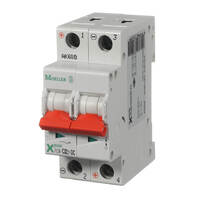
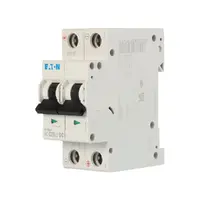
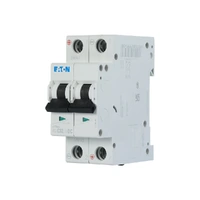
Watch Eaton FAZ-C20-2-DC | 20 amp DC Circuit breaker 2 pole 10kA video
Watch Eaton PLS6-C20/2DC | 20 amp DC Circuit breaker 2 pole 10kA video
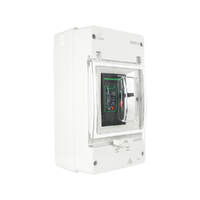
Watch NHP NL432PV | Enclosed DC Isolating Switch 32A 1500V IP66 | 4 Pole video

I recently purchased a GoodWe inverter online and was thoroughly impressed with both the product and service. The inverter is of exceptional quality, living up to its high standards, and was delivered promptly without any issues. Its performance has exceeded my expectations, offering efficient and reliable energy management. I am happy to recommend this inverter to anyone seeking a dependable product for their solar energy needs. The seamless purchase and delivery experience only added to the satisfaction. Great product and excellent service!
Outstanding quality product, Super fast delivery, Perfect fitment. I researched before I ordered this product - the service and ease of ordering on the Sparky Direct site was one of the best I've experienced. The products were in stock, exactly as described, and a premium quality product that fitted... and they arrived ahead of time too! The overall customer experience was excellent. Sparky Direct do what they say and outshine others who pale by comparison. I couldn't be happier and would highly recommend to all.
Recently i had a project on the go with a short window of time to complete the task. I have been using Sparky Direct because the large product range available to me and fellow Sparky's is current and in stock..Getting product lines supplied correctly and on time means i can plan ahead with the knowledge that my order is only a click away. Regards John.
DC-rated protection devices in stock • Fast Australia-wide delivery • Competitive trade pricing
Browse Solar Circuit Breakers → Get Expert Advice →Frequent tripping may indicate a system fault that should be assessed by a qualified professional.
Sparky Direct supplies solar circuit breakers Australia-wide, providing compliant protection components with convenient delivery.
Solar circuit breakers are securely packaged and delivered via standard courier services.
Yes. Sparky Direct generally accepts returns of unused solar circuit breakers, provided they’re in new condition and returned in the original packaging, in line with Sparky Direct’s returns policy.
Warranty coverage varies by manufacturer and usually covers defects in materials or workmanship.
Yes, solar circuit breakers are typically sold as individual components.
Yes, solar electrical work must be carried out by licensed electricians and accredited solar installers.
Using incorrect ratings can affect safety and system performance.
Yes, they are often replaced or upgraded when systems are expanded.
They generally require minimal maintenance but should be checked during system inspections.
Yes, faulty breakers can be replaced with correctly rated components.
Quality breakers are designed for long service life in outdoor or electrical enclosure environments.
Yes, they play a key role in reducing electrical risks within solar installations.
Solar circuit breakers are used to protect solar PV systems by automatically disconnecting circuits during overloads, short circuits, or fault conditions.
A tripped breaker will be in the off or tripped position and may stop part of the solar system from operating.
They help protect solar equipment, wiring, and property from electrical faults.
Most solar circuit breakers are resettable after tripping, once the fault has been resolved.
Yes, they are also used in commercial and industrial solar systems.
Yes, they are widely used in residential solar PV systems.
They are commonly required to meet protection and isolation requirements in compliant solar installations.
Voltage ratings vary and must match the system design and inverter specifications.
Yes, they are specifically rated for DC use, which is essential for solar PV installations.
Yes, solar circuit breakers are designed to handle DC currents and the unique electrical characteristics of solar systems.
Solar circuit breakers are designed to meet relevant AS/NZS electrical and solar safety standards when used as specified.
They are typically installed in solar switchboards, inverters, or distribution boards as part of a solar power system.