
Search Results:
Search Results:
Search Results:
Search Results:
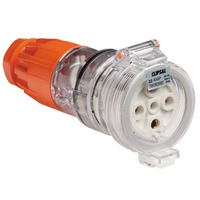
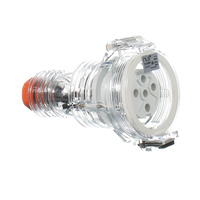
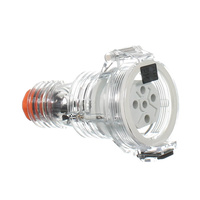
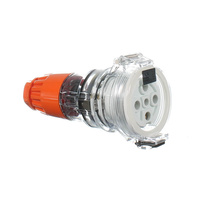
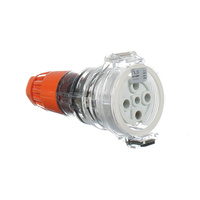
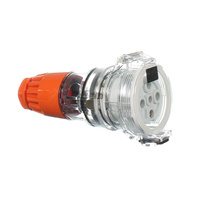
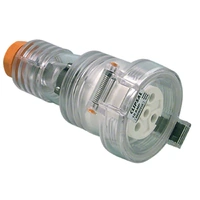
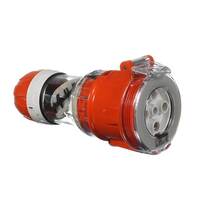
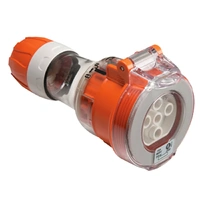
Find the best 5-pin extension sockets here at Sparky Direct. [ Read More ]
5 pin industrial extension sockets are portable or cord-mounted female connectors that link three-phase equipment to a matching plug. The five conductors carry three active phases, neutral, and earth at typical Australian three-phase voltages around 415V between phases and 240V between active and neutral. Many products carry a 500V AC rating that suits common industrial circuits. These sockets are built for industrial, construction, manufacturing, mining, agricultural, and commercial environments where domestic GPOs cannot meet the load, the IP rating, or the mechanical demands of the site. Plug, socket, lead, equipment, and circuit ratings must always match. All fixed three-phase electrical work and final connection of cord-end accessories must be carried out by a licensed electrician under Australian electrical safety requirements.
A 5 pin industrial extension socket is a heavy-duty female connector fitted to the end of a flexible cord or used inline within a portable lead. It accepts a compatible 5 pin industrial plug to deliver three-phase power, neutral, and earth to connected equipment. These sockets are commonly used with industrial extension leads, portable site distribution, machinery cords, workshop drops, and pump or compressor leads. Conductors are arranged in a fixed keyed pattern: L1, L2, L3, neutral, and earth. The keyed layout prevents the wrong plug from being inserted and helps maintain correct phase rotation across paired connectors.
The socket receives a matching plug, aligning each conductor pin with the corresponding contact inside the housing. A locking collar or retaining ring then holds the connection firmly so the plug cannot pull free under cable load or vibration. Recessed contacts sit behind the keyed face of the socket to keep live parts protected from accidental touch. Sealed cable entry, integrated gaskets, and gland fittings keep dust and moisture out when the connection is mated and properly closed. The socket must match pin count, current rating, voltage rating, and IP rating with the application, as no individual feature provides safety on its own.
Standard power points are designed for single-phase, low-current household and light commercial loads. They are not built to carry three-phase equipment, sustained higher currents, or harsh outdoor exposure. 5 pin industrial sockets carry higher load capacity, use stronger housings, and are sealed to keep dust and water out. The keyed pin pattern prevents incompatible equipment from being connected. Industrial sockets are also engineered for repeated mating cycles in trade environments, where a domestic GPO would wear out, overheat, or fail to seal against jobsite conditions.
The five pin layout is not a feature choice. It exists because some three-phase equipment needs a neutral conductor in addition to three active phases and earth. Equipment with onboard controls, single-phase auxiliary loads, mixed 240V and 415V circuits, internal lighting, displays, sensors, and certain motor starter arrangements all rely on a neutral reference. Selecting the correct pin count is a safety and compatibility requirement. A 5 pin plug will not fit a 3 pin or 4 pin socket, and a 5 pin socket will not accept a 3 pin or 4 pin plug. This separation prevents incorrect connections and helps maintain safe phase distribution. Where a buyer is unsure, the equipment data plate and supplier instructions should be checked, with a licensed electrician confirming the connection arrangement for the site.
3P + N + E means three phases, neutral, and earth. The three actives carry alternating current at 120 degrees of phase separation, which is the basis of three-phase power. The neutral provides the return path for any single-phase loads inside the equipment, such as control circuits, internal lighting, or instrumentation. Earth provides a low-resistance fault path for protection. Equipment that may need a neutral includes site huts, distribution boards, packaged compressors, mixers, processing machines, motor starters with auxiliary 240V loads, and many three-phase appliances used in food and beverage production.
3 pin IP66 sockets serve single-phase equipment with one active, neutral, and earth. They are common for portable tools, single-phase pumps, and lighting plants. 5 pin sockets serve three-phase equipment that also requires a neutral. A 3 pin socket cannot be used as a substitute for 5 pin three-phase equipment, regardless of current rating. The keyed configuration is intentional. Use the table below as a quick reference.
| Configuration | Pins | Typical Application |
|---|---|---|
| 3 Pin IP66 | 1 active, neutral, earth | Single-phase tools, pumps, lighting |
| 4 Pin IP66 | 3 actives, earth | Three-phase motors without neutral |
| 5 Pin IP66 | 3 actives, neutral, earth | Three-phase equipment requiring neutral |
4 pin sockets carry three actives and earth, which suits straight three-phase motors that have no neutral requirement. Many three-phase pumps and simple motor loads run on 4 pin connections. 5 pin sockets are required where the equipment includes any neutral-referenced circuit. Common examples are welders with auxiliary single-phase fans or controls, three-phase compressors with onboard 240V components, larger commercial machinery, equipment with control circuits or VFDs, and machines that share a neutral for instrumentation. Always check the equipment nameplate and the manufacturer wiring diagram before specifying a 4 pin or 5 pin socket.
IP66 is a recognised rating that signals strong protection for industrial extension sockets used outside controlled environments. The first digit (6) covers solid object ingress, and the second digit (6) covers water ingress. An IP66 socket is dust-tight against solids and resistant to powerful water jets from any direction. This makes IP66 5 pin extension sockets a strong fit for jobsite conditions including rain, wind-driven dust, mud, washdown, overspray, and outdoor storage. The rating performs as intended only when the socket is correctly specified for the application, properly assembled, sealed, mated with a compatible plug, and maintained in service. Damaged caps, missing covers, worn glands, or split housings will compromise the IP rating regardless of the original product specification. Buyers should also remember that IP66 protects against water jets but not against immersion or pressurised cleaning at higher PSI ratings, so very specialised conditions may need a higher IP rating or different protective method.
The two digits in IP66 are defined under AS 60529 (which is technically equivalent to IEC 60529). The first digit (6) means dust-tight, with no ingress of dust permitted. The second digit (6) means protection against powerful water jets projected from any direction. IP66 does not by itself certify protection against immersion, high-pressure cleaning, chemicals, salt fog, or impact. Those properties depend on the product housing, materials, and additional ratings such as IK impact codes. Always confirm the supplier specification sheet against the actual conditions on site before selecting an extension socket for harsh duty.
Weatherproof performance comes from the complete assembled connection, not the socket housing alone. Sealed enclosures, gasketed covers, recessed contact pockets, locking collars, cable glands, and effective strain relief all contribute. UV-resistant plastics keep the housing from cracking under sunlight exposure, while properly closed caps or covers protect the socket face when it is not mated to a plug. A 5 pin socket left uncovered in heavy rain, fitted to an oversized cable that the gland cannot seal against, or used with a damaged plug face will not deliver IP66 performance. Inspect seals, glands, and caps before each use, and replace any damaged components.
IP66 5 pin extension sockets suit outdoor worksites, construction zones, workshops, factories, warehouses, mines, farms, food processing facilities, marine-adjacent sites, temporary power setups, and industrial maintenance fleets. They are commonly chosen as durable 5 pin IP66 sockets for construction sites, where rain and dust are constant. They are also frequently selected as the best 5 pin IP66 extension sockets for outdoors when a fixed installation is not practical. Wet areas, dusty areas, and mobile site power demand fittings that resist failure under harsh conditions, since cable assemblies are repeatedly handled, dragged, and reconnected.
Selecting the right 5 pin industrial extension socket starts with the connected load and the supply circuit. The product range spans common Australian industrial ratings of 20A, 32A, 40A, and 50A across the broader category, with 32A being the most common single rating for a wide spread of three-phase equipment. The chosen socket rating must match (or be coordinated with) the plug rating, lead current rating, equipment full load current, upstream circuit protection, and the site supply. A socket cannot exceed the safe carrying capacity of the cable it is fitted to, and the upstream circuit protection must be set to protect the smallest rated component in the chain. Calculations and final selection should be confirmed by a licensed electrician, particularly where motor starting current, demand factors, ambient temperature, or installation grouping affect the final choice. Buyers can prepare by noting the equipment data plate full load current, the existing site supply rating, and the cable size on any portable lead being repaired or rebuilt.
Lower current ratings such as 20A suit lighter three-phase loads, smaller pumps, and compact machinery. 32A is widely used for medium loads, including many EV charger leads, light commercial equipment, and general site distribution. 40A and 50A ratings carry heavier machinery, larger compressors, welders, and industrial process equipment. Use the buyer guide below as a starting point. Always confirm against the equipment nameplate and the upstream circuit design.
| Rating | Typical Use | Buyer Check |
|---|---|---|
| 20A | Lighter three-phase loads, small pumps | Equipment FLC under 20A, matching circuit |
| 32A | EV chargers, mid-size machinery, site feeds | Cable size, plug match, upstream MCB |
| 40A | Larger compressors, welders, processing | Cable rating, demand factors |
| 50A | Heavy industrial loads, distribution | Full coordination with circuit design |
Undersized sockets run hot, damage their contacts, cause nuisance tripping, and fail prematurely. Motors draw large starting currents that may briefly exceed the running current shown on the nameplate, so the lead, plug, socket, and protection must accommodate the inrush. Sustained loads close to a rated value also accelerate wear. Safe design margins help reduce contact heating, voltage drop, and termination stress. Electricians should confirm the load profile, the cable size on the lead, the plug and socket rating, the upstream protection setting, and any environmental derating before commissioning a new extension assembly.
Cable diameter and cord type must match the socket gland range. A gland that is too large will not seal, while a gland that is too small can crush the cable insulation. Flexible cord types such as heavy-duty rubber-sheathed industrial cable are commonly used for portable assemblies, with the cord rating coordinated against the socket and plug ratings. Strain relief and termination quality matter as much as the gland fit, since a poorly retained cable can place stress on the conductor terminations and damage them over time. Loose glands, oversized cord, excessive cable tension, and poor sealing are common causes of premature failure. Portable extension leads should be inspected and tested under applicable Australian electrical safety requirements.
The cheapest 5 pin extension socket is rarely the best value over a project. Replacement, downtime, and safety risk all carry real cost. Buyers comparing 5 pin IP66 extension sockets for industrial use should weigh housing material, UV stability, impact resistance, contact quality, corrosion resistance, sealing design, cable retention, locking mechanisms, and suitability for repeated mating and unmating. Sites with heavy mechanical handling, frequent reconnections, harsh weather, or chemical exposure place much higher demands on the connector than a sheltered workshop install. Heavy-duty construction is what separates a socket that survives years of trade use from one that fails inside the first few months. The factors below are useful to compare when selecting a product family for a project.
Industrial socket housings are commonly moulded from polycarbonate or glass-filled nylon, both of which combine impact resistance, UV stability, and chemical resistance. Polycarbonate is widely used for the toughness needed on construction sites, workshops, mines, and mobile maintenance applications. Heavy-duty housings hold their shape when dropped, dragged, or knocked, and they keep IP66 sealing intact under mechanical stress. A socket with a cracked or distorted housing should be removed from service immediately, since impact damage compromises both the IP rating and the integrity of the conductor terminations.
Contact quality directly affects long-term performance. Better contact materials reduce resistance, heat build-up, arcing, and voltage drop across the connection. This matters in coastal, humid, agricultural, and washdown environments, where corrosion can degrade contact faces and increase resistance over time. No single contact material is universally superior across every environment. Buyers should check the supplier specification and balance contact quality against the rest of the build, the required current rating, and the service environment.
Locking collars, retaining rings, cable glands, gasketed covers, hinged flaps, integrated caps, and clamping inserts work together to keep an industrial connection secure. These features reduce mechanical failure under cable load, support IP66 performance during operation, and help maintain a safe assembly across many mating cycles. Strain relief in particular protects the conductor terminations from cable pull, which is one of the most common causes of premature failure on portable leads. The combination of features is what makes IP66 plugs and sockets safe for industrial use, not any single feature on its own.
5 pin industrial extension sockets are specified across the full range of Australian trade and industrial work. Common applications include site power distribution, portable three-phase machinery, temporary distribution boards, workshop machinery feeds, pumps, compressors, welders, and maintenance equipment. The role of an extension socket is to bring three-phase power exactly where it is needed, in a portable form, without compromising IP66 protection or current capacity. Buyers should match the socket to the equipment, the environment, and the compliance requirements for the site, including any client or principal contractor specifications. The use cases below illustrate why companies choose 5 pin IP66 extensions over alternative supply methods.
Construction sites rely on robust, IP-rated industrial extension sockets to handle rain, dust, mud, rough handling, and frequent equipment movement. Temporary distribution boards feed multiple machines through portable leads that are repeatedly relocated as the work progresses. The cheap option is rarely the right one in this environment. Compromising on compliance or durability for price alone usually leads to repeated replacement and a higher total cost across the build. Site managers looking at low-cost 5 pin industrial IP66 sockets in Australia should still confirm the product specification, IP rating, and current rating before bulk purchase.
Workshops and factories use 5 pin extension sockets to feed machinery, compressors, welders, pumps, processing equipment, and production lines. Secure three-phase connectivity matters where downtime is costly, and a quality socket helps maintain reliable operation during long production runs. Heavy duty 5 pin plugs and IP66 sockets for factories must coordinate with the equipment data plate, the upstream protection, and the cable size. Buyers planning a workshop fitout often source plugs, sockets, and matching extension leads together to keep specifications consistent across the site.
Harsh outdoor environments expose connectors to water, dust, chemicals, UV, impact, and contaminants. IP66 extension sockets are often selected where standard fittings would fail within months. Agricultural, mining, and food processing sites add washdown to that mix, with frequent cleaning and high-pressure rinse cycles around equipment. Where conditions exceed IP66, a higher-rated product or a different protection method may be needed. Buyers facing extreme conditions should confirm the IP rating of the entire mated assembly and consider whether the application is better served by combination switched sockets, RCD-protected outlets, or a more specialised connector format. For single-phase outdoor power, a 3 pin extension socket may be the right choice instead.
Buyers often discover that the right choice between fixed, portable, single-outlet, and multi-outlet products depends on how the equipment is used, where it sits on the site, and how often it is relocated. Fixed sockets stay in one place and are wired into the building. Cord extension sockets are attached to the end of a flexible lead. Portable extension leads carry power from one fixed point to a temporary working area. Multi-outlet boards distribute power to several pieces of equipment from a single feed. Site distribution units combine these elements with protection for larger temporary installations. Voltage drop, load sharing, physical layout, portability, maintenance, and inspection all affect which format suits each application. Choosing the right product family up front avoids over-specification, undersized cables, and difficult site rework later.
Fixed outlets suit permanent equipment positions where machinery is always installed in the same location. Portable extension leads and sockets suit temporary or shifting setups, where machinery is moved between bays, sites, or working areas. Fixed three-phase wiring must be completed by a licensed electrician under the wiring rules in force at the site. Portable three-phase electrical equipment still requires appropriate inspection and testing before and during use, including periodic in-service testing under AS/NZS 3760. Both formats can use the same 5 pin industrial outlets and sockets family, with the difference lying in mounting and assembly rather than the socket itself.
A single outlet gives cleaner load control, simpler protection, and tighter coordination with the connected equipment. A multi-outlet board adds flexibility on a busy site where several pieces of equipment share a single feed. The combined load must stay within the rated capacity of the upstream cable, plug, and circuit protection. Site power boards and multi-outlet distribution units commonly include integrated protection such as circuit breakers and RCDs, which adds another layer of safety where personnel and portable equipment are present. Compare options against the total expected load, the duty cycle, and the inspection regime before specifying a multi-outlet solution.
Portable extension sockets carry three-phase power to wherever the lead is laid, with the socket itself acting as the connection point at the equipment end. 5 Pin IP66 switched socket combinations are designed for fixed installations where local isolation is required at the outlet, with an integrated switch built into the housing. The combination format suits permanent equipment positions, machinery bays, and outlet points that need a clearly labelled local isolator. Choose the extension socket when portability matters; choose the switched socket combination when the equipment is fixed and a local switching control is required by the site or the equipment specification.
Three-phase electrical installation, alteration, repair, and testing must be carried out by a licensed electrician or competent person under Australian law. This applies whether the work is fixed wiring or the cord-end assembly of a portable lead. Relevant standards include AS/NZS 3000 for wiring rules, AS/NZS 3123 for industrial plugs and socket outlets, AS/NZS 3760 for in-service inspection and testing, and AS 60529 for ingress protection ratings. Products supplied for the Australian market also need RCM compliance where required by the regulator. Unlicensed work, incorrect assembly, poor terminations, unsuitable cable, missing earth continuity, and compromised IP protection are all common causes of safety incidents. The points below help buyers prepare for an installation, support the inspection regime, and recognise when a product should be removed from service. None of this content is a substitute for the advice of the licensed electrician engaged for the work.
Installation guidance is planning information, not a do-it-yourself walkthrough. The licensed electrician confirms supply availability, circuit protection, current rating, cable size, environmental exposure, and product compliance for each specific application. Before ordering, buyers should have the equipment data plate, the supply rating at the point of use, and the cable specification on any existing lead being repaired or rebuilt. Ordering complete kits including the matching plug, lead, socket, and any accessories from a single product family helps maintain consistent ratings and seal compatibility across the connection. Asking the supplier for spec sheets before purchase also supports the electrician on commissioning day.
Portable industrial extension leads are subject to in-service inspection and testing under AS/NZS 3760. Visual checks before each use are the first line of defence, alongside scheduled inspection and tag records that match the site or workplace requirements. Higher-frequency checks suit harsh environments, including construction, mining, and washdown areas. Look for cracked housing, discolouration around contacts, loose locking rings, damaged or torn cable glands, worn or perished seals, corrosion on metal parts, bent or burnt contacts, and frayed or cut cable sheath. Any of these signs indicates a lead that should be tested, repaired by a competent person, or replaced before further use.
Cracked housings, heat damage around the cable entry, damaged contacts, compromised seals, and unreliable connections all indicate that an extension socket should be removed from service. Field repairs to a moulded plastic body usually cannot restore IP66 protection, and many product designs are not intended for field repair beyond replacing the cord, gland, or internal terminations. Replace damaged sockets with compliant products of the correct current rating, voltage rating, and IP rating. Where a connected lead also shows damage, replace both ends of the assembly together to maintain a fully rated portable lead.
Buying 5 pin industrial extension sockets online is straightforward when the right specifications are confirmed up front. Compliance, stock availability, price transparency, trade purchasing terms, delivery speed, compatible accessories, and range depth all matter for site supply. Sparky Direct stocks NLS and Clipsal 5 pin extension sockets across the common Australian current ratings, with matching plugs, leads, and combination outlets available across the same product families. This simplifies project supply because the connector ranges are designed to mate together. Trade buyers comparing Sparky Direct against other suppliers typically look at total landed cost, including product price, freight, and lead time. They also weigh product specification depth, the range of compatible accessories, and consistent stock availability across the product family. Ordering a complete kit (plug, lead, socket, glands, and accessories) from one supplier reduces the chance of mis-matched components arriving on different days.
Confirm pin count, current rating, voltage rating, IP rating, cable entry range, housing material, compatible plug type, brand, compliance markings, and delivery availability before placing an order. Match the extension socket against the plug on the equipment lead, the cord size in use, and the upstream protection at the point of supply. Where the same project also needs 5 pin straight plugs or 5 pin angled plugs, ordering the matching pair helps keep ratings and seal styles consistent across the assembly.
Best value means the right blend of compliance, durability, availability, warranty, specification fit, and total cost of ownership. The lowest-priced socket is rarely the best value over the working life of an industrial lead. Premium construction is justified for harsh sites, mission-critical equipment, and high-cycle applications. Lower-cost options are reasonable for lighter duty, sheltered locations, or short-duration projects. Compare on specification first, then on price, and check that the supplier holds adequate stock for the job. Buyers searching for the best 5 pin IP66 extension sockets in 2026 should verify the IP rating, current rating, and compliance markings on the actual product. Confirm these details before committing to a brand for a full project.
Contractors ordering multiple sockets for projects, maintenance stock, and site fitouts benefit from sticking to a consistent product family, ordering compatible accessories together, and including spare units for replacement. Australia-wide delivery covers metro, regional, and remote sites, with delivery speed and lead time varying by location and product. Higher-rated or specialised units may need a longer lead time. Buyers placing project orders should plan around their current rating mix (20A, 32A, 40A, 50A) and confirm stock for the largest run before locking in a delivery schedule. For project-scale supply, contacting the trade desk before placing the order can confirm stock and lock in any volume terms that apply.
Club Clipsal is Australia's largest electrician community offering trade rewards, business support, and exclusive benefits. When you nominate Sparky Direct as your preferred wholesaler, we automatically apply your Clipsal spend points to your Club Clipsal account daily.
Entry-level offering coaching, mentoring, and training discounts
Unlock exclusive industry tools and networking events
Access Toyota fleet offers and business software discounts
Maximum benefits, including VIP experiences and rewards
1. Sign Up: Create your Club Clipsal account at clipsal.com/club-clipsal or via the iCat mobile app
2. Nominate Sparky Direct: Select Sparky Direct from the wholesaler dropdown menu in your profile
3. Add Email: Enter your Sparky Direct account email address in the membership number field
4. Start Earning: Every dollar spent on Clipsal products earns points automatically
Redeem points from the rewards store, including gift cards, tools, and experiences. Access business summits, product training, and industry networking events. Receive early access to new product launches and special promotions. Connect with fellow electricians via the Club Clipsal community app.
Watch NLS 66SCS520 | 5 Pin 20Amp Extension Socket IP66 | 30483 video
Watch NLS 66SCS532 | 5 Pin 32Amp Extension Socket IP66 | 30484 video
Watch NLS 66SCS540 | 5 Pin 40Amp Extension Socket IP66 | 30625 video

Quality 5 pin socket at a reasonable price point. Well constructed, right down to the clamping screws on the pins.
Quality product, as is all of their stuff. We no longer look anywhere else for our electrical hardware, SPARKY DIRECT is the place to go!
If you ask me, these are much better than the Clipsal range. I hate the Clipsal locks… these are simple screw type and I prefer using them.
Quality products in stock • Fast Australia-wide delivery • Competitive trade pricing
Browse 5 Pin Industrial Extension Sockets → Get Expert Advice →Yes. Their sealed design helps reduce the risk of electrical faults caused by moisture or debris.
5 pin extension socket industrial IP66 products are available from Sparky Direct, offering access to durable industrial electrical connectors with Australia-wide delivery.
Delivery availability depends on the supplier and location, with options across metropolitan and regional Australia.
Yes. They are suitable for new extension leads, upgrades, and replacing worn industrial sockets.
Warranty coverage depends on the manufacturer and supplier, with conditions applying to correct installation and use.
Consider voltage and current rating, IP rating, cable compatibility, and electrician recommendations.
With correct installation and use, they are designed for long service life in harsh conditions.
They generally require minimal maintenance but should be inspected during routine electrical inspections.
Yes. They are designed to withstand repeated plugging and unplugging in high-use environments.
Yes. They are often used to supply power to portable or fixed industrial machinery.
Yes. They are commonly used in agricultural and rural environments due to their weather resistance.
They feature a robust industrial design that prioritises durability and protection.
Yes. The IP66 rating makes them suitable for wash-down zones and dusty industrial sites.
A 5 pin extension socket industrial IP66 is a heavy-duty socket designed to be fitted to the end of an extension lead, providing a protected three-phase power connection.
Yes. They are designed for secure yet straightforward connection and disconnection by trained personnel.
It provides reliable protection against dust, water, and physical damage in demanding work conditions.
Yes. Termination and wiring must be carried out by a licensed electrician to ensure safety and compliance.
Yes. They are specifically designed to be fitted to extension leads for portable industrial power distribution.
Yes. They are designed to mate with matching 5 pin industrial plugs of the same rating and configuration.
Ratings vary by model and must be selected to suit the connected equipment and electrical system requirements.
Yes. The IP66 rating makes them suitable for outdoor and wash-down environments when used as specified.
They are commonly used on worksites, in factories, workshops, agricultural environments, and outdoor industrial locations.
Products supplied in Australia are designed to meet relevant AS/NZS electrical and safety standards when installed correctly.
A 5 pin configuration is typically used for three-phase power with active, neutral, and earth connections.
IP66 means the socket is fully protected against dust ingress and resistant to strong water jets, making it suitable for harsh environments.