




What Is a Single Pole RCBO and How Does It Protect a Final Sub-Circuit?
Table of Contents
- Single Pole RCBOs Combine Earth Leakage and Overcurrent Protection
- How Single Pole RCBOs Differ from MCBs, RCDs and Double Pole RCBOs
- Ratings, Trip Curves, Sensitivity and Breaking Capacity
- Type A Is the Current Standard for Modern Australian Loads
- Australian Standards and Compliance Requirements
- Residential, Retrofit and Light Commercial Applications
- Comparing Single Pole RCBO Brands Available in Australia
- Buying Single Pole RCBOs Online in Australia
- Installation, Testing and Troubleshooting
- Tradies Join Club Clipsal with Sparky Direct
- Product Videos
- What Sparky Direct Customers Say
- Quick Summary (TL;DR)
- Frequently Asked Questions about Single Pole RCBOs
Single Pole RCBOs Combine Earth Leakage and Overcurrent Protection in One Compact Device
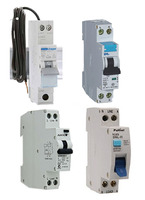
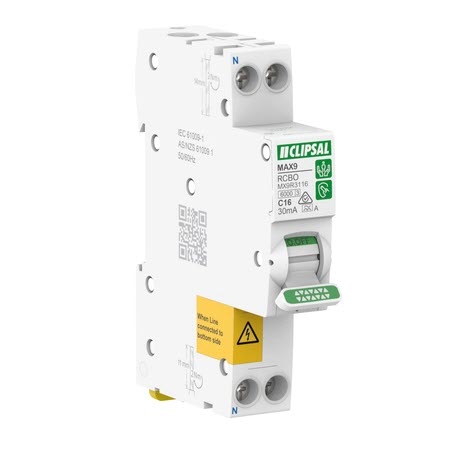
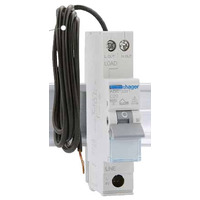
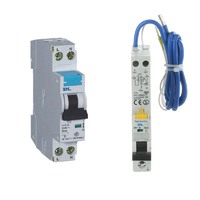
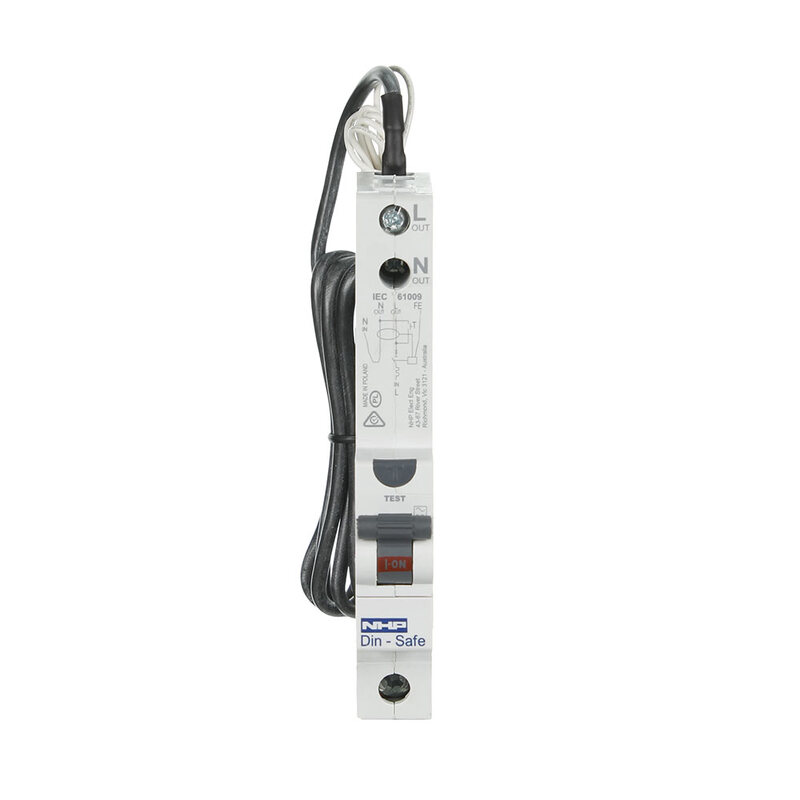
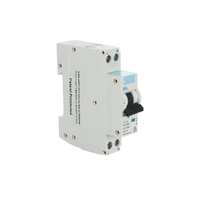
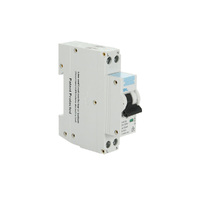
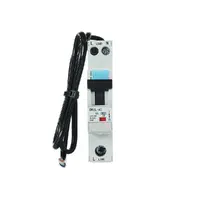
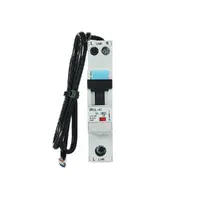
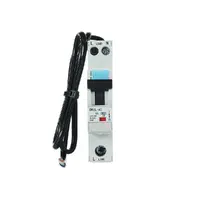
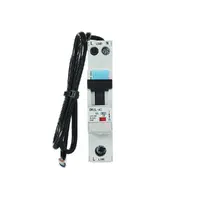
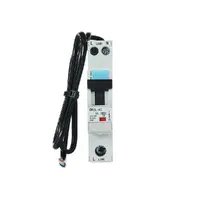
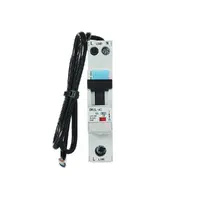
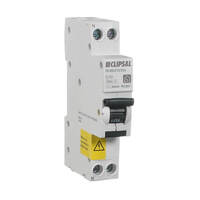
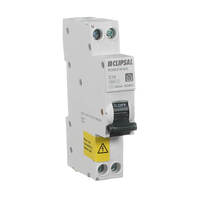
A single pole RCBO is a DIN rail protective device that delivers two functions in one body. It detects residual current (earth leakage) and it interrupts overcurrent caused by overload or short circuit. The device clips onto a standard 35mm DIN rail inside a distribution board or electric switchboard.
The single pole format switches and protects the active conductor. The neutral remains connected through the switchboard neutral bar, subject to the installation design and earthing system. This is the most space-efficient way to deliver per-circuit RCD protection on a standard final sub-circuit.
Typical Australian applications include residential lighting circuits, general power outlet (GPO) circuits, appliance circuits, small commercial boards, and switchboard upgrades. A single pole RCBO suits any final sub-circuit where the design calls for individual residual current protection plus overcurrent protection on the active leg.
What Is a Single Pole RCBO?
RCBO stands for Residual Current Circuit Breaker with Overcurrent Protection. A single pole RCBO performs the job of both an RCD and an MCB in one unit. The combined design protects one circuit independently, so a fault on that circuit does not affect any other circuit on the board.
This differs from a separate RCD plus MCB arrangement, where one shared RCD upstream of several MCBs trips every circuit grouped under it. With individual RCBOs, a fault on the kitchen circuit does not also kill the lighting and the home office.
How Does a Single Pole RCBO Work?
The device continuously monitors the current flowing out on the active conductor and returning on the neutral, and under normal conditions these two currents balance exactly. If a small portion of the current leaks to earth, the balance breaks and the residual current sensor trips the breaker, usually within 30 milliseconds.
The same unit also contains a thermal element that responds to sustained overload, and a magnetic element that responds to high-fault short-circuit current. The 30mA sensitivity rating is the standard personal protection level for many final sub-circuits. Testing, installation, and fault diagnosis must be completed by a licensed electrician.
The Three Main Faults a Single Pole RCBO Helps Protect Against
Earth Leakage
- Detects current leaking to earth via a faulty appliance or damaged cable
- Disconnects within 30 milliseconds at 30mA
- Provides personal shock protection
Overload
- Responds to sustained excessive current
- Prevents cable insulation from overheating
- Thermal trip mechanism reacts over seconds or minutes
Short Circuit
- Detects high-current fault between active and neutral or earth
- Magnetic trip mechanism reacts within milliseconds
- Breaking capacity must match prospective fault current
Combining these three protections in one device cuts the number of components on the DIN rail. It also gives every protected circuit its own residual current detection, which is a step up from one shared RCD covering several MCBs.
Single Pole RCBOs Differ from MCBs, RCDs, SP&N RCBOs, and Double Pole RCBOs
Buyers often confuse the four device types commonly fitted on a switchboard, and the table below summarises the practical differences between them. Single pole RCBOs handle most standard final sub-circuits, but other formats are sometimes required by the installation design.
| Device | Earth Leakage | Overload / Short Circuit | Switches Neutral |
|---|---|---|---|
| MCB | No | Yes | No |
| RCD | Yes | No | Depends on model |
| Single Pole RCBO | Yes | Yes | No (neutral via bar) |
| SP&N RCBO | Yes | Yes | Neutral connected through device |
| Double Pole RCBO | Yes | Yes | Yes (full isolation) |
Single Pole RCBO vs MCB
An MCB (miniature circuit breaker) protects against overload and short circuit only. It does not provide residual current protection, so it cannot detect earth leakage from a faulty appliance.
A single pole RCBO combines MCB-style overcurrent protection with RCD-style earth leakage protection in the same unit. If the existing circuit already has upstream RCD coverage, an MCB may still be appropriate. Where per-circuit RCD protection is required, the RCBO is the simpler choice.
Single Pole RCBO vs RCD
An RCD (residual current device) detects earth leakage only. It does not provide overload or short-circuit protection, so it must be paired with an MCB or fuse upstream or downstream.
A shared RCD can trip several circuits at once. Individual RCBOs isolate the fault to one circuit. This reduces nuisance outages and makes fault-finding faster because the tripped device points directly at the affected circuit.
Single Pole vs Single Pole and Neutral RCBO
Single pole (SP) devices switch only the active conductor. Single pole and neutral (SP&N) devices incorporate a neutral connection that runs through the device, with neutral isolation depending on the model. SP&N units typically occupy more DIN rail space than SP units.
Electricians choose between SP and SP&N based on the switchboard layout, the earthing system, the neutral arrangement, and the applicable standards. The decision is not interchangeable on every job.
Single Pole RCBO vs Double Pole RCBO
Double pole RCBOs disconnect both active and neutral on trip. Full isolation may be required for special locations, dedicated circuits, or installations where the neutral integrity is uncertain. Three-phase circuits use 4 pole MCB/RCD combinations rather than single pole units.
This selection is a specifier and electrician decision, not a retail substitution. The wrong pole arrangement can leave a circuit incompletely isolated during maintenance.
RCBO Ratings, Trip Curves, and Sensitivity Determine the Right Product for the Circuit
Selecting the correct single pole RCBO is more than picking an amperage. The current rating must match the cable size, the circuit design, and the load characteristics. The trip curve must match the inrush behaviour of the load. The breaking capacity must exceed the prospective fault current at the installation point.
How to Choose Single Pole RCBO Amperage
Current rating is the maximum continuous current the device will pass without tripping on overload. The common Australian filters at this category are 10A, 16A, 20A, 25A, and 32A.
10A
- Lighting circuits
- Lightly loaded outlets
- 1mm or 1.5mm cable
16A and 20A
- General power outlet (GPO) circuits
- Standard appliance circuits
- 2.5mm cable, typical
25A and 32A
- Higher-demand circuits
- Some kitchen, laundry, and dedicated appliance runs
- 4mm or 6mm cable depending on length and load
Oversizing the device is dangerous and should never be done as a workaround. Fitting a 32A RCBO on a 2.5mm cable that should be protected at 20A is a serious fire risk. The device will not trip in time to protect the cable from overheating under sustained overload. Replacement and upgrade work must be confirmed by a licensed electrician against the cable size and circuit design.
B Curve vs C Curve Single Pole RCBOs
The trip curve describes how quickly the magnetic element responds to inrush current relative to the rated current. B curve devices trip between 3 and 5 times rated current. C curve devices trip between 5 and 10 times rated current. The curve must suit the load it protects.
| Curve | Trip Range | Typical Loads |
|---|---|---|
| B Curve | 3 to 5 x rated current | Resistive loads, lower-inrush lighting, simple GPO circuits |
| C Curve | 5 to 10 x rated current | Lighting drivers, small motors, mixed appliance circuits |
Nuisance tripping is often caused by the wrong curve, accumulated load leakage, or a wiring fault. Trip curve types and the rating both deserve attention during specification.
30mA Sensitivity and Personal Protection
30mA is the standard residual current sensitivity for many final sub-circuits in Australian residential and light commercial work. At this level the device trips fast enough to limit the duration of an electric shock to a level the human body can typically tolerate without serious injury.
10mA devices exist for specialist cases where higher personal protection is specified, such as some medical or wet area circuits. Sensitivity selection must comply with AS/NZS 3000 and the documented circuit purpose.
Breaking Capacity: 6kA vs 10kA
Breaking capacity is the maximum prospective fault current the RCBO can safely interrupt without damage, and the value is expressed in kiloamps (kA).
Breaking capacity sizing: 6kA is common in residential boards where prospective fault current is moderate. Commercial sites with shorter, larger supply cables and closer transformer feeds may require 10kA. The electrician checks the prospective fault current at the board and selects the manufacturer specification accordingly.
Type A Single Pole RCBOs Are the Current Standard for Modern Australian Loads
Residual current type describes which waveform of leakage current the device can detect. The distinction matters because modern electronic appliances do not always produce the simple AC leakage waveform that older devices were designed to catch. Selecting the wrong type can leave a circuit without effective residual current protection.
Type AC RCBOs and Why They Are No Longer the Preferred Choice
Type AC devices detect sinusoidal AC residual current only. They were the original general-purpose RCD type and worked well when most loads were simple incandescent lights, motors, and resistive heaters.
Modern electronic appliances can produce pulsating DC leakage that Type AC devices may fail to detect. Type AC is now considered legacy on most new Australian work. It is not the preferred specification for current installations, though some legacy stock remains in service.
Type A RCBOs for Modern Appliances and LED Loads
Type A devices detect AC residual current and pulsating DC residual current. This covers the leakage waveforms produced by the bulk of modern Australian loads, including washing machines, computers, LED drivers, induction cooking, and inverter-driven appliances.
Type A is the practical default for current Australian residential and small commercial single pole RCBO work. Most of the stocked Clipsal, Hager, and NLS single pole RCBOs sold today are Type A units.
When Type B Protection May Be Required
Type B devices detect AC, pulsating DC, and smooth DC residual current. They are specified where smooth DC leakage may occur, such as some EV charger circuits, solar inverter circuits, and specialist equipment with three-phase rectifiers.
Type B is not a standard single pole RCBO purchase decision for a general lighting or GPO circuit. The specification requires qualified assessment of the connected load and the manufacturer guidance for that load.
Australian Standards and Compliance Requirements for Single Pole RCBOs
Australian electrical work is governed by published standards. For single pole RCBOs, the two relevant standards cover installation rules and product compliance. Both apply to every device sold and installed in Australia.
AS/NZS 3000 and RCD Protection Requirements
AS/NZS 3000 is the Australian and New Zealand Wiring Rules. It requires RCD protection for many final sub-circuits in residential and light commercial installations. New residential work in particular has wide-ranging RCD protection requirements that often extend across most general purpose outlets and lighting circuits.
Single pole RCBOs are a common way to provide individual circuit-level RCD protection that satisfies these requirements. The electrician assesses the circuit purpose, the installation context, and the standard before specifying the device.
AS/NZS 61009.1 and Product Compliance
AS/NZS 61009.1 is the relevant product compliance standard for RCBOs. A compliant device carries the Regulatory Compliance Mark (RCM) and is supplied through compliant Australian channels.
Why RCM Marking Matters
Non-certified imported devices may not meet the breaking capacity, sensitivity, or trip-time performance claimed on the label. The cost of a compliant device is small compared to the cost of a failed device during a fault. Always verify RCM marking and the product compliance certificate before installation.
Licensed Electrician Installation Requirements
RCBO installation, replacement, testing, and switchboard work must be performed by a licensed electrician in Australia. This is a legal requirement, not a recommendation. The electrician completes the work, certifies the installation, and updates the circuit schedule on the board.
Buyers should discuss the device rating, the trip curve, the residual current type, and the breaking capacity with their electrician before ordering. This applies to both replacement work and new installations.
Single Pole RCBOs Are Commonly Used in Residential and Light Commercial Switchboards
Practical use cases for single pole RCBOs cover homes, townhouses, apartments, small commercial tenancies, renovations, and switchboard upgrades. The device suits any installation where individual circuit protection is preferred over a shared RCD covering multiple circuits.
Residential Wiring Applications
- Lighting circuits across general living areas and bedrooms
- General power outlet (GPO) circuits in living areas, bedrooms, and studies
- Laundry, kitchen, garage, and outdoor circuits where RCD protection is required
- Dedicated appliance circuits for dishwashers, ovens, and pool equipment
The practical advantage of individual RCBO protection is fault isolation across the board. A leakage fault on the laundry circuit trips only the laundry RCBO. The lighting, the bedrooms, and the kitchen remain on.
Switchboard Upgrades and Retrofit Work
Compact single pole RCBOs are valuable in older or crowded switchboards. Replacing a separate RCD and MCB pair with a single pole RCBO can free up DIN rail space and improve the per-circuit protection coverage at the same time.
Before upgrading, the electrician checks the enclosure condition, the neutral arrangements, the available DIN rail space, and the existing circuit identification. A retrofit also benefits from insulated busbars for cleaner connections between devices.
Small Commercial and Maintenance Applications
Offices, shops, workshops, warehouses, and service maintenance boards benefit from per-circuit RCBO protection. Uptime improves because a fault on one circuit does not knock out the rest of the board. Fault-finding speeds up because the tripped device points to the affected circuit.
Trade purchasing for these jobs typically prioritises brand consistency across the board, stock availability for fast replacement, and matching form factor for the existing busbar. Main switches and surge protection are usually specified at the same time.
Comparing Single Pole RCBO Brands Available in Australia
Brand selection is rarely a question of which RCBO is best in absolute terms. It is a question of which RCBO suits the existing switchboard system, the preferred busbar, the terminal layout familiar to the contractor, and the available local stock for future replacement. The trusted Australian-market brands include Clipsal, Hager, and NLS.
Clipsal, Hager, NLS and Other Common RCBO Brands
Brand choice is often driven by the existing switchboard system. A board originally fitted with Clipsal devices and Clipsal busbars is usually best maintained with Clipsal replacements, including the Clipsal RCBO range and the Clipsal MAX9 and Resi MAX circuit protection ranges. The same principle applies to Hager RCBO boards. Other trade brands stocked include HPM, Legrand, Eaton, and Siemens.
Mixing brands within one switchboard can create busbar compatibility issues, escutcheon fit problems, or layout difficulties. Datasheets should be checked before ordering when replacing or extending an existing board.
What Makes a Good Single Pole RCBO Brand?
- RCM compliance and an accessible AS/NZS 61009.1 certificate
- Clear technical datasheets covering trip curves, sensitivity, and breaking capacity
- Reliable trip performance verified by independent testing where available
- Appropriate Type A residual current detection for modern loads
- Suitable breaking capacity for residential or commercial fault levels
- Compatible busbar combs and switchboard accessories
- Readily available replacement stock through Australian wholesalers
Top Rated Single Pole RCBO Brands for Electricians
Top rated, in trade practice, means consistently available, easy to specify, and dependable in service. Reliability, broad amperage range, Australian support, and consistent form factor matter more than online star counts. Specifiers usually have a preferred brand for residential work and a second preferred brand for commercial jobs.
Buying Single Pole RCBOs Online in Australia
Buying online suits both trade and informed retail buyers, provided the supplier stocks compliant devices, lists clear technical detail, and dispatches quickly. The category page lists each rating, curve, and brand so the right device can be ordered without a phone call.
Where to Buy Single Pole RCBOs Online
Compliant single pole RCBOs should be purchased from Australian electrical wholesalers or reputable online electrical suppliers. Compliant stock, local warranty support, and accurate model details matter more than headline price. Sparky Direct lists stocked ratings, trip curves, and Type A models from trusted brands with fast Australia-wide delivery.
Best Value Single Pole RCBOs for Switchboards
Best value means compliant protection, correct rating, compatible form factor, and reliable availability. It does not always mean the lowest sticker price. Electricians often standardise on one brand across a board to simplify maintenance and the spares cupboard.
Contractors handling multiple jobs benefit from bulk and project purchasing, where unit pricing and dispatch lead time both improve with order volume.
Cheap Single Pole RCBO Deals: What to Check Before Ordering
Low-cost devices still need RCM certification, AS/NZS 61009.1 compliance, suitable breaking capacity, and correct Type A residual current performance. A bargain device that lacks these qualifications is not a bargain at all. Check the manufacturer datasheet against these criteria, not just the listed price on the page.
The cost of a non-compliant or incorrectly specified RCBO can exceed any upfront saving when an inspection fails or a fault is not cleared in time.
Installation, Testing, and Troubleshooting Must Be Handled by Licensed Electricians
Single pole RCBOs are installed by qualified people. This section explains what happens during professional installation and commissioning, and what causes common nuisance tripping, without providing DIY wiring instructions.
Single Pole RCBO Installation Guide: What Buyers Should Know
The electrician isolates the supply, verifies the circuit details, and selects the correct device for the cable size and load. They install the unit to manufacturer instructions, then test trip performance with a calibrated RCD tester. The board is then documented with an updated circuit schedule, and switchboard labelling supports future maintenance and inspection.
Testing Single Pole RCBOs
Every RCBO has a built-in test button that simulates a residual current fault and confirms the mechanism trips, which acts as a basic operational check. Calibrated RCD testing, performed periodically by an electrician, verifies the actual trip time and sensitivity against the standard.
Regular test-button checks are recommended in line with manufacturer and electrician guidance. A failed test, repeated tripping, or inability to reset all require professional inspection, and none of these symptoms should be ignored by the occupant.
Common Causes of RCBO Tripping
- Genuine earth leakage from a faulty appliance or damaged cable
- Accumulated leakage across several devices on one circuit, even when each device is within spec individually
- Overload from too many high-draw loads operating at once
- Short circuit caused by damaged insulation or a wiring fault
- Incorrect neutral sharing between circuits, which presents as residual current to the device
- Wrong trip curve for the load, particularly with inrush-heavy lighting drivers
Diagnosing the cause requires an electrician with the right test equipment. Repeated tripping is a signal to call for service, not a signal to fit a higher rating.
Tradies Join Club Clipsal with Sparky Direct
Club Clipsal is Australia's largest electrician community offering trade rewards, business support, and exclusive benefits. When you nominate Sparky Direct as your preferred wholesaler, we automatically apply your Clipsal spend points to your Club Clipsal account daily.
Four Membership Tiers
Entry-level offering coaching, mentoring, and training discounts
Unlock exclusive industry tools and networking events
Access Toyota fleet offers and business software discounts
Maximum benefits, including VIP experiences and rewards
How It Works
1. Sign Up: Create your Club Clipsal account at clipsal.com/club-clipsal or via the iCat mobile app
2. Nominate Sparky Direct: Select Sparky Direct from the wholesaler dropdown menu in your profile
3. Add Email: Enter your Sparky Direct account email address in the membership number field
4. Start Earning: Every dollar spent on Clipsal products earns points automatically
Exclusive Benefits
Redeem points from the rewards store, including gift cards, tools, and experiences. Access business summits, product training, and industry networking events. Receive early access to new product launches and special promotions. Connect with fellow electricians via the Club Clipsal community app.
Product Videos
Watch NLS 30794 | 16A 4.5kA Single Pole RCBO Type A video
Watch HAGER ADC920T | 20Amp 6 kA Single Pole RCBO video
Watch Clipsal RCBE216/30S | 16AMP RCBO 1P+N 4.5kA Resi MAX video
What Sparky Direct Customers Say

Wanted to add another power circuit to my full distribution board. The NLS30784 RCBO helped achieved this as I could remove the 3ph RCD and 3 x 16amp CB taken up 7 spaces and replaced them all with 4 x NLS30794 RCBOs. Now giving me the extra circuit plus space for 3 more if ever needed. The extra bonus also is now each circuit has its own RCD, where before you would loss all power circuit with a single RCD trip. During installation I found the NLS30794 having the bottom offset terminal inputs are a good option for wiring multiple devices using a busbar comb, However I didn't require to use this option. If required in the future I will definitely use this device again.
I recently bought 8 Clipsal RCBO's and busbar to refurbish a sub-board, and was very pleased with the result. The way the busbar connects everything together is so much neater than short wire lengths, and the RCBO units are not tripping like the RCD's they replaced. Will be buying again from Sparky Direct, their service is good and their pricing is about 2/3 the cost of buying local. Thanks Guys.
These combination RCD/Breakers are a worthwhile upgrade for houses with no RCD device, or just the one device protecting selected circuits. Sparky Direct supplies these combo units at a price unequalled elsewhere in Australia. Their customer service is also first class during both the ordering process and post purchase.
- A single pole RCBO combines RCD and MCB protection in one DIN rail device, switching the active conductor and leaving the neutral connected via the switchboard neutral bar.
- Common ratings cover 10A lighting, 16A and 20A GPO circuits, and 25A or 32A higher-demand circuits, with B curve and C curve options for different inrush profiles.
- Type A is the current standard for modern Australian residential and small commercial loads; Type B applies to EV charger, solar, and specialist DC-leakage circuits.
- 6kA breaking capacity suits most residential boards; 10kA is specified for higher fault level commercial installations.
- Compliance requires RCM marking, AS/NZS 61009.1 product compliance, and AS/NZS 3000 installation rules, with all work performed by a licensed electrician.
- Brand selection should match the existing switchboard system, busbar, and contractor preference; Clipsal, Hager, and NLS are the most commonly stocked Australian-market options.
Shop Single Pole RCBOs at Sparky Direct
Quality products in stock • Fast Australia-wide delivery • Competitive trade pricing
Browse Single Pole RCBOs → Get Expert Advice →Single Pole RCBO Frequently Asked Questions
Can frequent tripping indicate a problem?
Yes. Repeated tripping may indicate faulty appliances, wiring issues, or moisture and should be checked by an electrician.
Single Pole RCBO near me
Single pole RCBOs are available from Sparky Direct, offering access to compliant electrical safety products.
Is delivery available for single pole RCBOs?
Yes. Single pole RCBOs are available with fast dispatch and fast delivery Australia wide, including metropolitan and regional areas.
Can single pole RCBOs be used for replacements or upgrades?
Yes. They are suitable for replacing existing protection devices or upgrading older switchboards.
Do single pole RCBOs come with a warranty?
Yes. Warranty coverage depends on the manufacturer and supplier, with conditions applying.
What should I consider before buying a single pole RCBO?
Consider current rating, fault sensitivity, switchboard compatibility, and electrician recommendations.
Are single pole RCBOs suitable for light commercial use?
Yes. They are commonly used in residential and light commercial installations.
Do single pole RCBOs require maintenance?
They require no routine maintenance but should be tested and inspected during electrical safety checks.
Do single pole RCBOs wear out over time?
They are designed for long service life but may require replacement if they no longer trip or reset correctly.
Are single pole RCBOs used in renovations?
Yes. They are commonly installed during switchboard upgrades and renovations to meet current safety expectations.
Are single pole RCBOs noisy when they operate?
No. They operate silently under normal conditions.
Do single pole RCBOs improve electrical safety?
Yes. They significantly reduce the risk of electric shock and fire caused by electrical faults.
Are single pole RCBOs easy to identify in a switchboard?
Yes. They are typically labelled and include a test button for residual current protection.
What is a single pole RCBO?
A single pole RCBO is a combined safety device that provides both overcurrent protection (like a circuit breaker) and residual current protection (like an RCD) for a single circuit.
What happens when a single pole RCBO trips?
The RCBO disconnects power to the circuit to prevent injury or damage caused by a fault.
Why use a single pole RCBO instead of a standard circuit breaker?
A single pole RCBO provides additional safety by combining circuit protection and electric shock protection in one device.
Is professional installation required for single pole RCBOs?
Yes. Installation and replacement must be carried out by a licensed electrician.
Do single pole RCBOs isolate the neutral?
Single pole RCBOs switch the active conductor and include residual current protection as part of a compliant system design.
Are single pole RCBOs resettable after tripping?
Yes. Once the fault is identified and cleared, a single pole RCBO can be reset.
How is a single pole RCBO different from an RCD?
An RCD provides earth leakage protection only, while an RCBO combines RCD protection with circuit breaker protection.
Are single pole RCBOs suitable for Australian homes?
Yes. They are widely used in Australian homes, particularly in modern switchboards and upgrades.
What protection does a single pole RCBO provide?
It protects against electric shock, earth leakage faults, overloads, and short circuits on a single circuit.
Do single pole RCBOs comply with Australian standards?
Single pole RCBOs supplied in Australia are designed to meet relevant AS/NZS electrical and safety standards when installed correctly.
Where are single pole RCBOs commonly used?
They are commonly used in residential and light commercial switchboards to protect individual circuits such as power outlets, lighting, and appliances.
What does RCBO stand for?
RCBO stands for Residual Current Breaker with Overcurrent protection.