
Search Results:
Search Results:
Search Results:
Search Results:
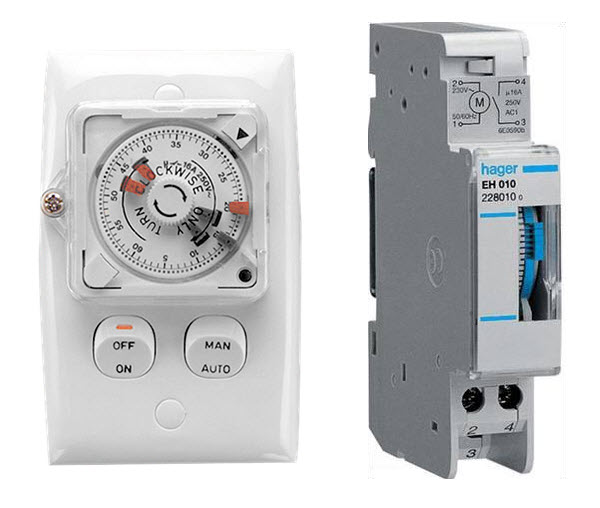
Electrical timers automatically control power to circuits and appliances by switching them on and off at set times. [ Read More ]
Electrical timers automatically control power to circuits and appliances by switching them on and off at set times. They save energy, boost security, and add convenience for lighting, heating, pool pumps, and more across Australian homes and businesses.
Electrical timers range from basic mechanical models with dial settings to advanced digital versions with programmable schedules, plus smart timers with WiFi control and pneumatic switches for commercial use.
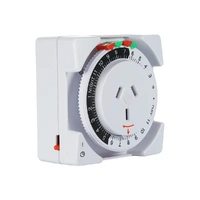
Mechanical timers use physical dials and pins for simple daily schedules, whilst digital timers offer precise programming with LCD screens and buttons for complex weekly or seasonal timing needs.
| Feature | Mechanical Timers | Digital Timers |
|---|---|---|
| Programming Method | Physical pins or segments on a rotating dial | LCD screen with push buttons |
| Time Intervals | 15 or 30-minute increments | 1-minute or 1-second precision |
| Schedule Complexity | Daily repeat only | Daily, weekly, yearly programmes |
| Power Requirements | No power is needed for the timing mechanism | Requires power, needs battery backup |
| Durability | Very durable, fewer failure points | More complex electronics may fail |
| Cost | $15-$40 | $30-$150+ |
| Best For | Simple daily schedules, outdoor use | Complex schedules, precise control |
You need simple on/off schedules that repeat daily. Budget is tight. Installation is outdoors or in harsh conditions. Power supply is unreliable. You want maximum durability with minimal maintenance.
You need different schedules for different days. Precision timing down to the minute matters. You want random mode for security. Automatic daylight saving adjustment is needed. Multiple programmes are required.
Many electricians use mechanical timers for outdoor lighting and pool pumps, where simple daily schedules work well, then digital timers indoors for more complex heating, cooling, and lighting control systems.
Sunset timers automatically adjust for sunrise and sunset throughout the year; 7-day programmable timers follow weekly schedules you set; and countdown timers turn off after a fixed delay.
How They Work: A basic light-sensing timer, often called a "dusk-to-dawn" timer, doesn't need location data.
Sunset Timers uses a built-in light sensor to detect changes in ambient light. The device turns on when it senses darkness (dusk) and turns off when it senses daylight (dawn)
Best For: Outdoor lighting, security lighting, garden lighting, and street lighting.
No manual adjustment needed as seasons change.
Example Use: Turn on driveway lights at sunset and off at 5 am when the sun rises.
Timing adjusts automatically from summer to winter.
How They Work: Let you set different on/off times for each day of the week. Store multiple programmes with precise timing control.
Best For: Hot water systems, shop displays, office lighting, and irrigation systems. Where schedules differ between weekdays and weekends.
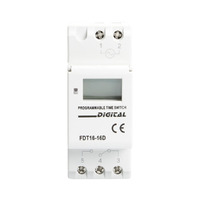
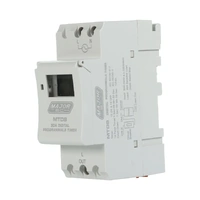
Example Use: NLS FDT16-16D Digital Timer Heats water overnight Mon-Fri at cheap rates, different schedule on weekends when usage patterns change.
How They Work: Start timing when triggered by a button or switch. Turn off automatically after a preset delay from 1 second to 8 hours.
Best For: Exhaust fans, stairwell lighting, garage lights, bathroom heaters.
Anywhere you need a temporary operation that switches off automatically.
Example Use: Clipsal pneumatic timer keeps bathroom fan running 10 minutes after you leave to clear moisture.
| Application | Recommended Timer Type | Why This Type Works Best |
|---|---|---|
| Outdoor security lighting | Sunset | Adjusts automatically for changing sunset times |
| Hot water heating | 7-Day Programmable | Different needs on weekdays vs weekends |
| Bathroom exhaust fans | Countdown | Runs for a fixed period after each use |
| Pool pumps | 7-Day Programmable | Precise control of daily filter cycles |
| Garden irrigation | 7-Day Programmable | Different watering days and durations |
| Stairwell lighting | Countdown (Pneumatic) | Temporary lighting after button press |
Timer switches connect between your power supply and the load you're controlling. Most have terminals marked Active In, Neutral In, Active Out (Switched), and Neutral Out for standard 240V AC wiring.
All electrical work in Australia must be performed by a licensed electrician in compliance with AS/NZS 3000:2018. Do not attempt to install timers yourself unless you hold the required electrical licence.
A timer is installed in the switchboard or the ceiling. Active feed from breaker to timer Active In. Switched the Active out to the lights. Neutral remains continuous to the lights through the timer.
Timer with contactor (for high current). Timer pack includes both components. Timer switches the contactor coil, contactor switches the heating element load.
Run-on timer triggered by light switch. When the lights turn off, the fan continues running for a preset time before switching off automatically.
Timer mounted in an outdoor enclosure near pool equipment. Switched circuit feeds directly to the pump motor. Programme for off-peak electricity times to save costs.
Standard timers typically handle 10-16A maximum. For high-current loads like pool pumps, air conditioners, or hot water systems, you need a contactor. The timer switches the contactor's low-current coil, and the contactor handles the high-current load.
Yes, but most timers are rated 10-16A and need a contactor for loads above their rating. Pool pumps, air conditioners, and hot water systems typically require a 25A or 40A contactor controlled by the timer.
Appliances drawing more than 16A must use a contactor. The timer energises the contactor's 240V coil (typically 0.1A), and the contactor safely switches the high-current load.
Motors, compressors, and transformers generate high inrush currents during startup. Even if the running current is within the timer rating, the starting current may exceed it. Contactors handle inrush better.
When switching several circuits simultaneously, the total current may exceed the timer rating. A timer can control multiple contactors to switch several high-power loads simultaneously.
Even loads within the timer rating benefit from contactors in commercial use. Contactors have replaceable contacts rated for hundreds of thousands of operations versus thousands for timer contacts.
| Application | Load Current | Recommended Setup | Product Example |
|---|---|---|---|
| Small pool pump | 4-6A | 16A timer only | CSG TMA116 13A timer |
| Hot water system | 18-20A | Timer + 25A contactor | Tesla hot water timer pack |
| Large pool pump | 10-15A | Timer + 25A contactor | Matelec HWB-Timer-Con-1 |
| Air conditioner | 15-25A | Timer + 32A contactor | Separate timer Hager EHN011 and Hager ESC465 contactor |
| Multiple circuits | Varies | One timer + multiple contactors | Custom installation |
Example: 3,600W hot water element ÷ 240V = 15A. With 25% margin = 18.75A.
This exceeds the standard 16A timer, so use a 25A contactor.
Astronomic or Sunset timers turn on garden and security lights at dusk and off at dawn, or set a time.
Save energy whilst maintaining security.
No manual adjustment needed as seasons change.
Programme heating during off-peak electricity periods (typically 11 pm-7 am).
Save up to 40% on water heating costs.
Use 24-hour programmable timers with battery backup.
Run filtration during off-peak hours.
Typical requirement: 8 hours daily in summer, 4-6 hours in winter.
Programmable timer adjusts run time as needed whilst minimising electricity costs.
Delay-off timers keep exhaust fans running 5-15 minutes after the lights turn off.
Removes moisture and odours whilst preventing energy waste from fans left on all day.
Water early in the morning (5-7 am), when evaporation is lowest.
Programme different days and durations for lawn versus garden beds.
7-day timers handle complex watering schedules easily.
Random mode timers turn indoor lights on and off at varying times when you're away.
Creates a lived-in appearance to deter burglars.
More convincing than fixed schedules.
Programmable timers turn window displays on before opening, off after closing.
Different schedules for weekdays versus weekends.
Reduces electricity costs whilst ensuring displays are lit during business hours.
Astronomic timers adjust automatically for seasonal changes.
Can the programme reduce lighting during quiet hours for additional savings?
Motion sensors combined with timers provide optimal control.
Pre-heat or pre-cool buildings before staff arrive.
Reduce temperature during unoccupied hours.
7-day timers handle different schedules for weekdays, weekends, and public holidays.
Control warm-up cycles for machinery, ventilation systems, and batch processes.
Precise timing ensures consistent production quality and energy efficiency in manufacturing operations.
Pneumatic time-delay switches keep lights on for a preset time after button push.
Common in apartment buildings and commercial high-rises for energy-efficient lighting control.
Business signs turn on at dusk, off at closing or midnight.
Reduces electricity costs compared to 24/7 operation.
Astronomic or Sunset timers automatically handle seasonal sunset time changes.
| Product | Type | Rating | Best For |
|---|---|---|---|
| Clipsal 319 Pneumatic Timer | Countdown (pneumatic) | 10A, 250V | Bathroom fans, stairwell lights |
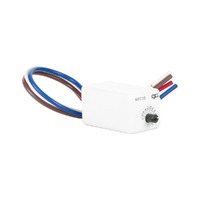
| CSG MRT10 Run-On Timer | Digital delay-off | 16A, 240V | Exhaust fans with adjustable delay |
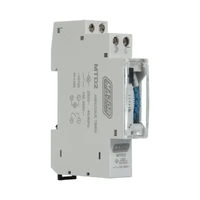
| CSG TMA116 24-Hour Timer | Mechanical programmable | 13A, 240V | Daily schedules, 72-hour backup |
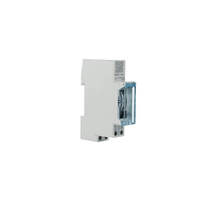
| Hager EHN011 24-Hour Timer | Mechanical programmable | 16(4)A, 240V | Hot water, lighting, 120-hour backup |
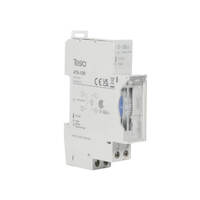
| Tesla Hot Water Timer Pack | Timer + 25A contactor | 25A load switching | Complete hot water control solution |
Need Help Choosing? Our electrical experts can recommend the right timer for your application. We stock Australia's largest range and offer same-day dispatch on orders placed before 12 pm.
Browse All TimersLearn more by watching our Hager EHN011 | Single pole timer 24 hour 16(4)amp Analogue 120hr Battery Backup (EH011) video.
Learn more by watching our Tesla TESHWP | Hot Water Contactor and Timer Pack 25A | ATS1DR + TESVS125-10 video.
Club Clipsal is Australia's largest electrician community offering trade rewards, business support, and exclusive benefits. When you nominate Sparky Direct as your preferred wholesaler, we automatically apply your Clipsal spend points to your Club Clipsal account daily.
Entry-level offering coaching, mentoring, and training discounts
Unlock exclusive industry tools and networking events
Access Toyota fleet offers and business software discounts
Maximum benefits, including VIP experiences and rewards
1. Sign Up: Create your Club Clipsal account at clipsal.com/club-clipsal or via the iCat mobile app
2. Nominate Sparky Direct: Select Sparky Direct from the wholesaler dropdown menu in your profile
3. Add Email: Enter your Sparky Direct account email address in the membership number field
4. Start Earning: Every dollar spent on Clipsal products earns points automatically
Redeem points from the rewards store, including gift cards, tools, and experiences. Access business summits, product training, and industry networking events. Receive early access to new product launches and special promotions. Connect with fellow electricians via the Club Clipsal community app.

Clipsal 319 Pneumatic Time Delay Switch.
Works perfectly. Love all the mechanical functions, reliable and going to work for years to come. This is the second lot of pneumatic switches in our second house. Solves the problem of lights being left on by kids and others.

CSG MRT10 | Run On Timer
I bought this as a replacement for the original German unit, which was very expensive. It does the same job at a more realistic price and is easier to set the timer.

I purchased a Hager EHN011 timer to replace an older Hager EH010 timer that started to get stuck. The old EH010 timer's dip switch only had ON and AUTO, while the new EHN011 now has ON, AUTO and OFF. The OFF option can come in handy. Also, the mechanical parts of the new timer seem like a better design.
Australia's largest range in stock • Expert technical support • Same-day dispatch
Browse All Timers Get Expert AdviceMany electrical timers carry a manufacturer warranty of around 1–3 years, depending on the brand. Sparky Direct lists the warranty details for each electrical timer on the product page, so check there before buying.
Sparky Direct specialises in trade-grade electrical timers that come with clear specifications and Australian approvals. Purchasing electrical timers from Sparky Direct simplifies matching ratings, reading datasheets, and selecting the right timer for your job. Enjoy trade prices and fast delivery across Australia. Shop where your electrician shops!
You can adjust time and programs on electrical timers using the front controls or buttons. Only a licensed electrician should open, wire, or re-wire any hard-wired electrical timers.
Mechanical electrical timers often make a light ticking sound and a click when switching. Digital electrical timers are usually quieter. If noise is a concern, choose digital electrical timers for bedrooms or quiet spaces.
You can plug a power board into some electrical timers if the total load stays under the timer rating. Avoid daisy-chaining many boards. If in doubt, keep the electrical timer on a single, known load.
Mechanical electrical timers usually restart but may lose the exact position and need resetting. Many digital electrical timers keep their clock and programs with a backup, but the actual on/off cycle may shift after a long outage.
Quality electrical timers used within their rated load and installed correctly are designed for continuous use. Make sure the electrical timer is not overloaded, is kept dry, and is checked if it ever feels hot or damaged.
Check the wattage or amps of your appliance and match it to the electrical timer rating. Also decide if you want a simple mechanical dial or a digital electrical timer with more schedule options.
Electrical timers can switch lights on at night, run pumps or filters, and cycle heaters or fans. Electrical timers also help make a home look lived-in when you are away.
Electrical timers are devices that turn power on and off at set times. Electrical timers sit between the power supply and the load and switch the circuit according to the schedule you program.
Any hard-wired electrical timers must be installed by a licensed electrician under Australian law. Plug-in electrical timers that go into a standard socket are user-fitted, but all fixed wiring work needs a qualified sparkie.
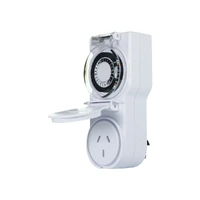
Outdoor electrical timers should have a suitable IP rating, often IP44 or higher, for rain and dust. Only use electrical timers outdoors if they are clearly marked for outdoor or damp-area installation.
Many digital electrical timers have an internal battery or super-cap to hold time and programs during outages. Some basic mechanical and electrical timers do not. Check the electrical timer’s specs for backup details. This one is a popular Digital Timer: NLS FDT16-16D | Single Channel Digital timer 16amp 24Hr / 7 Day Battery Backup
One electrical timer can control multiple devices if the total load stays under its rated amps and watts. For safety, add up all device loads and keep the electrical timer below its maximum continuous rating. Usually a contactor is used for larger or multiple loads.
Many electrical timers are fine for LED lighting, small pumps, and general appliances. Check that the electrical timer’s load type and minimum/maximum wattage suit LEDs, inductive loads, or motors as needed. Some require contactors to prevent them from burning out under heavy loads.
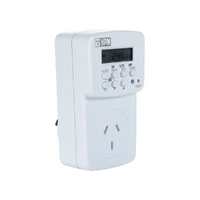
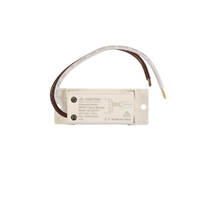
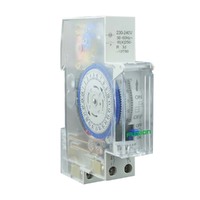
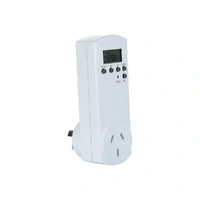
Electrical timers come as simple plug-in socket timers, hard-wired wall or ceiling timers, and DIN-rail timers for switchboards. Choose the electrical timer style to suit the circuit and how it will be controlled.
Most domestic electrical timers in Australia are rated for 230–240 V AC. Many electrical timers are rated around 10 A, but some heavy-duty models go higher. Always match the electrical timer rating to your load.
Electrical timers listed by Sparky Direct are selected to meet relevant Australian standards and RCM requirements. Always check each electrical timer’s datasheet or markings for exact standard numbers and approvals.