
Search Results:
Search Results:
Search Results:
Search Results:
The 3 pin appliance inlets stocked at Sparky Direct fall into two main families: flat-pin Australian-pattern inlets that match standard 240V plugs, and round-pin industrial inlets built to AS/NZS 3123. Both types share a common purpose. They give an appliance, enclosure, or vehicle a permanent power-entry point that accepts a flexible lead.
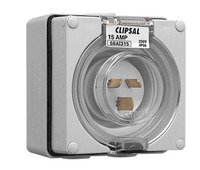
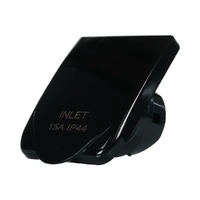
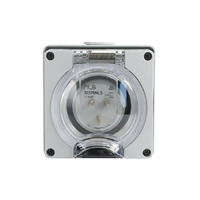
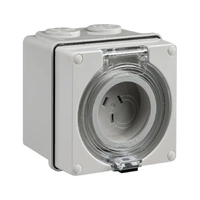
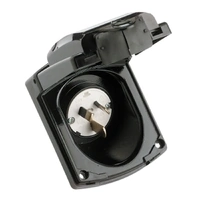
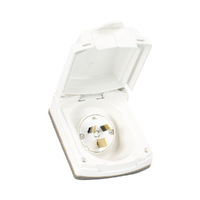
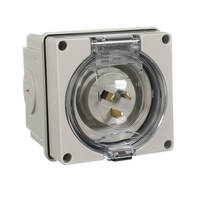
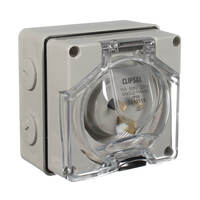
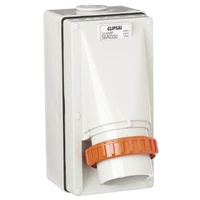
Panel-mount inlets fit through a cut-out in a metal or plastic enclosure, with the body sitting flush behind the panel. This style suits switchboards, generator enclosures, and custom builds where the inlet must sit inside a sealed cabinet. Surface-mount versions, including the Clipsal 56 Series 56AI310 and 56AI315, mount on a wall or post with the body visible. The 56 Series enclosure is the dominant pattern in caravan parks, marinas, and outdoor installations.
Every 3 pin appliance inlet at Sparky Direct carries an IP66 rating. That means the body is fully sealed against dust ingress and resists powerful water jets from any direction. The Clipsal 56 Series, Easy56, NLS API range, and GEN3 API range are all IP66 rated. This rating suits outdoor mounting, caravan exterior walls, marine bulkheads, and exposed industrial sites.
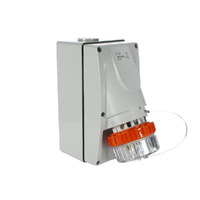
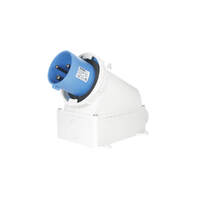
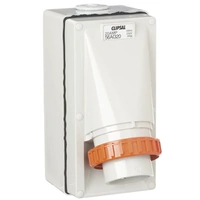
Heavy-duty inlets carry higher current ratings and use round-pin configurations. The NLS 30801 is a 32A 500V three-round-pin inlet built to AS/NZS 3123, designed for high-draw single-phase loads in workshops and agricultural sites. Round-pin inlets pair with matching round-pin extension sockets and plugs, which prevents accidental connection to standard 240V flat-pin equipment.
Selecting the correct rated current is the most important decision when buying an appliance inlet. The inlet, the lead, and the supply circuit must all share the same rating. A mismatch causes nuisance tripping at best and overheating at worst.
Single-phase 3 pin inlets at Sparky Direct cover three current bands: 10A, 15A, and 32A, all rated for 240V or 250V single-phase supply. The 10A inlet matches the standard Australian household plug. The 15A inlet uses a wider earth pin and pairs with caravan and high-draw equipment leads. The 32A round-pin inlet is industrial pattern and used for workshop machinery and large generators.
Match the inlet rating to the maximum continuous load of the connected equipment, plus any startup inrush current. A 10A appliance pulling 8A continuous fits a 10A inlet comfortably. A welder or compressor that draws 13A continuous needs a 15A inlet, with a 15A lead and a 15A protected circuit at the supply. Never fit a higher-rated inlet to an appliance with a lower-rated flexible cord. The cord becomes the weakest point and overheats before the upstream protection trips.
The inlet pin pattern must match the plug on the connecting lead. Flat-pin 10A inlets accept 10A flat-pin plug tops. Flat-pin 15A inlets have a wider earth pin and only accept 15A plugs. Round-pin 32A IP66 inlets pair only with matching 32A round-pin plugs and sockets from the same industrial range.
The pin pattern is a built-in safety feature. A 10A plug will not fit a 15A inlet, which prevents under-rated leads from connecting to high-draw equipment. Do not modify pins or earth-pin shrouds to force a connection. If the lead does not fit, the rating is wrong for the application.
The IP rating describes how well the inlet body resists dust and water. For appliance inlets mounted outdoors or in damp areas, IP66 is the working minimum.
IP66 is defined in AS/NZS 60529. The first digit, 6, means total protection against dust ingress. The second digit, 6, means protection against powerful water jets from any direction. An IP66 inlet survives wash-down cleaning, driving rain, and prolonged outdoor mounting without water reaching the live terminals.
An IP66 inlet keeps moisture and grit out of the contact area. Contacts stay clean, oxidation is slow, and resistance at the connection stays low. Lower contact resistance means less heat under load, longer service life, and fewer arc-flash events at insertion.
Mount outdoor inlets with the cable entry pointing down, so any moisture that does enter drains away from the terminals. Use the supplied gland or a separately ordered cable gland sized for the supply cable. Tighten the cap on the unused inlet to maintain the IP rating during storage or transit.
For applications below grade, in flooded zones, or in continuous spray-down environments, the standard IP66 inlet is the highest rating in the Sparky Direct 3 pin range. Permanent submersion needs a fully sealed connector system from a different product family, not a 3 pin appliance inlet.
Three factors decide the right inlet for the job: the load rating, the mounting environment, and the available supply lead pattern. Get all three right, and the inlet does its job for years.
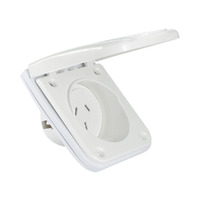
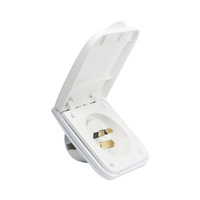
Caravans and motorhomes typically use a 15A flat-pin inlet, which matches the 15A power lead supplied at most caravan parks. Generators and standby supply points usually use 15A flat-pin or 32A round-pin, depending on the generator output and circuit size. Workshops and trade sites lean toward 32A round-pin for fixed machinery, with 10A or 15A inlets on portable trolleys.
For internal switchboard work, any IP-rated 56 Series, Easy56, or GEN3 inlet performs well. For outdoor or exposed mounting, the IP66 rating matters more than the brand badge. For heavy industrial use, prioritise round-pin patterns and 32A capacity, plus a glanded cable entry.
Body material is typically engineering-grade thermoplastic or polycarbonate. Look for thick-wall construction, a captive screw cap, and brass or nickel-plated brass pins. Lower-cost units may use thinner walls or non-captive caps, which is fine for occasional use but tends to fail on sites where the cap is opened daily.
The most common mistake is buying a 10A inlet for a 15A lead, on the assumption the lower rating is safer. It is not. The under-sized inlet becomes a bottleneck and a fire risk. The second common mistake is ignoring the cable entry size and ending up with a gland that does not seal the supply cable.
3 pin appliance inlets appear across domestic, trade, and industrial work. The exact rating and pin pattern shifts with the load, but the role stays the same: a fixed, weatherproof power entry point that accepts a flexible lead.
Common domestic uses include caravan exterior walls, granny-flat sub-supply points, and standby generator inlets feeding a changeover switch. The 15A flat-pin Clipsal 56AI315 and Easy56 EY56AI315 are the most-used patterns for these jobs.
In workshops, appliance inlets are wired into compressor housings, welding trolleys, and portable lighting towers. A 15A flat-pin inlet covers most single-phase machinery. A 32A round-pin inlet handles larger compressors, three-phase converters, and heavy single-phase loads.
Commercial sites use round-pin IP66 inlets on machinery, sub-distribution boards, and outdoor power points. The round-pin pattern prevents domestic flat-pin leads from being plugged into industrial circuits, which protects the lead and the operator.
Outdoor uses include marine berths, agricultural pump sheds, festival power, and exposed roof-top plant. The IP66 rating, combined with a downward cable entry and a tight cap on the unused inlet, keeps the connection clean across years of weather exposure.
Installing a 3 pin appliance inlet is licensed electrical work in every Australian state and territory. The inlet sits on the load side of a hard-wired connection, and the wiring must comply with AS/NZS 3000:2018.
Only a licensed electrician can install, replace, or rewire a fixed appliance inlet. This applies to caravan inlets, generator inlets, and workshop machinery alike. DIY installation of a fixed mains-voltage inlet is illegal and breaches state electrical safety regulations.
Strip insulation to the depth marked on the inlet body, no more, no less. Tighten terminal screws to the torque specified on the product data sheet. Do not tin the conductor strands before insertion, and do not leave loose strands outside the terminal. A loose strand bridging earth and active is the most common cause of nuisance tripping after installation.
Wire active to the active terminal, neutral to neutral, earth to earth. Confirm polarity with a polarity tester before energising the inlet. A reversed-polarity inlet powers connected equipment with the chassis live, which is a Category 1 safety failure.
Run insulation resistance, earth continuity, and polarity tests as required by AS/NZS 3000:2018. Issue a Certificate of Electrical Safety where state law requires it. For caravans and motorhomes, a periodic gas-and-electrical inspection should also include the inlet integrity check.
3 pin appliance inlets sold in Australia must comply with AS/NZS 3112 for flat-pin patterns or AS/NZS 3123 for industrial round-pin patterns. Wiring must comply with AS/NZS 3000:2018, the Wiring Rules.
Inlets are classed as in-scope electrical equipment under the Electrical Equipment Safety System (EESS). Each model must hold a valid Regulatory Compliance Mark (RCM) or equivalent registration. Buying from a licensed electrical wholesaler like Sparky Direct gives confidence the product is registered and traceable.
Look for an AS/NZS approval number on the product or its packaging. Clipsal 56 Series, Easy56, GEN3, and NLS API inlets all carry current Australian approvals. Unmarked or grey-import inlets should not be installed, regardless of price.
Overload failures usually trace back to undersized inlets. Heat damage shows as discoloured plastic around the pins, melted insulation, or a brown stain on the body. Ingress failures show as green oxidation on the contacts, or moisture beads inside the cap. Replace any inlet with these symptoms.
Replace the inlet at the first sign of cracked plastic, missing or damaged caps, loose pin springs, or corrosion on the contact face. A failing inlet is cheap to swap. A failed inlet that arcs across damp contacts can cause a fire.
An appliance inlet is not the only way to connect equipment to a flexible lead. Standard plugs, extension sockets, and hard-wired connections all do similar jobs. Each has its place.
A standard plug top is fitted to the end of a flexible lead, with the pins on the lead. An appliance inlet is fitted to the equipment, with the pins on the equipment. The result is the same socket-and-pin engagement, but the appliance inlet keeps the connection point fixed to the equipment chassis. Caravans, generators, and switchboards almost always use inlets, not trailing plugs.
An extension socket is the female end of a lead. It accepts a plug. An appliance inlet is the male end fitted to fixed equipment, and it accepts the female socket of a lead. The two parts work together: the lead has an extension socket on one end and a plug on the other, and the appliance has the inlet.
A hardwired connection eliminates the inlet and runs supply directly into the equipment via a cable gland. Hardwiring is permanent and removes a potential failure point, but it also removes the ability to disconnect the equipment for service or relocation. Inlets win on flexibility; hardwiring wins on absolute reliability.
Use an inlet on portable, semi-permanent, or service-disconnected equipment, including caravans, generators, lighting towers, and welders. Use a hardwired connection on fixed plant, switchboards, and equipment that never moves. Use an extension socket as the loose end of a flexible lead, never as a fixed entry point.
| Connection Type | Best For | Disconnectable |
|---|---|---|
| 3 Pin Appliance Inlet | Caravans, generators, portable equipment | Yes |
| Standard Plug Top | Loose leads and appliances with captive cords | Yes |
| Extension Socket | Lead ends, temporary connections | Yes |
| Hardwired | Fixed switchboards, immovable plant | No |
A well-chosen IP66 inlet runs for a decade or more on a caravan or generator without issues. The drivers of long service life are connection integrity, weather resistance, and how the inlet is used.
Contact integrity comes from spring-loaded brass or nickel-plated brass pins making consistent pressure on the mating socket contacts. Over thousands of insertion cycles, springs lose tension and contact resistance creeps up. Quality inlets keep contact resistance low for far longer than budget alternatives.
UV exposure breaks down lower-grade plastics. The Clipsal 56 Series body is engineered for sustained UV exposure and stays dimensionally stable for years. NLS API and GEN3 ranges are built for similar duty. Bodies that go chalky or develop hairline cracks within a year or two are a sign the material is below trade grade.
Inspection is straightforward. Twice a year, open the cap, check for moisture or oxidation on the contacts, blow out any grit, and confirm the cap seal is intact. If the contacts are bright and the seal is firm, the inlet has another six months in it.
The cost of an inlet is small relative to the cost of a roadside breakdown or a workshop machine offline. Buying a known, registered, IP66-rated inlet up front avoids most field failures. Stocking one or two spares on a fleet keeps replacement time under thirty minutes.
3 pin appliance inlet pricing in Australia varies by brand, current rating, and pin pattern. Sparky Direct prices the full IP66 range competitively across both trade and domestic accounts.
10A IP66 flat-pin inlets sit at the lower end of the price range. 15A flat-pin inlets are typically slightly more, reflecting the heavier construction. 32A round-pin industrial inlets carry the highest unit price, driven by the larger body, heavier contacts, and AS/NZS 3123 compliance work.
Buying inlets by the carton makes sense for fleet operators, caravan-park owners, and contractors fitting out multiple units. Bulk pricing reduces the per-unit cost and removes the need to reorder mid-job. Single-unit pricing suits replacement work and one-off domestic jobs.
The cheapest inlets on the market often skip Australian approval, use thinner plastic, or substitute lower-grade pin alloys. They look like compliant inlets at a glance but fail under load or weather. Stick to AS/NZS-approved brands. The price difference is small, and the safety margin is much larger.
Online electrical wholesalers like Sparky Direct combine trade pricing with next-day delivery to most Australian metro and regional locations. Counter-trade pricing at a local wholesaler is similar, but online ordering avoids the trip and gives clear stock visibility before placing the order.
Common 10A and 15A flat-pin inlets in the Clipsal 56 Series, Easy56, NLS API, and GEN3 ranges are stocked for fast despatch. The 32A round-pin pattern and less common variants may have a short lead time. Contact Sparky Direct for stock confirmation on bulk orders.
For licensed electricians, choosing the right inlet comes down to a few repeatable checks. Get the rating right, match the pin pattern to the lead in service, and pick a brand you can replace with the same pattern in five years.
Read the equipment nameplate. The current rating on the nameplate is the minimum inlet rating, and round up to the next standard size if the load is borderline. For caravans, the standard is 15A flat-pin. For workshop machinery, 15A or 32A round-pin depending on draw. For generators, match the output socket on the generator itself.
For a fleet job or caravan-park retrofit, allow one extra inlet per ten installed for damage and warranty replacement during the install phase. Keep one spare per crew vehicle for field replacement work. Order matching caps and gaskets in the same line, since these are often what fails first.
Buyers under-rate inlets to save a few dollars, mismatch flat-pin and round-pin patterns, or order inlets without checking the cable entry size. Each of these mistakes costs more in return shipping and re-ordering than the original buy. Check the spec sheet before clicking buy.
Sparky Direct stocks the IP66 3 pin appliance inlet range across Clipsal 56 Series, Easy56, NLS, and GEN3, with 10A, 15A, and 32A current ratings. Trade and domestic accounts both receive the same shelf pricing, and orders despatch the same business day where stock is held.
Club Clipsal is Australia's largest electrician community offering trade rewards, business support, and exclusive benefits. When you nominate Sparky Direct as your preferred wholesaler, we automatically apply your Clipsal spend points to your Club Clipsal account daily.
Entry-level offering coaching, mentoring, and training discounts
Unlock exclusive industry tools and networking events
Access Toyota fleet offers and business software discounts
Maximum benefits, including VIP experiences and rewards
1. Sign Up: Create your Club Clipsal account at clipsal.com/club-clipsal or via the iCat mobile app
2. Nominate Sparky Direct: Select Sparky Direct from the wholesaler dropdown menu in your profile
3. Add Email: Enter your Sparky Direct account email address in the membership number field
4. Start Earning: Every dollar spent on Clipsal products earns points automatically
Redeem points from the rewards store, including gift cards, tools, and experiences. Access business summits, product training, and industry networking events. Receive early access to new product launches and special promotions. Connect with fellow electricians via the Club Clipsal community app.
Sparky Direct stocks 3 pin appliance inlets and adjacent industrial outlets and sockets from major Australian and international brands. Beyond the appliance inlet range, customers fitting out switchboards or industrial sites also work with HPM, PDL, Legrand, Hager, Major Tech, Connected Switchgear, and NHP Electrical. The full industrial outlets and sockets range covers 3 pin, 4 pin, and 5 pin patterns at 10A, 15A, 20A, and 32A current ratings.
3 pin appliance inlets are part of the wider IP66 3 pin industrial outlets and sockets family. Related categories include 3 pin extension sockets, 3 pin straight plugs, 3 pin angled plugs, and 3 pin switched socket combinations. For caravan-specific power entry, see the caravan power inlet range. For 5 pin three-phase variants, see the 5 pin appliance inlets category.
Watch CLIPSAL 56AI310-GY | Appliance Inlet 3 Flat Pin 10Amp IP66 | 56 SERIES video
Watch CLIPSAL 56AI315 | Appliance Inlet 3 Flat Pin 15Amp IP66 | 56 SERIES video
Watch NLS 30801 | Weather Protected Appliance Inlet | 3 Round Pins 32amp 500V IP66 (Grey/Orange) video

I bought these special inlet/outlet for the 240V of our latest bus to motorhome conversion build. I have bought from Sparky previously totally satisfied, and once again, the price was the lowest I found through a Google search, the package arrived super fast, the packing was neat and secure, and the receptacles of top quality. These replaced the RV specific ones I had bought elsewhere, which had cost me almost double the price about 4 years ago, but, had suffered through UV and weather exposure. Super happy with Sparky prices, fast despatch service, and highly recommend them to all my industry colleagues.
This was used to replace the standard caravan/RV 15 amp 240v input which never really holds the plug very well. The plug always works itself loose or gets kicked off. However this problem is now permanently resolved by replacing it with the Clipsal EY56AI315. It’s waterproof and takes a positive locking connection that will never accidentally fall off.
Much better option for caravan, boat and motorhome power inlets. Secure attachment with protection from dust and water ingress
Quality products in stock • Fast Australia-wide delivery • Competitive trade pricing
Browse 3 Pin Appliance Inlets → Get Expert Advice →Yes. They provide a controlled connection point that helps improve safety for fixed appliances.
3 pin appliance inlets are available from Sparky Direct, offering access to reliable electrical products with Australia-wide delivery.
Delivery availability depends on the supplier and location, with options across metropolitan and regional Australia.
Yes. They are suitable for new installations, upgrades, and replacing existing appliance inlets.
Warranty coverage depends on the manufacturer and supplier, with conditions applying to correct installation and use.
Consider voltage and current rating, IP rating if required, mounting type, and electrician recommendations.
With proper installation and use, they are designed to provide many years of reliable service.
Yes. They are commonly used in environments with frequent operation.
Yes. When correctly installed, they are designed for long-term use.
They generally require minimal maintenance but should be inspected during routine electrical checks.
They are primarily intended for fixed appliances, but suitability depends on the application and installer advice.
They have a functional design focused on durability and protection rather than aesthetics.
Yes. They are commonly used in commercial kitchens, workshops, and service areas.
3 pin appliance inlets are fixed electrical connection points designed to allow appliances or equipment to be safely connected to a power supply.
Yes. They are designed for straightforward connection and disconnection by qualified personnel.
Appliance inlets provide a secure, dedicated connection for fixed equipment and reduce the risk of accidental disconnection.
Yes. Installation must be carried out by a licensed electrician to ensure safety and compliance.
Many models are surface mounted, making them suitable for exposed installations.
Yes. They are designed to mate with compatible 3 pin appliance plugs of the same rating and configuration.
Voltage ratings vary by product and must be selected to suit the appliance and electrical supply.
Some models are rated for outdoor use, depending on their IP rating and installation conditions.
Yes. Many 3 pin appliance inlets are designed for industrial and commercial environments where robust connections are required.
Quality 3 pin appliance inlets supplied in Australia are designed to meet relevant AS/NZS electrical and safety standards when installed correctly.
They are commonly used for fixed appliances, machinery, equipment connections, and industrial or commercial installations.
A 3 pin configuration is used for single-phase power, including active, neutral, and earth connections.