
Search Results:
Search Results:
Search Results:
Search Results:
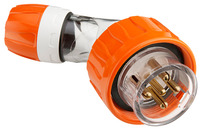
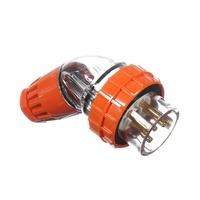
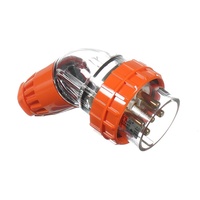
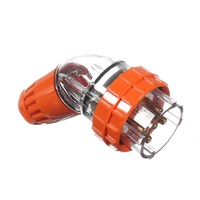
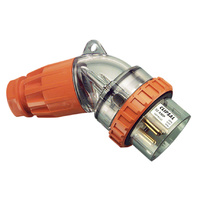
5 pin angled plugs are industrial-grade connectors used to terminate flexible leads on three-phase equipment. The five pins carry three active conductors, neutral, and earth, which is the standard configuration for 415V three-phase supply with a neutral return. The angled body changes the cable entry geometry so the lead exits at roughly 90 degrees to the socket face. That suits machinery installed against walls, switchboards, and inside cabinets where a straight plug would be awkward.
This category includes IP66-rated plugs in 10A, 20A, 32A, and 50A ratings to suit workshop equipment, factory machinery, compressors, welders, and temporary site power. Termination of these plugs to fixed wiring or appliance leads must be carried out by a licensed electrician where state and territory rules require it.
A 5 pin angled plug is an industrial connector with five round pins arranged in the standard 3P + N + E pattern. In plain trade terms, that means three active phases, one neutral, and one earth. The plug body is moulded around the cable gland at an angle, which redirects the lead away from the socket face. Many products in this category are rated to 500V AC and suit 415V three-phase supply found in Australian commercial and industrial installations. The angled geometry does not change the electrical configuration; it only changes how the cable exits the connector.
The plug connects a flexible lead from machinery or portable equipment to a matching 5 pin industrial socket outlet. Three of the pins carry the active phases, one carries the neutral conductor, and the dedicated earth pin provides the equipotential bond back to the installation earthing system. A 5 pin angled plug works by carrying three-phase power, neutral, and earth through a sealed angled connector body that mates with a matching industrial socket. The locking ring secures the connection mechanically, while the gland and gasket maintain the IP rating around the cable entry. Wiring and termination of these plugs is electrical work and falls under licensed-electrician requirements in most Australian jurisdictions.
Trade buyers fit 5 pin angled plugs to compressors, welders, pumps, process equipment, workshop machinery, and temporary power boards. The angled body is preferred behind equipment, under benches, in tight wall-mounted sockets, and around control panels where a straight plug would catch on adjacent gear or force a sharp cable bend. Common environments include factories, manufacturing plants, construction sites, food processing areas, agricultural sheds, and commercial workshops. Electricians, sole traders, contractors, and maintenance teams typically specify these plugs for three-phase tools and equipment that needs both phase voltage and a neutral path.
The angled body of a 5 pin plug is a practical choice, not a stylistic one. It changes how the lead leaves the socket, which has direct effects on cable bend radius, mechanical strain at the gland, profile depth from the wall, and the chance of accidental impact. Buyers select angled plugs when the cable needs to drop down or run sideways from the socket without forcing a tight bend. Straight plugs remain useful when the lead has clear space to exit directly outward, but in cramped or high-traffic areas, the angled design generally wins on durability and tidiness.
The choice comes down to clearance, cable direction, mechanical strain, and socket position. Sparky Direct also stocks 5 pin straight plugs for installations where the angled body is not required.
The angled body lets the cable leave the connector along a relaxed path rather than doubling back on itself. That reduces tension at the gland and at the screw terminations inside the plug, which is the most common failure point on heavily used industrial leads. In high-vibration areas, on portable equipment, and on leads that get coiled and uncoiled daily, lower strain at the gland directly translates to longer service life. Maintaining gland fit and cable restraint also preserves the IP66 seal around the cable entry.
Angled plugs sit closer to the wall or socket plate than straight plugs of the same rating. That matters for switchboards, workshop benches, wall-mounted outlets, and power distribution areas where the plug is exposed to foot traffic, trolleys, toolboxes, or moving equipment. A protruding straight plug is easier to knock, bend, or shear off. The angled profile also helps with cable trays and conduit runs that need to leave the socket downward or to one side without obstruction.
5 pin angled plugs are sold by current rating, and the rating must match the equipment, the circuit protection, and the cable. The available sizes cover everything from light three-phase test gear up to sustained heavy industrial loads. Current ratings of 10A, 20A, 32A, and 50A are the standard options in Australia, and the connectors are mechanically keyed so a 32A plug will not insert into a 20A socket.
The 3P + N + E layout means three active phases, one neutral, and one earth. This pin count suits three-phase equipment that also needs a neutral conductor, which is common on machinery with single-phase auxiliary circuits, mixed-load control gear, and equipment that draws both 415V three-phase and 240V single-phase loads. Where no neutral is required, electricians often specify a 4 pin angled plug instead. Wiring decisions at the terminations should be made by a licensed electrician based on the equipment manufacturer's specification.
| Current Rating | Typical Applications |
|---|---|
| 10A | Smaller three-phase equipment, instrumentation, test rigs, light industrial gear. |
| 20A | Workshop machinery, smaller compressors, general industrial tools, common workshop loads. |
| 32A | Heavier machinery, larger motors, higher-load site equipment, mid-range welders. |
| 50A | Large welders, heavy compressors, industrial processing equipment, sustained high-current loads. |
Plug, socket, circuit protection, and cable must all be correctly rated for the load. A 32A plug fitted to a circuit protected at 50A will not protect the cable or the equipment correctly. Confirm the equipment full-load current and the site supply with a licensed electrician before specifying the rating.
The selected plug must equal or exceed the equipment full-load current and must suit the upstream circuit protection. Undersizing the plug puts heat into the contacts, accelerates wear, and can cause nuisance tripping or terminal damage. Motors and compressors also draw high starting currents, sometimes several times the running current, and the plug, lead, and circuit need to handle that inrush without distress. Treat the equipment manufacturer's rating plate as the starting point for selection, then check the cable and circuit protection together.
Compliant industrial plugs and sockets must match on pin count, current rating, voltage configuration, and physical keying. A 5 pin angled plug will only mate with a matching 5 pin industrial socket of the same current rating. Different amp ratings are mechanically keyed to prevent accidental cross-connection, which is a safety feature, not a limitation. Sparky Direct stocks matching 5 pin extension sockets and 5 pin IP66 switched socket combinations for full-system compatibility.
IP66 is the dominant ingress protection rating for industrial plugs sold for Australian conditions. It signals that the plug body, when correctly mated and sealed, resists dust ingress and powerful water jets. That matters for outdoor power, washdown environments, dusty workshops, coastal sites, and construction work where the connector is exposed to weather, mud, spray, and grit. An IP66 rating only delivers in service if the plug is correctly mated to a compatible socket, the gland is correctly sized, and the seals and locking ring are intact.
The first digit covers solid particles. A six rates the connector as dust-tight, with no ingress over an extended test period. The second digit covers liquids. A six rates the connector against powerful water jets from any direction. The rating framework is defined under AS 60529 / IEC 60529. IP66 performance always depends on correct mating with a compatible socket, correct cable gland sealing on the entry side, and undamaged housings throughout. A high IP rating on the plug body cannot compensate for a loose gland or a cracked housing.
IP66 angled plugs are standard on construction sites, in manufacturing plants, in food processing areas, in workshops, on agricultural equipment, and around outdoor equipment yards. Temporary power feeds for site sheds, mobile compressors, and portable processing gear typically use IP66 connectors so they can stay in service through rain, dust, and the occasional washdown. Coastal sites and salt-spray environments also benefit from the sealed body, which slows the corrosion that quickly degrades unsealed connectors.
Intact seals, a properly tensioned locking ring, a correctly sized cable gland, and an undamaged housing are what hold an IP66 rating in service. Cracked bodies, bent or pitted pins, damaged locking rings, and worn or perished seals all break the rating and should trigger replacement of the plug. A plug that has been overheated, dropped onto a hard surface, or pulled out by the cable should be inspected before being put back into service. Damaged industrial plugs are replaced rather than repaired in most cases.
Price alone is a poor guide to industrial plug quality. Two plugs with the same current rating and the same IP rating can perform very differently after a year on a working site. The differences sit in the housing material, the pin and terminal quality, and the integrity of the seals, locking ring, and gland. Trade buyers who assess these details up front avoid the cost and downtime of plug failures later.
UV-stabilised polycarbonate or equivalent industrial-grade thermoplastic is the standard housing material for outdoor-rated plugs. It resists impact, withstands moderate heat, holds up under UV exposure, and shrugs off the chemical splashes common in workshops and process plants. UV stability is particularly important in Australian conditions where direct sun exposure is severe and cheaper non-stabilised plastics chalk, embrittle, and crack within a season or two outdoors.
Brass or phosphor bronze pins, secure terminal screws, and corrosion-resistant fasteners separate a good plug from a poor one. The pins carry the load current through the contact face with the socket, and any oxidation, pitting, or weak spring tension shows up as heat at the contact. Reliable contact integrity reduces heat, suppresses arcing, and extends service life. Termination work inside the plug remains the responsibility of the licensed electrician carrying out the installation.
The locking ring secures the plug to the socket and applies the compression that holds the IP seal. The cable gland on the entry side seals around the flexible lead and provides strain relief. Gland sizing must suit the cable outer diameter; a gland that is too large leaves a gap, and a gland that is too small distorts the cable insulation. Sparky Direct stocks a cable gland range for matching gland-to-cable sizing on industrial leads.
Industrial plugs sold for Australian use are governed by a small set of standards that cover the connector itself, the wiring it terminates, and the ingress protection rating it claims. Buying compliant product from a wholesaler that focuses on the Australian trade is the easiest way to stay on the right side of the rules. Installation and termination remain the responsibility of a licensed electrician under state and territory electrical safety laws.
AS/NZS 3123 covers industrial plugs and socket-outlets, including the pin patterns, current ratings, and mechanical keying that prevent cross-connection between different ratings. AS/NZS 3000, the Wiring Rules, sets the requirements for the fixed wiring, circuit protection, and earthing arrangements that the plug terminates into. AS 60529 / IEC 60529 defines the IP rating system that supports IP66 and other ingress claims. Compliant products that match on pin count, current rating, voltage configuration, and socket type allow safe interchangeability across job sites.
Installing or terminating industrial plugs and the associated fixed electrical equipment must be carried out by a licensed electrician where required under Australian state and territory electrical safety laws. Unlicensed electrical work creates safety, insurance, and compliance risks, and may void equipment warranties. This page provides product-selection information only and does not contain step-by-step wiring instructions.
Several visible signs indicate a plug that should be removed from service. These include cracked housings, damaged or pitted pins, loose or missing locking rings, missing gaskets, heat discolouration on the body or pins, signs of moisture ingress, and visible cable strain at the gland. In workplace environments, test-and-tag schedules pick these up on a regular cycle, and the inspecting electrician records the defect and tags the lead out. Damaged industrial plugs are replaced with compliant equivalents rather than patched.
A simple decision framework saves time and avoids reorders. Start with the equipment rating, work outward to the lead and the socket, then check the environment and the compliance position. Most failures of plug selection trace back to a missed step at the start, not a fault with the product itself.
The cheapest plug on the shelf can cost more over time if it cracks, loses IP integrity, or fails to meet compliance expectations on inspection. Replacing a failed plug means downtime, callout cost, and sometimes equipment damage or scrapped material. Value in this category sits in durability, correct rating, reliable stock availability, and suitability for the intended environment. Trade buyers usually find the middle of the price range delivers the best long-term outcome on industrial leads.
For fixed machinery near walls or panels, an angled plug with the correct rating reduces strain on the lead and tidies the install. For portable equipment, a robust housing and a properly sized gland are the priorities. For outdoor leads, IP66 construction and matching IP66 sockets are essential. Common workshop machinery often runs on 20A or 32A connectors, depending on the load profile. Always match the plug to the equipment specification rather than to whatever happens to be on the shelf.
Buying industrial plugs online suits trade workflows because the specification is well-defined and the product range is consistent. Electricians, contractors, and maintenance teams can order to a known part number, get the correct rating delivered, and keep van stock topped up between site visits. Sparky Direct is an Australian online electrical wholesaler that focuses on trade-aligned categories, so the 5 pin angled plug range is grouped with matching sockets, extension sockets, and combinations under industrial outlets.
Multi-site projects, maintenance teams, and workshops that stock standard current ratings benefit from consistent product families across all installs. That means the same brand, the same gland fitment, and the same matching socket range from one location to the next. Buying in bulk also helps with budget planning and reduces the time spent reordering single units. Fast replenishment from an Australian wholesaler keeps maintenance schedules on track without long lead times from overseas suppliers.
When comparing suppliers, trade buyers look at a handful of practical factors. Those include a standards-compliant range, reliable stock availability, clear product specifications, an electrical trade focus, sensible delivery coverage, and a related product range that includes matching sockets and accessories. Sparky Direct positions itself as an Australian online electrical wholesaler with trade-aligned categories, including 5 pin angled plugs, matching sockets, IP66 combinations, and supporting accessories. For specification questions on a particular install, contact via the Sparky Direct contact page.
Club Clipsal is Australia's largest electrician community offering trade rewards, business support, and exclusive benefits. When you nominate Sparky Direct as your preferred wholesaler, we automatically apply your Clipsal spend points to your Club Clipsal account daily.
Entry-level offering coaching, mentoring, and training discounts
Unlock exclusive industry tools and networking events
Access Toyota fleet offers and business software discounts
Maximum benefits, including VIP experiences and rewards
1. Sign Up: Create your Club Clipsal account at clipsal.com/club-clipsal or via the iCat mobile app
2. Nominate Sparky Direct: Select Sparky Direct from the wholesaler dropdown menu in your profile
3. Add Email: Enter your Sparky Direct account email address in the membership number field
4. Start Earning: Every dollar spent on Clipsal products earns points automatically
Redeem points from the rewards store, including gift cards, tools, and experiences. Access business summits, product training, and industry networking events. Receive early access to new product launches and special promotions. Connect with fellow electricians via the Club Clipsal community app.
Watch NLS 66PA520 | 5 Pin 20Amp Angled Plug IP66 | 30477 video
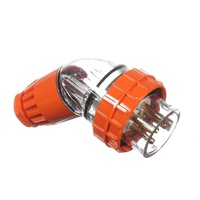
Watch NLS 66PA532 | 5 Round Pin 32Amp Angled Plug IP66 | 30573 video
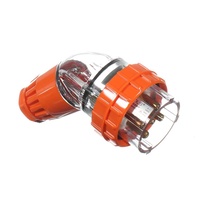
Watch NLS 66PA550 | 5 Pin 50Amp Angled Plug IP66 | 30575 video

Website very easy to use and find the plug I was after. Delivery time was excellent and communication to me about what was happening during the delivery phase was excellent. Very highly recommended.
Plugs are good, well packaged and build quality is good also at a fraction of the price being sold by wholesalers or distributors.
This was perfect for what I needed. Sparky direct was way cheaper than all the local suppliers
Quality industrial connectors in stock • Fast Australia-wide delivery • Competitive trade pricing
Browse 5 Pin Angled Plugs → Get Expert Advice →Yes. The angled design reduces cable stress, which can help extend cable lifespan.
5 pin angled plug industrial IP66 products are available from Sparky Direct, offering access to durable industrial electrical connectors with Australia-wide delivery.
Delivery availability depends on the supplier and location, with options across metropolitan and regional Australia.
Yes. They are suitable for new installations, upgrades, and replacing existing industrial plugs.
Warranty coverage depends on the manufacturer and supplier, with conditions applying to correct installation and use.
Consider voltage and current rating, IP rating, cable size, installation environment, and electrician recommendations.
With correct installation and use, they are designed for long service life in harsh environments.
They generally require minimal maintenance but should be inspected during routine electrical checks.
Yes. They are designed to withstand repeated connection and disconnection in demanding conditions.
Yes. They are often used to supply power to fixed or portable industrial machinery.
Yes. They are commonly used in agricultural and rural settings due to their weather resistance.
They feature a robust industrial design that prioritises durability and protection.
Yes. The IP66 rating makes them suitable for wash-down areas and dusty industrial sites.
A 5 pin angled plug industrial IP66 is a heavy-duty electrical plug designed for three-phase power applications, featuring an angled cable entry and high protection against dust and water.
Yes. They are designed for secure yet straightforward connection by trained personnel.
They provide reliable power connections while protecting against dust, water, and physical strain on the cable.
Yes. Termination and installation must be carried out by a licensed electrician to ensure safety and compliance.
Yes. They are designed to mate with matching 5 pin industrial sockets of the same rating and configuration.
Ratings vary by model and must be selected to suit the electrical system and connected equipment.
Yes. The IP66 rating makes them suitable for outdoor and wash-down environments when installed as specified.
Angled plugs help manage cable direction, reduce bending stress, and are suitable for installations with limited space.
They are commonly used in factories, workshops, agricultural sites, outdoor installations, and industrial machinery connections.
Products supplied in Australia are designed to meet relevant AS/NZS electrical and safety standards when used correctly.
A 5 pin configuration is commonly used for three-phase power with active, neutral, and earth connections.
IP66 means the plug is fully protected against dust ingress and resistant to strong water jets, making it suitable for harsh industrial environments.