
Search Results:
Search Results:
Search Results:
Search Results:
Solar panels generate DC electricity when sunlight hits the photovoltaic cells. Household appliances, commercial equipment, and the Australian electricity grid all run on AC. The inverter sits between the panels and the switchboard, performing three core jobs: DC-to-AC conversion, maximum power point tracking (MPPT) to extract the most energy from the array, and grid synchronisation. Grid synchronisation ensures the AC output matches the voltage and frequency of the network.
Beyond conversion, modern inverters also handle safety shutdowns, anti-islanding protection, earth fault detection, and performance monitoring. If the inverter fails or underperforms, the whole system produces less energy, regardless of how good the panels are.
A PV array without an inverter is a DC power source that cannot interact with the grid or run standard household loads. Appliances, lights, and most commercial equipment in Australia run on 230V AC at 50Hz. The inverter makes that translation. It is also the only way to meet grid connection rules, which require AC output that conforms to AS/NZS 4777.2 before a network operator will allow export.
A standard rooftop system follows this signal path: panels, DC isolators, inverter, AC isolators, switchboard, and the grid or loads. For hybrid systems, a battery and battery management system sit off the inverter (or are integrated inside it). Each stage needs rated solar cables, compliant solar isolator switches, and appropriately sized solar circuit breakers to meet AS/NZS 5033 and AS/NZS 3000:2018.
String inverters handle a whole array (or a string of panels) from a single wall-mounted unit. They are the default in Australian residential and small commercial installations because they are cost-effective, serviceable, and well-understood by the installer base. One inverter, one monitoring platform, one warranty claim path. The trade-off is that shading or mismatch on any panel in a string affects the whole string's output.
Microinverters mount under each panel and convert DC to AC at the panel. Because each panel operates independently, shading on one does not drag down the rest. They suit roofs with multiple orientations, partial shading, or complex shapes. They cost more per watt and put electronics on the roof, which adds serviceability considerations.
Hybrid inverters manage solar, batteries, loads, and the grid in a single device. They are built for systems that include (or will include) storage. Hybrids handle charge control, export limiting, time-of-use scheduling, and backup-power switching without needing a separate battery inverter.
Power optimisers are DC-DC devices that sit under each panel and work with a central string inverter. They give panel-level MPPT and monitoring without the cost of full microinverters. They are a good fit for mildly shaded roofs or installations where panel-level visibility is required but microinverters are not justified.
| Feature | String Inverter | Microinverter |
|---|---|---|
| Cost per watt | Lower | Higher |
| Shading tolerance | Weaker (whole string affected) | Stronger (panel-level) |
| Monitoring granularity | String level | Panel level |
| Service access | Wall-mounted, serviceable | Roof-mounted, harder to access |
| Typical fit | Simple, one-orientation roofs | Complex, shaded, multi-orientation roofs |
Three efficiency figures appear on inverter datasheets. Peak efficiency is the best result under ideal lab conditions. Euro efficiency is a weighted average based on European irradiance profiles. CEC weighted efficiency, published by the California Energy Commission, uses a weighting closer to real-world operation and is the standard reference in Australia. Look for CEC weighted efficiency above 97% on quality units.
Inverters derate at high ambient temperatures. A unit rated for full output at 25°C may step down output at 45°C or 50°C to protect internal components. For Australian rooftops and north-facing walls, ambient temperatures above 40°C are common in summer. Check the derating curve on the datasheet and mount the inverter in shade where possible. A derated inverter loses real kWh every afternoon.
Most modern inverters ship with Wi-Fi or Ethernet connectivity and a cloud-based monitoring portal. Installers can check generation, faults, and firmware remotely. Homeowners can see daily output on a phone app. Commercial systems often add energy-meter integrations and export-control hardware for zero-export or dynamic-limit requirements.
Four factors drive the choice: array size, roof complexity, whether batteries are planned, and whether the property is single or three phase. Match the inverter's AC output to the intended array size, allowing for a modest DC-to-AC oversize ratio (commonly 1.1 to 1.3). Choose a hybrid if storage is on the roadmap within a few years. Check with the local distribution network service provider (DNSP) before specifying, because some areas cap single-phase inverter size.
Common residential sizes in Australia are 3kW, 5kW, 6.6kW, 8kW, and 10kW. A 3kW inverter suits small homes and flats. 5kW is the most common size for suburban homes on single phase. 8kW to 10kW suits larger households, homes with pools, or properties planning EV charging. Commercial systems often use 15kW to 100kW three-phase inverters, sometimes in parallel for larger sites.
Single-phase inverters connect to one active and neutral. Three-phase inverters connect to three actives and neutral and distribute generation evenly across phases. Three-phase is required for larger inverters in most DNSP zones (typically above 5kW in some states, 10kW in others). Three-phase homes benefit from balanced export and are better suited to future EV and battery loads.
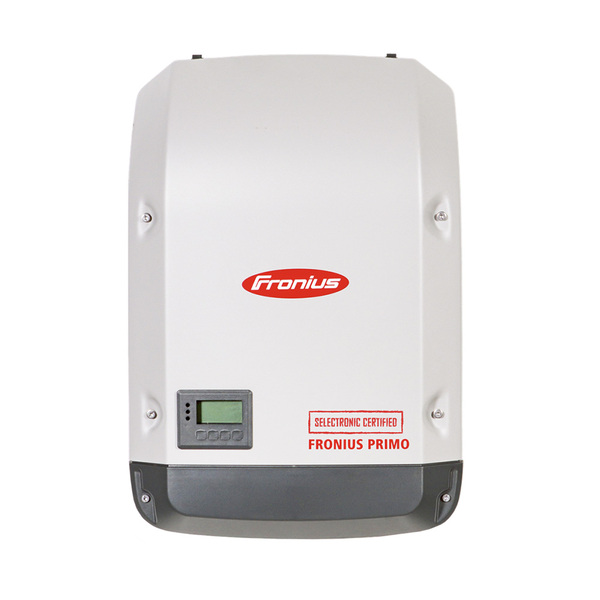
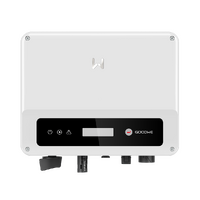
For installers new to solar work, string inverters from major brands such as Fronius, GoodWe, and SUNGROW offer the most forgiving learning curve. Commissioning apps are mature, documentation is thorough, and technical support in Australia is well-established. Stick to standard single-MPPT or dual-MPPT grid-tied models before moving to hybrids with battery integration.
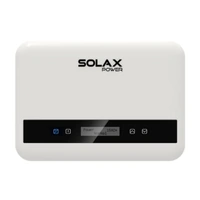
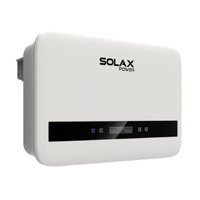
Premium inverters (Fronius, SMA) command higher upfront cost but have strong track records on reliability, firmware stability, and after-sales support. Value-tier brands (GoodWe, SUNGROW, SolaX) have closed much of the gap in the last five years and are widely deployed across Australia with solid warranties. The right choice depends on project budget, customer expectations, and how much matters on day-5 of a fault call.
Grid-connected inverters must shut down during a grid outage (anti-islanding) unless paired with a battery and a backup-capable hybrid inverter. True off-grid inverters, such as those from Victron Energy, are designed to form their own AC grid from battery storage and manage charging from panels and generators. Specifying the wrong type for the application is a common costly mistake.
The Australian market is dominated by a handful of inverter manufacturers with strong local support and CEC-approved product lists. Fronius, GoodWe, SUNGROW, SolaX, and Victron Energy all appear on most installer shortlists. Each has a different strength profile: Fronius for quality and serviceability, GoodWe and SUNGROW for value and range, SolaX for hybrid-ready options, Victron for off-grid.
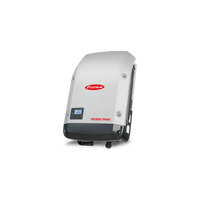
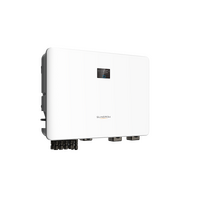
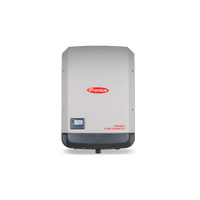
The highest-rated inverters across trade reviews and installer feedback tend to be the mid-range string units from three manufacturers. Fronius (Primo and Symo lines), GoodWe (DNS, XS, and EH hybrid series), and SUNGROW (RS and RT three-phase series) lead this group. These models balance efficiency, reliability, and price at the size points most commonly installed on Australian rooftops.
On paper, efficiency numbers look similar across the market. The differences show up over years of operation: firmware stability, warranty claim experience, availability of replacement parts, and ease of integration with monitoring platforms. Premium units typically show fewer fault events and have faster RMA turnaround. For a small system in a mild climate, the gap matters less than for a large system in a hot coastal region.
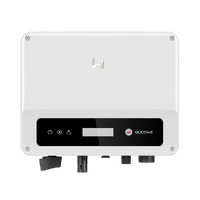
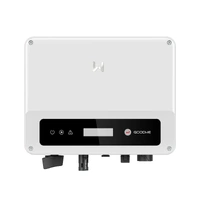
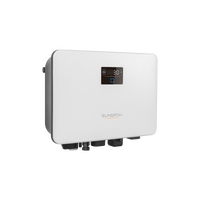
For 3kW installations, proven options include the GoodWe GW3000-XS single-MPPT grid-tied inverter and the SUNGROW SG3.0RS double-MPPT string inverter. Both are widely stocked in Australia, have mature commissioning apps, and come with CEC approval. A single-MPPT unit is fine for a simple one-orientation 3kW array; dual-MPPT gives more flexibility for split-orientation small systems.
Budget inverters under four figures typically cover the 2kW to 3kW range. At that size point, value-tier brands give genuine warranty and CEC approval at the low end of the market. Avoid unknown brands with no Australian service presence. A cheap inverter that cannot be serviced locally is expensive once it fails.
Standard inverter warranties in Australia run 5 to 10 years, with some premium brands offering extensions to 15 or 20 years at additional cost. Warranty terms vary on whether labour is included, whether replacement is like-for-like, and how long the manufacturer commits to stocking parts. Read the fine print, because a 10-year parts-only warranty without labour cover can still leave the owner with a large bill.
Trade-focused wholesalers such as Sparky Direct give licensed electricians direct access to pricing, stock, and technical data without retail markups. Online ordering, Australia-wide delivery, and CEC-listed stock make it straightforward to source a matched inverter, isolators, cables, and mounting hardware from one supplier. Browse the full range of solar supplies alongside the inverter itself.
Retail solar sites often bundle inverters into installed-system packages at prices that include labour, margin, and sales commission. Trade supply strips the price back to the product. For licensed electricians, this means better margins on jobs and faster quoting, without the retail-channel markups built into end-customer pricing.
Only a licensed electrician with a current Clean Energy Council (CEC) accreditation for grid-connected PV can install, commission, and connect a solar inverter to the grid in Australia. Homeowners cannot self-install grid-tied systems. Off-grid systems still require a licensed electrician for any fixed AC wiring work.
Standard practice: mount the inverter in a cool, shaded, well-ventilated location, ideally indoors or on a south-facing external wall. Keep cable runs between array and inverter short to minimise DC voltage drop. Use compliant DC and AC isolators at each required location. Label all circuits clearly per AS/NZS 5033. Commission per the manufacturer's app and record the settings.
AS/NZS 4777.2 sets the performance, safety, and grid-support requirements for inverters connected to the Australian grid. The standard covers voltage and frequency response, anti-islanding, power quality, and Volt-Watt / Volt-Var response modes. Only CEC-listed inverters that meet AS/NZS 4777.2 can be approved for connection by DNSPs. Always verify the unit is on the current CEC list before ordering.
Watch out for: Oversizing the DC array beyond the inverter's maximum DC input (causes clipping and can void warranty). Mounting the inverter in direct sun (causes summer derating and reduces lifespan). Using undersized DC cable or wrong connectors (MC4 mismatches are a common fire risk). Skipping the DNSP pre-approval step (forces costly post-install changes). Missing the commissioning report and final compliance paperwork (blocks connection and payment).
Hybrids combine solar conversion, battery charge/discharge control, and grid management in one box. The advantage is a cleaner install, one manufacturer warranty, and integrated monitoring. The disadvantages are higher upfront cost and lock-in to one ecosystem. If the hybrid or the battery fails outside warranty, replacement can be more complex than a modular setup with a separate battery inverter.
Battery-ready inverters have a DC or AC battery port ready to pair with a storage unit added later. For customers who want solar now but storage in a few years, a hybrid or battery-ready inverter saves a full inverter replacement down the line. Verify compatibility with specific battery brands before recommending, as not every hybrid inverter pairs with every battery.
Hybrid inverters can be programmed to charge the battery during cheap off-peak windows, discharge during peak rate periods, and prioritise self-consumption during solar hours. With an export limit or a flexible tariff, smart scheduling materially changes the payback period on storage. Most hybrid inverters now expose this scheduling through their cloud monitoring portal.
A quality string inverter in a good mounting location should run for 10 to 15 years. Microinverters are often rated for longer due to lower heat loading per unit. Failures tend to cluster around electrolytic capacitor wear, cooling fan wear in fanned units, and firmware issues on older hardware. A well-installed inverter in a shaded location lasts longer than an identical unit baked by afternoon sun.
Grid-tied inverters are largely fit-and-forget. Recommended maintenance: annual visual inspection of ventilation grilles, check of mounting and cable connections, firmware update if available, and review of monitoring data for output drift. Keep a metre of clear air around the inverter. Do not stack boxes or hang tools from the unit.
Common fault categories: grid voltage out of range (usually a network issue, not the inverter), insulation fault (wet connectors, damaged cable), MPPT fault (string mismatch or broken panel), and over-temperature (poor mounting location). Every brand publishes a fault code list. Start with the manufacturer's app, which usually decodes the code and suggests first steps. Escalate to technical support when the cause is not obvious.
Sparky Direct ships solar inverters to metro, regional, and remote areas Australia-wide. Orders placed before cut-off on business days typically dispatch same day. Delivery times vary by location, with metro capitals receiving stock in 1 to 3 business days and remote areas longer. For time-critical jobs, confirm stock status before committing an install date with the customer.
Trade supply reliability matters on every job. Inverter lead times can blow out install schedules when a model is backordered. Sparky Direct maintains stock across the popular size points in the Fronius, GoodWe, SUNGROW, SolaX, and Victron ranges, alongside matching solar accessories and solar cable supplies. Check availability on the product page before quoting.
Watch SUNGROW S100 | Single Phase Smart Energy Meter 100 Amp video
Watch NHP NL432PV | Enclosed DC Isolating Switch 32A 1500V IP66 | 4 Pole video
Watch CATCH Power CATCHSOLARRELAY-2CT | CATCH Solar Relay with 2 CTs video

I recently purchased a GoodWe inverter online and was thoroughly impressed with both the product and service. The inverter is of exceptional quality, living up to its high standards, and was delivered promptly without any issues. Its performance has exceeded my expectations, offering efficient and reliable energy management. I am happy to recommend this inverter to anyone seeking a dependable product for their solar energy needs. The seamless purchase and delivery experience only added to the satisfaction. Great product and excellent service!
Seems to have improved the daily solar output of our system, probably the wider MPPT range and efficiency compared with our old inverter. Hopefully the PID system can improve the panels output as well.
Came with my 10kW solar system and has worked flawlessly for 6 years. Possibly not the exact same model as 6 years ago but certainly the current equivalent.
Quality products in stock • Fast Australia-wide delivery • Competitive trade pricing
Browse Solar Inverters → Get Expert Advice →They typically require minimal maintenance beyond periodic checks and ensuring ventilation is clear.
Sparky Direct supplies solar inverters Australia-wide, offering reliable solar components with convenient delivery.
Solar inverters are securely packaged and delivered via courier or freight services.
Yes. Sparky Direct generally accepts returns of unused solar inverters, provided they’re in new condition and returned in the original packaging, in line with Sparky Direct’s returns policy.
Yes, solar inverter installation and servicing must be carried out by licensed electricians and accredited installers.
Warranty coverage varies by manufacturer and commonly ranges from 5 to 10 years or more.
Yes, solar inverters are typically sold as individual system components.
Yes, different inverter types and sizes suit both residential and commercial installations.
Inverters can be replaced or upgraded, particularly when adding batteries or expanding systems.
They produce some heat during operation and require adequate ventilation.
Yes, when installed correctly, they include built-in safety and protection features.
Most inverters have indicator lights or displays showing system status and performance.
Yes, inverter faults can significantly reduce or stop solar energy production.
A solar inverter converts the direct current (DC) electricity generated by solar panels into alternating current (AC) electricity used in homes and businesses.
Solar inverters are generally quiet, though some may emit a low hum during operation.
Most solar inverters are designed to last 10 to 15 years, depending on usage and environmental conditions.
Yes, inverter efficiency plays a role in overall system performance and energy yield.
Many inverters are rated for outdoor installation, but environmental suitability should be confirmed in specifications.
They are typically installed on walls in garages, utility areas, or external locations depending on design and rating.
Standard grid-connected inverters shut down during outages unless paired with battery backup and suitable configuration.
Some inverters are battery-ready or hybrid models designed to work with solar batteries.
Inverter size depends on the solar panel capacity and system design, which should be determined by a qualified installer.
Yes, a solar inverter is an essential component of any grid-connected solar power system.
Solar inverters are designed to meet relevant AS/NZS electrical and grid-connection standards when approved for use in Australia.
Common types include string inverters, hybrid inverters, and microinverters.