
Search Results:
Search Results:
Search Results:
Search Results:
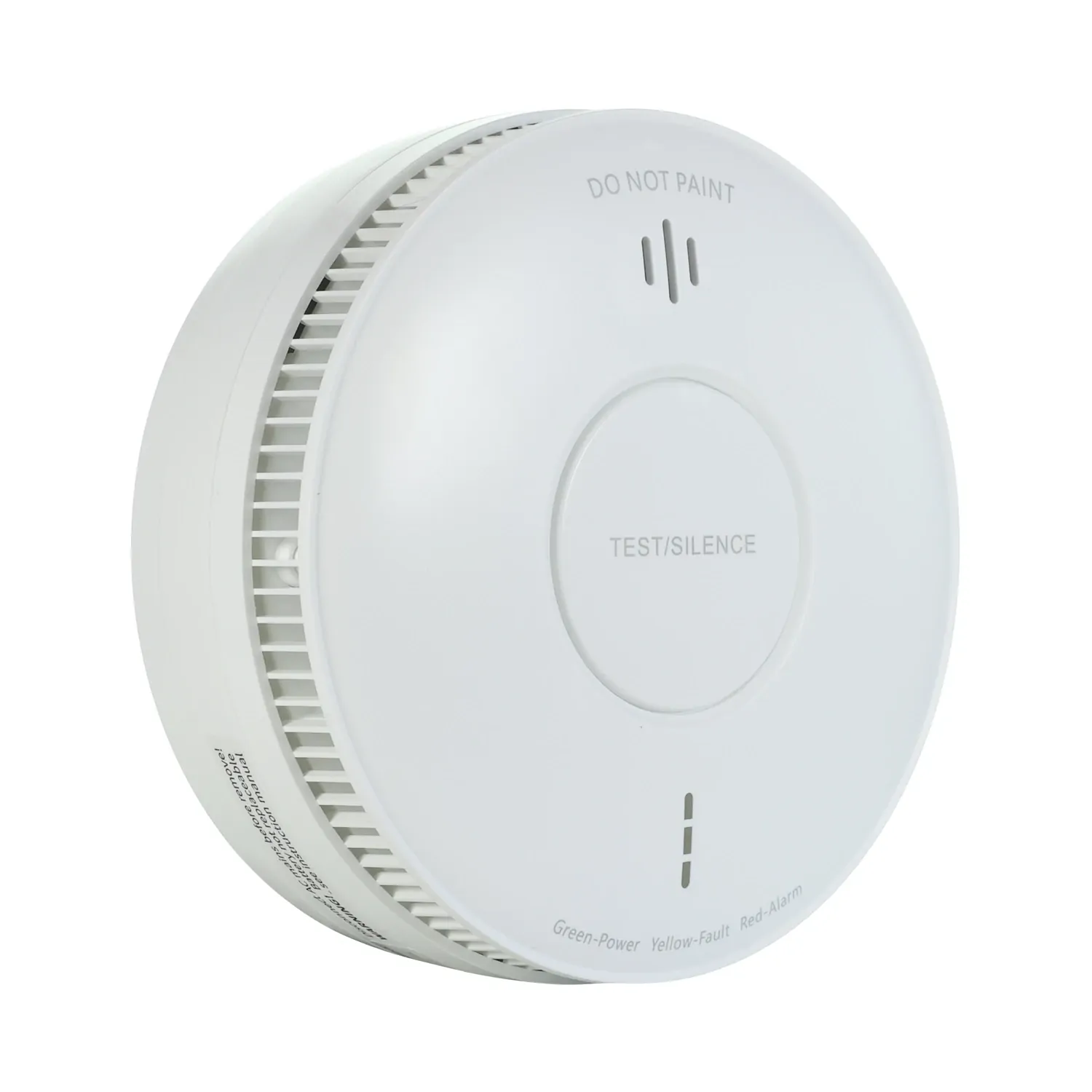
GT smoke alarms suit licensed electricians, builders, property managers, landlords and informed household buyers who need reliable early warning. They detect smoke early and support faster, safer evacuation, but a smoke alarm is only one layer of protection rather than a complete fire safety system.
The core job of any smoke alarm is to sense smoke early, sound a loud audible warning, and give occupants more time to react. Good placement and reliable detection improve coverage across the whole property and help reduce the risk of injury or damage during a fire.
GT smoke alarms are used in houses, apartments, townhouses, rental properties, renovations, new builds and selected light commercial spaces. Typical project needs include end-of-life replacements, compliance upgrades, extra coverage and interconnected alarm systems. They sit within the wider electrical accessories range that trades order for everyday jobs.
Licensed electricians buy compliant products for new jobs and staged upgrades. Property owners, landlords and renovators buy them when they need clear product guidance before purchase or installation. Both groups benefit from matching the alarm to the property and confirming the model details before they order.
Smoke alarms differ by sensor type, power source and how they connect to other alarms. Understanding the main types helps buyers compare GT products before they choose. The notes below explain the technology without giving unsafe installation instructions.
Photoelectric alarms detect visible smoke particles, which makes them well suited to smouldering fires. They are widely used in modern residential settings where compliance and reduced nuisance alarms matter. You can compare photoelectric smoke alarms across the range when you plan a replacement or upgrade.
Ionisation alarms react quickly to fast-flaming fires and respond differently from photoelectric units, so the two technologies suit different conditions. Detection requirements vary by state and territory, and many residential buyers now compare photoelectric options first, so check current local rules and product suitability before purchase.
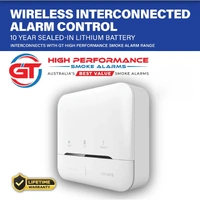
Interconnected alarms trigger together, so one alarm sounding sets off the others across the property, and interconnection can be wireless or hardwired. Some ranges add a controller or compatible base, and Matelec smoke alarms are one example of a wireless interconnect range stocked at Sparky Direct.
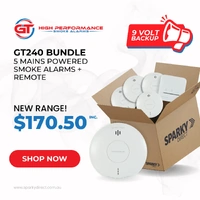
Mains-powered 240V alarms are common in new builds, renovations and replacement projects, and most include a battery backup for power outages. The 240V Clipsal smoke alarms range shows the type of hardwired unit trades fit during wiring work. Any 240V installation must be completed by a licensed electrician where the law requires it.
Buyers often ask which alarm type is better, and the honest answer depends on context. It helps to compare how each technology responds rather than naming one as best for every situation.
Photoelectric units respond faster to visible smoke from smouldering fires, while ionisation units respond faster to the small particles from fast-flaming fires. Fire behaviour, room use and the risk of nuisance alarms all affect which type fits a given location. There is no single answer for every room.
Many Australian buyers compare photoelectric options for modern residential use, partly because they tend to reduce cooking-related nuisance alarms near kitchens. The right choice still depends on current local requirements and the intended location. Check the rules for your state or territory and select an alarm suited to the room.
Trade advice is worth seeking for hardwired replacements, interconnected systems, rental properties, new builds and uncertain existing installations. A licensed electrician can confirm the alarm type, the power source and the interconnection method before you commit to an order.
Choosing the right alarm is easier when you treat it as a short buying framework. The steps below help both trade buyers and households understand what to ask for before they order.
Houses, apartments, rentals, renovations, extensions, new homes and commercial-style spaces all have different needs. Layout, sleeping areas, ceiling height, airflow, room use and property age influence alarm selection. Plan placement around how the property is actually used and where people sleep.
Compare 240V mains power, battery backup, wireless connectivity, hardwired interconnection and controller compatibility before you buy. A simple replacement of one old alarm is different from planning a full interconnected system. Decide early whether you are swapping like for like or designing a connected setup.
When you replace or stage an upgrade, match the brand, model, base, interconnection method and any accessories, because mixing incompatible units can cause pairing problems. Electricians should verify compatibility before ordering for replacement or staged upgrade work to avoid return trips and wasted stock.
Electricians, builders and property managers ordering multiple alarms benefit from consistent models, a few spare units and matching controllers. Practical considerations include labelling, accessories and fast fulfilment for scheduled jobs, and consistent product selection keeps a multi-room install simple while reducing repeat orders.
Interconnected alarms cost more than single standalone units, so buyers weigh value against coverage, and the notes below frame that decision around property size and risk.
When alarms are interconnected, one detector sounding triggers all the others, which improves warning consistency across bedrooms, hallways and living areas. The benefit is clear in larger homes, multi-storey properties, rentals and new builds, where a single local alarm may not be heard everywhere.
Frame the decision around property size, the number of sleeping areas, compliance requirements, risk tolerance and installation cost. For many homes the extra cost buys more reliable whole-property warning. Plan a consistent alarm system rather than mixing incompatible units, which keeps setup and future maintenance simpler.
Wireless interconnection avoids running interconnect cabling, which suits retrofits and tricky areas. Hardwired interconnection often suits new builds and renovations where the wiring is already open. Electrical installation requirements still apply wherever mains wiring is involved, so confirm the method before you buy.
Smoke alarm requirements vary by state, territory, property type and installation context, so the guidance below is compliance-aware and practical. It is not legal advice, and it avoids unsafe installation steps.
Choose compliant alarms that suit Australian safety requirements and the intended property type. Smoke alarms are covered by Australian Standard AS 3786, and mains wiring is covered by the wiring rules in AS/NZS 3000. Confirm the requirements that apply to your project rather than assuming one rule fits every property.
Rental work often involves renovation, replacement planning, compliant product selection and documented maintenance. Many landlords choose interconnected photoelectric units, and ranges such as Red Smoke Alarms are popular for rental upgrades. Landlords and property managers should confirm the rules for their state or territory before they order.
A licensed electrician is required for 240V hardwired smoke alarm installation and for other electrical work where the law requires it. Professional installation helps with correct placement, interconnection, testing and compliance outcomes, while battery-only alarms are often homeowner-fitted because they involve no mains wiring.
Wireless alarms can suit some applications, especially retrofits where running cable is difficult. They are a product feature to evaluate rather than an automatic compliance shortcut. Buyers must still confirm code, property and installation requirements before relying on a wireless interconnected setup.
A complete smoke alarm order often includes more than the alarms themselves. Controllers, bases and accessories help a system work well and reduce the number of missed items on a job.
Some ranges offer a controller that supports easier testing, silencing or system control from one convenient point. Is handy for high ceilings and for occupants who cannot reach a ceiling alarm. Check that any controller is compatible with the alarm range before purchase.
Bases, mounting accessories and replacement parts matter for efficient replacement work, because a matching base can let an electrician swap an alarm quickly without rewiring. Related products such as heat alarms are sometimes added for kitchens and garages where smoke alarms are less suitable. Always verify model compatibility and the existing installation type.
Consider the alarms, controllers, bases, accessories, labels and a few spare units together as one order. Planning the whole order reduces missed items and repeat orders, which keeps contractor purchasing efficient. A short checklist before checkout saves real time on scheduled jobs.
Ongoing maintenance keeps alarms working as intended. It helps to know the difference between replaceable batteries, backup batteries, sealed lithium units and the alarm reaching its end-of-life.
Battery replacement frequency depends on the alarm type, the battery type and the manufacturer instructions. Many alarms use a 9V backup battery, while sealed units use a built-in lithium battery for around ten years. Replace removable batteries when a low-battery warning sounds and keep spare 9V batteries on hand for backup units.
Smoke alarms have a finite service life and reach end-of-life after a set period, often around ten years. Replace any alarm that is damaged, faulty or expired. Check the date marked on the alarm, the model instructions and the compliance requirements for your property.
Test alarms regularly using the test button to confirm they operate, and keep units free from dust, since debris can interfere with the sensor. Avoid detailed electrical procedures or tampering, and use suitable test equipment only for tasks that are within your competence.
Buying online is straightforward when you confirm a few details first. Sparky Direct is a practical place to source GT smoke alarms, compatible accessories and project quantities for a job.
Renovation buyers often replace alarms during upgrade or property preparation work, so compare detection type, power source, interconnection and compliance needs before ordering. Matching the new alarm to the existing base can turn a replacement into a quick swap rather than a rewiring job.
For hardwired and interconnected alarms, confirm the key details before purchase, including voltage, backup type, interconnect method, quantity and accessory compatibility. Confirming these points up front supports fast delivery and avoids ordering units that do not pair with the existing system.
Trade and rental projects benefit from consistent product selection, planned quantities and job-ready ordering. Builders and property managers can order matching alarms, bases and controllers in one go. The smoke alarm range also sits near related circuit protection categories, including arc fault detection and safety switches, for whole-of-job ordering.
The short answers below cover questions that often remain after the main decision sections. You should keep checking the specific model details, since features and ratings vary between products.
Yes, and you can review the available GT smoke alarms and accessories listed on this page to confirm the current models, options and quantities. If you cannot see the exact product you need, the team can help you check stock and suitable alternatives.
Compliance depends on the specific model, its certification and your intended application, so check each product against the listed specifications, Australian suitability and your project requirements. Use a licensed electrician for any installation work the law requires, and verify the rules for your state or territory.
Compliant brand selection depends on certification, specifications and the application rather than the brand name alone. GT smoke alarms sit alongside other established brands stocked at Sparky Direct, including Clipsal, Legrand, Matelec and PSA Products. You can also compare Legrand smoke alarms within the range before you buy.
Confirm the property type, alarm type, power source, interconnection, quantity, compatibility and compliance requirements, and confirm whether a licensed installer is needed for the work. A short check of these points before checkout helps you order the right units the first time.
Watch Matelec FSA-30000 | Wireless Photoelectric Smoke Alarm With 10 Year Lithium Battery | 3V video
Watch PSA LIF6800 | 240V Photoelectric Smoke Alarm with 9V DC Battery Backup | 10YR Warranty video
Watch Red Smoke Alarms R240RC | Photoelectric Smoke Alarm 240v | 10 Year Lithium Battery | Interconnectable video

Have put these in 3 different house/units now. They have had no false detections. I know someone who put a well-known brand in their house and have had several false detections in the middle of the night. Well priced. Quick delivery. Very satisfied with brand and purchase.
I chose Brooks smoke alarms because they have few if any problems with false/nuisance alarms. I’ve been a sparky for many years ( now retired ) and recommend paying a little extra for these. Don’t be the household with alarms disconnected because of nuisance alarms.
I've recent re-purchased the RIF6800RL which replace my 10 year old version of RIF5800RL, these are great the do not nuisance alarm. They work perfectly in sync together, hence why coming back the to PSA brand and quality.
Trusted brands • Expert advice • Fast Australia-wide delivery • Trade pricing
Browse GT Smoke Alarms → Get Expert Advice →