
Search Results:
Search Results:
Search Results:
Search Results:
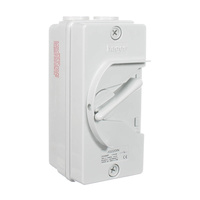
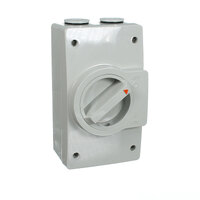
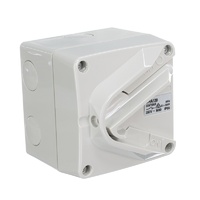
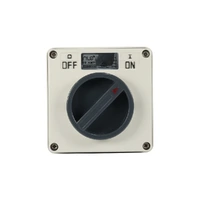
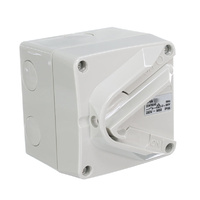
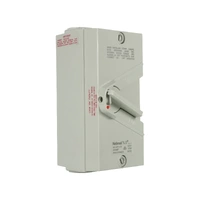
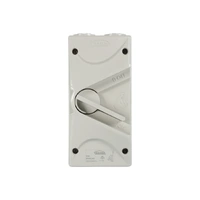
Find the best Weatherproof Isolator Switches here at Sparky Direct. [ Read More ]
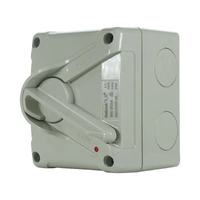
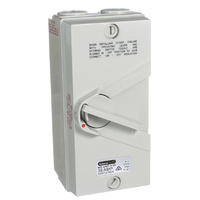
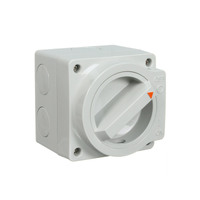
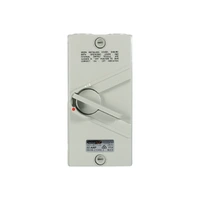
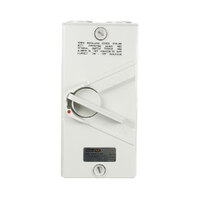
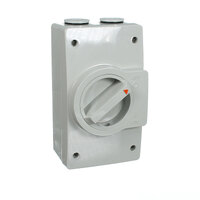
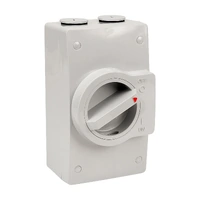
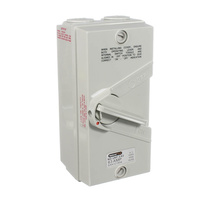
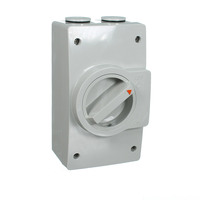
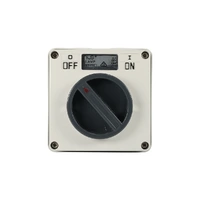
A weatherproof isolator switch is a heavy-duty switch-disconnector that creates a physical break in the circuit. The enclosure is built to resist dust, water, UV and impact in outdoor and semi-exposed environments. Common current ratings include 20A, 32A, 35A and 63A, with higher ratings available for commercial and industrial plant. Isolators support safe servicing and maintenance, but they do not replace circuit breakers, RCDs or correct switchboard protection. The licensed electrician selects the rating, pole configuration and IP rating against the equipment data plate and the site conditions.
The handle on a weatherproof isolator operates internal contacts to open or close the circuit. The practical benefit is a visible local OFF position close to the equipment being serviced. A technician can see that the local disconnection is in place before working on the appliance, which removes the risk of someone accidentally restoring power at the switchboard during the job. This page covers function and selection only; wiring and testing are electrician-led tasks under AS/NZS 3000.
A standard indoor wall switch is not built for outdoor use. Weatherproof isolators add higher load ratings, sealed enclosures, IP-rated protection, UV resistance, lockable handle options and suitability for fixed-appliance disconnection. A 10A indoor light switch cannot be substituted for an outdoor isolator on a 32A air conditioner circuit. The load rating, enclosure strength, IP rating and fixed-appliance suitability are all different design points, and the wrong product on the wall is both a compliance and a safety problem.
Split-system air conditioners, heat pumps, hot water systems and outdoor motors all benefit from local service isolation. The isolator sits near the outdoor unit so a technician can disconnect the supply before opening the appliance. The appliance data plate and the electrician's circuit assessment determine the correct isolator rating, pole configuration and IP rating for each install.
Pool pumps, spa equipment, irrigation pumps, pond equipment and garden installations need durable isolation hardware that handles moisture, chlorine, UV and corrosion. Pool and spa electrical work must be designed and installed by a licensed electrician under the specific pool and spa zone rules. Treat pool and spa zones as electrician-specified positions rather than as DIY product picks, since the zone rules drive both the product choice and its mounting location.
Sheds, detached garages, farm pumps, compressors, workshops, carports and light commercial outdoor plant all need robust enclosures with the right IP rating and current rating. Agricultural and washdown sites in particular benefit from IP66 enclosures that can take direct hose-down. Three-phase isolators are commonly specified for larger pumps, motors and farm equipment, with single-phase options covering the lighter end.
Many standard outdoor lights run through a weatherproof switch rather than an isolator. Isolators come into play for fixed equipment and grouped circuits where local disconnection is required. For lighting-only positions, the broader Weatherproof Switches category usually covers the requirement. The electrician confirms whether a position needs a switch, an isolator or both.
The IP rating uses two digits. The first digit covers protection against solids such as dust and small objects. The second digit covers protection against water ingress. Outdoor isolators should be selected against the actual exposure level at the position, not against the lowest rating available on the shelf. Under-specifying a coastal or washdown isolator usually leads to early failure, water in the enclosure or corrosion on the contacts.
| Rating | Solids Protection | Water Protection | Typical Use |
|---|---|---|---|
| IP55 | Dust protected | Low-pressure water jets | Sheltered outdoor installs, eaves, carports, some shed positions |
| IP66 | Dust tight | Powerful water jets | Exposed external walls, coastal, high-rainfall zones, washdown areas |
IP55 suits sheltered positions. IP66 is the stronger choice for exposed external walls, coastal sites, high-rainfall zones, commercial washdown areas and farm wash-out spaces. The right rating depends on the actual site conditions and the local exposure, not on a universal rule.
UV-stabilised polycarbonate and thermoplastic enclosures, sealed glands, sealed conduit entries and corrosion-resistant screws all extend service life in Australian conditions. Queensland, Northern Territory, Western Australia and coastal regions across the country push outdoor electrical accessories hard with UV, heat, salt air and storm exposure. Spec the enclosure material and the IP rating together so the housing is not the weak link in the install.
20A isolators suit smaller fixed appliances, pumps, selected outdoor equipment and lighter-duty isolation needs. Single-pole and double-pole 20A options cover much of the residential outdoor work. Final suitability depends on the appliance current draw, the inrush characteristics of motor loads and the circuit design. The electrician confirms the rating against the appliance data plate, since the steady-state current is not the only number that matters.
32A isolators are commonly selected for higher-load outdoor equipment, including some air conditioning circuits and larger appliance loads. 32A selection should be matched to the equipment nameplate data and to the upstream circuit protection. Three-phase 32A isolators handle larger motors, pumps and commercial plant where single-phase capacity would be too low.
A single-pole isolator switches only the active conductor. A double-pole isolator switches both the active and the neutral conductor, providing a more complete local disconnection. Double-pole isolation is commonly preferred for fixed appliances because it disconnects both poles for safer servicing. The licensed electrician confirms the correct configuration based on the circuit design, the appliance type and the applicable wiring rules.
Single-phase isolators handle typical residential loads, including most domestic outdoor fixed appliances. Three-phase isolators handle larger pumps, motors, large air conditioning systems, farm equipment and commercial plant. A single-phase isolator must not be used on a three-phase circuit. Phase type is one of the first selection checks, since getting it wrong means the product is unsafe rather than just suboptimal.
Lockable isolators feature handles or OFF positions that accept a padlock. Lockability supports maintenance safety, lockout-tagout procedures, commercial sites, rental properties, strata buildings and multi-occupancy environments. Where supply restoration risk exists during servicing, lockable hardware lets the maintenance team physically secure the OFF position while they work on the equipment. The IP66 Key Lockable Isolator Switches range covers higher-spec lockable options for plant and industrial installs.
Start with the appliance data plate. Current rating, voltage, continuous load and motor start-up loads all feed into the isolator choice. The licensed electrician selects a compliant product with a rating equal to or above the circuit requirement. Under-rating an isolator against the actual load creates a real safety risk, so the rating check is non-negotiable on commercial and industrial work.
Sheltered mounting under an eave with limited spray suits an IP55 enclosure. Fully exposed coastal, washdown, hose-down, farm and high-rainfall positions usually need IP66. Sheds, workshops, pool areas and pump rooms each push the environment differently, so the rating call is per-position rather than per-property. Tie the IP rating, enclosure material and gland selection together so the install is consistent end to end.
Domestic owner-occupied homes can run standard non-lockable isolators on most outdoor fixed appliances. Commercial buildings, strata sites, farms, rental properties and maintenance-team-managed plant benefit from lockable hardware. Lockability becomes more important when the supply can be restored remotely or when multiple people may approach the equipment during servicing. Visual isolation by itself does not stop someone else switching the power back on.
Trade buyers also benefit from cross-checking pack quantities and lead times before ordering, particularly on multi-site or multi-dwelling projects where one missing isolator can delay a fit-off.
Weatherproof isolators sold for use in Australia should carry the RCM mark and reference applicable standards such as AS/NZS 3000, AS/NZS 3133, AS/NZS 60669 or AS/NZS 60947, depending on the product type. Compliant products clearly state voltage, current, pole configuration and IP rating on the housing or data plate. Unverified imports, marketplace products without certification and vague "waterproof" claims with no IP evidence should be treated with caution by trade and retail buyers alike.
Installing, replacing or wiring an isolator is electrical work in Australia. It must be performed by a licensed electrician. The electrician confirms load suitability, cable entry sealing, mounting location, IP integrity and final testing. Buyers and specifiers can select and order the product. The electrical work itself is not a DIY task and carries legal as well as safety consequences if attempted by an unlicensed person.
Safety note: Weatherproof isolator switches are not DIY products. All wiring, isolator installation and replacement must be performed by a licensed electrician. Sparky Direct supplies the products. The licensed electrician performs the install.
Isolators are part of safe maintenance planning, not a replacement for correct test-and-isolate procedures. The technician should still verify the disconnection with the appropriate tools before starting work. Lockable isolators add a physical barrier against supply restoration during servicing, which is especially useful on commercial, farm and strata sites where supply can be restored by a third party at the switchboard. Pair the isolator with switchboard-side protection through the Main Switches and Isolators range.
A circuit breaker provides overcurrent and short-circuit protection at the switchboard. A weatherproof isolator provides local manual disconnection at the equipment. The two devices usually work together rather than replacing each other. The breaker handles fault conditions automatically. The isolator gives the technician a deliberate, visible OFF position close to the equipment being serviced.
An RCD | Residual Current Device protects people from earth leakage by tripping the circuit when leakage current is detected. An isolator does not detect leakage and does not trip automatically. RCDs are a personal protection device. Isolators are a service-isolation device. The two solve different problems and both have their place on an outdoor circuit.
Weatherproof light switches control lighting circuits, including outdoor lights, alfresco fans and garden lighting. Weatherproof isolators are selected for local disconnection of equipment and higher-load fixed appliances. Buying a 10A weatherproof light switch for a 32A air conditioner circuit is the wrong product. Buying an isolator for a single garden light is overkill in most cases. The electrician confirms the correct device type for the position.
Confirm amperage, pole configuration, phase type, IP rating, product dimensions, cable entry positions, compliance marks and stock availability before placing an order. Cross-check the product datasheet against the electrician's requirements for the site. Larger orders should also confirm pack quantity and projected delivery window, since outdoor isolators are frequently a critical-path item at fit-off.
Bulk buying suits multi-site work, replacement stock, project ordering and consistency across brands and ratings. Ordering common sizes such as 20A and 32A in trade quantities reduces delays across service work and keeps the maintenance van stock predictable. Housing developments, strata maintenance, farm fit-offs, hospitality venues, warehouses and facility upgrades all benefit from a repeatable SKU list. The Sparky Direct team can be reached via the contact-us page for trade pricing and stock checks.
The cheapest weatherproof isolator is rarely the right pick for weather-exposed safety equipment. Enclosure quality, IP rating, UV stability, lockability, certification and brand support all factor into long-term value. A budget unit replaced twice in five years costs more than a quality unit installed once and left to do its job. Value sits in durability and compliance, not in headline price alone.
Related categories that often appear on the same outdoor job include Clipsal Iconic Outdoor for matching switching and outlets. Weatherproof GPO outlets cover outdoor power positions. Solar Isolator Switch options handle PV system disconnection. Cable Gland sets seal cable entries on the enclosure during install.
Watch NHP NLINE NL120S | Weatherproof Isolator 2 Pole 20 amp M100 250v | Small video
Watch Clipsal WHB320-RG | Weatherproof Switch 3 Pole 20 amp IP66 video
Watch CSG S332-K2 | 32 Amp Isolating Switch Key Operated | 3 Pole 250V AC IP66 video

I purchased two 20A WHB320RG Isolators in Jan 2017. I have purchased another 2 of the same item New year's Eve 2017. These are all used on my own home, so I prefer to use a well known reliable brand name.
Outstanding isolators at a great price, thanks sparky direct Nicely engineered, sensibly sized and located terminals, clearly marked For efficient fitting-off
Great product, well-priced and well built and I've installed a lot of these now on solar systems and never had any problems.
Quality products in stock • Fast Australia-wide delivery • Competitive trade pricing
Browse Weatherproof Isolator Switches → Get Expert Advice →Modern designs are compact and unobtrusive compared to older isolator styles.
Ovens usually require a 20 or 45-amp Isolation switch. Depending on the load, air conditioners typically require a 35 amp Isolator Switch for a standard domestic split system up to a 63 amp for a commercial installation. Hot water systems usually require a 20 amp Isolation switch for a domestic system. If you need further information, contact an electrical contractor or call us.
As mentioned above, Isolation switches are manually operated to disconnect circuits, primarily for maintenance. In contrast, an electrical switch is normally not lockable and is used for turning lights on and off.
You can find Weatherproof Isolator products at Sparky Direct, offering suitable solutions for Australian outdoor installations.
Yes, Australian regulations require a licensed electrician to install or replace isolator switches.
Check the IP rating, voltage and current rating, application suitability, and installation requirements.
Yes, they are available through authorised electrical suppliers and online electrical retailers.
Yes, they are typically supplied with a manufacturer’s warranty covering defects under normal use.
Yes, quality isolators are designed for long-term outdoor performance when installed correctly.
Yes, they are commonly used in residential properties for outdoor appliances.
Yes, they are suitable for mounting on external surfaces when installed correctly.
Yes, they are built to withstand harsh outdoor environments and frequent use.
Minimal maintenance is required, usually limited to ensuring the enclosure remains intact and clean.
Yes, when correctly rated and installed, they are designed to operate safely in wet conditions.
A weatherproof isolator is an electrical switch designed to safely disconnect power while being protected against rain, dust, and outdoor environmental conditions.
Yes, they are designed with clear on and off positions for simple operation.
They are commonly installed near outdoor air conditioning units, heat pumps, and other fixed equipment.
They allow power to be safely turned off during servicing or emergencies while withstanding outdoor conditions.
Yes, installation must be carried out by a licensed electrician to ensure safety and compliance.
In many applications, isolators are required to allow safe servicing and maintenance, as specified by Australian electrical regulations.
Yes, they may be used indoors in areas exposed to moisture, such as plant rooms or garages.
Yes, they are specifically designed for outdoor and exposed installations.
IP55 and IP66 ratings are commonly used for outdoor isolators exposed to weather conditions.
The IP rating indicates the level of protection against dust and water ingress, helping determine suitability for outdoor installation.
They are typically rated for standard Australian mains voltage of 230–240 volts AC, with some models suitable for higher loads.
Yes, quality weatherproof isolators are designed to meet relevant AS/NZS electrical safety and performance standards when installed correctly.
They are commonly used to isolate power to outdoor equipment such as air conditioners, heat pumps, hot water systems, and other fixed electrical appliances.