
Search Results:
Search Results:
Search Results:
Search Results:
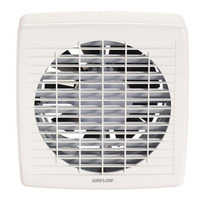
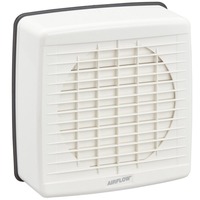
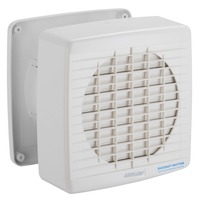
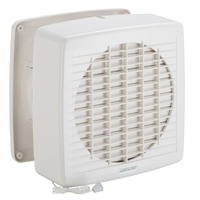
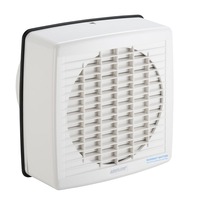
Find the best airflow wall mount exhaust fans here at Sparky Direct. [ Read More ]

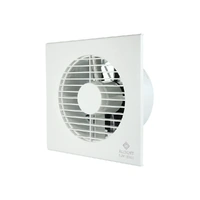
An Airflow wall mount exhaust fan removes moisture, odours, stale air, and contaminants by drawing them through an external wall and discharging them outside. The Clipsal Airflow range is the most widely specified residential and light-commercial ventilation option through Sparky Direct, with broader wall-mount alternatives covered in the Fantech wall and window mount range.
A wall mount exhaust fan is a mechanical ventilation device installed through an external wall. An electric motor drives an impeller, which creates negative pressure inside the room. Stale air is pulled out through the fan body and discharged outside via an external grille or louvre. Airflow is usually measured in cubic metres per hour (m³/h) or litres per second (L/s).
Wall mounting suits rooms with no roof cavity access, downstairs bathrooms, apartments, multi-storey homes, and concrete slab construction. A short horizontal discharge path through the wall reduces duct losses compared with long ceiling duct runs. Ceiling-mount or inline options remain better where no external wall is available, and you can compare those alternatives in the Mercator ceiling mount range.
Typical use cases include bathroom and ensuite steam clearance, laundry humidity control, toilet and powder room odour extraction, garage and workshop air movement, and small commercial amenities. The bathroom exhaust fans category includes wall-mount, ceiling-mount, and combination options for renovators planning a full bathroom upgrade.
The practical benefits of a wall mount exhaust fan come from how it moves air rather than from any single product feature. Effective extraction protects building fabric, controls humidity, and makes wet rooms more comfortable.
Warm, humid air from a shower or dryer condenses on walls, ceilings, mirrors, cabinetry, and framing once it cools. Repeated condensation can lead to mould growth, paint failure, and timber damage over time. Correct fan sizing combined with external discharge is essential for preventing recurring moisture issues. A wall mount unit running for the full duration of a shower, plus a short run-on period, removes most of the moisture before it can condense.
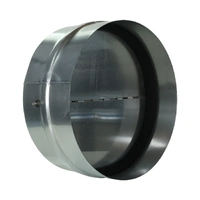
A wall exhaust fan can move air directly outside through the wall. This often maintains stronger delivered airflow than a long ducted route through the ceiling cavity. Backdraft shutters stop reverse airflow when the fan is off, while external weather grilles keep out pests and rain. Actual performance still depends on wall thickness, grille design, and installation quality, so always allow some headroom above the calculated minimum airflow.
Wall fans clear odours in toilets, humidity in laundries, and stale air in compact enclosed spaces. Faster extraction makes bathrooms feel more comfortable after use and reduces the time mirrors stay fogged. This matters for rentals, renovations, and compact homes where small bathrooms see heavy daily use.
Rooms with an external wall, no roof cavity access, or where short discharge paths are preferred. Common cases are downstairs bathrooms, ground-floor laundries, garages with external walls, and apartments with limited ceiling void space.
Neither format is universally better. The right choice depends on room layout, duct access, wall access, noise tolerance, installation complexity, and how the finished fan should look. The table below gives a quick side-by-side, with detail underneath.
| Factor | Wall mount | Ceiling mount |
|---|---|---|
| External discharge | Direct through the wall | Via roof cavity and ducting |
| Roof cavity needed | No | Yes |
| Typical duct length | Short (wall thickness) | Longer (cavity to eaves) |
| Best for downstairs rooms | Yes | Often unsuitable |
| Combination units (light, heater) | Less common | Widely available |
| Visual presence | Grille on external wall | Flush ceiling fitting |
Wall mounting gives direct outdoor discharge wherever an external wall is available. Roof cavity access is not required, which suits apartments, downstairs bathrooms, and slab-on-ground construction. Shorter duct runs reduce airflow loss and noise. Retrofit installations are usually straightforward where an existing wall cut-out is reused.
Ceiling mount fans are the default in bathrooms with easy roof cavity access. They integrate cleanly into the ceiling line and often support combined fan-light or fan-light-heater units. Where no suitable external wall is available, a ceiling fan ducted to the eaves is the practical answer.
Use a simple framework. Choose wall mount when the room has an external wall and limited ceiling access. Choose ceiling mount when roof cavity ducting is straightforward. Consider inline fans for longer duct runs or noise-sensitive spaces where the motor must sit away from the room. A licensed electrician or ventilation installer can assess the practical installation path and confirm what fits the building.
Wall mount exhaust fans split by application: residential standard, higher-airflow units for larger wet areas, heavy-duty workshop units, and feature-led models with humidity sensors, timers, or speed control. Many trade buyers also pair fans with timers and run-on switches from the electrical timers range.
Standard residential units cover the 100 mm, 125 mm, and 150 mm size range. These suit bathrooms, toilets, ensuites, and small laundries. Housings are usually ABS plastic with a matching internal grille and external cover. A 150 mm model is the most common bathroom replacement size in Australian homes.
Higher extraction capacity is needed in large bathrooms, laundries with a dryer, small workshops, and high-humidity spaces. A 200 mm or 250 mm fan moves significantly more air than a 150 mm unit, but only when matched with correctly sized ducting and a suitable external grille. Undersized openings choke airflow and increase noise.
Heavy-duty units have robust housings, continuous-duty motors, higher airflow ratings, and larger wall penetrations. Typical applications include workshops, utility rooms, commercial amenities, and light industrial ventilation. Industrial or hazardous-area fans require specialist specification and are not interchangeable with residential models.
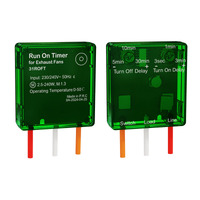
Humidity-sensing fans switch on automatically when bathroom or laundry humidity rises and switch off once moisture levels return to baseline. Run-on timers extract for a set period after the light is turned off, which captures lingering steam after a shower or wash cycle. Multi-speed or variable-speed control balances noise and performance, letting one unit run quietly overnight and harder during peak use. Compare control hardware in the fan speed controllers and digital timers ranges.
A wall mount fan rarely sits alone on a job. Wall plates, ducting, external louvres, backdraft shutters, isolation switches, and timers are usually ordered with the fan to avoid return trips to the supplier. The exhaust fan accessories range covers the common matched parts.
Sizing is the single most important decision when buying a wall mount exhaust fan. Undersized fans are the most common cause of poor ventilation. The room volume method gives a defensible starting point before allowances for duct losses.
Multiply room length by width by ceiling height. The result is room volume in cubic metres. Multiply that volume by the recommended air changes per hour (ACH) for the room type. The output is target airflow in m³/h.
Worked example: A bathroom measuring 2 m x 2.5 m x 2.4 m has a volume of 12 m³. At 15 air changes per hour, the target airflow is 12 x 15 = 180 m³/h. Choose a fan rated above 180 m³/h to allow for duct and grille losses.
| Room type | Air changes per hour | Indicative airflow |
|---|---|---|
| Toilet or powder room | 6 to 8 | 50 to 100 m³/h |
| Small ensuite | 10 to 15 | 100 to 150 m³/h |
| Standard bathroom | 15 to 20 | 150 to 250 m³/h |
| Laundry with dryer | 15 to 25 | 200 to 350 m³/h |
| Workshop or garage | Application specific | Refer to fan datasheet |
Published fan capacity is often a free-air rating measured without ducting. Shutters, insect mesh, external louvres, bends, and undersized ducting all reduce delivered airflow. Select above the calculated minimum, or check manufacturer airflow curves for commercial work. As a rule of thumb, add 25 to 50 percent above the calculated target for typical residential wall installations.
Wall mount exhaust fans look similar from the outside. The differences that matter are airflow, noise, motor type, energy efficiency, and accessory inclusion. Compare these criteria before ordering, especially for replacement jobs where the existing wall opening sets a hard constraint.
Check m³/h or L/s first. Match the fan's rated duct diameter to the existing ducting or external grille size. Common wall fan aperture sizes are 100 mm, 125 mm, 150 mm, 200 mm, and 250 mm. Always measure the existing opening during a replacement job before ordering.
Noise is measured in decibels (dB) or sones. Quiet wall mount exhaust fans suit bedrooms, ensuites, and living-adjacent areas where a noisy unit becomes a daily annoyance. Axial fans are common in residential models and move air efficiently at low pressure. Centrifugal fans handle higher static pressure, which suits longer duct runs. EC and DC motors typically run quieter and more efficiently than older AC motors at the same airflow.
Lower wattage for the same airflow reduces running costs over the life of the fan. DC and EC motor models are usually the most efficient choice for fans that run frequently. Timers and humidity sensors also save energy by avoiding unnecessary run time, which matters most in rentals and commercial amenities where fans are sometimes left on accidentally.
Backdraft shutters prevent reverse airflow, draughts, pests, and weather ingress when the fan is off. External grille quality matters in coastal locations: look for UV resistance and corrosion resistance on outdoor-facing components. Stainless or marine-grade fixings extend service life near salt air.
Compare product specifications, brand support, warranty, and availability rather than unit price alone. A cheaper fan that is undersized or hard to source for replacement costs more across its life. Sparky Direct lists Airflow, Fantech, Martec, and Mercator wall and ceiling units side by side, which lets you compare specifications, ducting accessories, and timers from one category page. Bulk ordering is straightforward for electricians, builders, and property maintenance teams managing repeat fit-outs.
Wall mount exhaust fans involve fixed electrical wiring, wet area zoning, and external building penetrations. The information below covers what to plan and confirm, not how to wire the fan. Permanent mains wiring must be carried out by a licensed electrician in Australia.
Yes for hardwired installations. Any wall exhaust fan installation, replacement involving fixed wiring, or connection to a switch or timer must be completed by a licensed electrician under AS/NZS 3000:2018. This protects safety, insurance validity, and warranty cover. Sparky Direct does not provide DIY wiring instructions for hardwired fans.
Before ordering a replacement fan, measure the items listed below. Most replacement issues come down to a mismatch between the new fan body and the existing wall cut-out, plus interference from external eaves, tiles, or window architraves.
Bathrooms and laundries are zoned wet areas under AS/NZS 3000:2018. IP rating suitability depends on the exact location relative to showers, baths, basins, and water sources. The required IP rating changes between Zone 0, Zone 1, and Zone 2 in a bathroom. Confirm the correct zone and IP rating with a licensed electrician before ordering.
Exhaust air should always discharge outside the building, not into wall cavities, roof spaces, or sub-floors. Discharging into a cavity creates a serious mould and condensation risk. External termination should avoid nearby windows, doors, and neighbouring properties where required by building codes. A backdraft damper at the external grille prevents reverse flow when the fan is off.
Before purchasing, confirm: wall thickness, cut-out diameter, external clearance, IP rating zoning, control type (light switch, timer, humidity sensor), and electrician availability. A licensed electrician should review the proposed installation before parts are ordered for any job involving wet area zoning or replacement of an older non-compliant unit.
Wall mount exhaust fans need light periodic maintenance to keep airflow at the rated level. Dust on the impeller, blocked external grilles, and stiff shutters are the most common causes of weak performance over time. Internal electrical components should only ever be opened by a licensed electrician.
Clean the internal grille and any visible dust build-up every 6 to 12 months. High-use bathrooms and laundries with a dryer often need more frequent cleaning. Check that backdraft shutters move freely when the fan switches on and off. Wipe down the external louvre when accessible. Avoid opening live electrical components or internal wiring under any circumstances.
Common causes include a blocked external grille, a dust-loaded impeller, stiff or seized shutters, incorrect sizing for the room, undersized ducting, poor positioning, or motor wear after years of service. A noticeable increase in noise often indicates restriction, vibration, or mechanical wear. Recommend an electrician inspection if there is an electrical fault, burning smell, or intermittent operation.
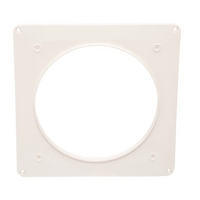
Replace the fan when airflow is no longer sufficient for the room, motor noise has increased significantly, shutters have failed, spare parts are no longer available, or the existing unit no longer suits room requirements. Renovations are a good time to upgrade to a timer, humidity sensor, quieter, or more energy-efficient model. Always check that the new fan matches the existing wall opening and duct size, or plan for an adapter plate. The Airflow exhaust fan range includes wall plates designed to match older 6000-series and 7000-series openings.
Selecting the best wall mount exhaust fan depends on the room and how it is used, not on rankings. Use the scenarios below as a starting point for product comparisons.
Prioritise quiet operation, correct airflow for the room volume, compact body depth, and a backdraft shutter. A humidity sensor or run-on timer is worthwhile where the room sees daily shower use, since the fan keeps extracting steam after the user leaves the room.
Laundries often need higher airflow to handle dryer-related humidity and lint. Durable grilles and good make-up air paths matter more here than in a bathroom. A timer-controlled fan paired with the dryer cycle is a practical option for utility rooms.
Workshops need robust housings, higher airflow ratings, and continuous-duty motor suitability. Standard residential fans are not built for long daily run cycles. For light industrial or hazardous environments, commercial or industrial specification is required, and product selection should follow the project's mechanical schedule.
For renovations, match the existing wall opening, choose a reliable brand with strong parts support, confirm airflow capacity for the room, and check accessory availability. The cheapest fan is rarely the best value if it is undersized, noisy, or difficult to replace later. Clipsal Airflow units are a common choice for replacement work because matching wall plates and adapters are available for older openings.
Buying through an electrical wholesaler streamlines fan, accessory, and control sourcing for a single job. Compare specifications and check stock before committing, since lead times can make or break a renovation schedule. The full fans and ventilation section at Sparky Direct lets you compare wall, ceiling, and inline options in one place.
Repeat fit-outs, renovations, property maintenance, strata work, and commercial amenity upgrades often need matching fans across multiple units. Ordering fans, grilles, ducting, timers, and switches together reduces missed parts on site. Sparky Direct supports trade ordering across the full Clipsal Airflow, Fantech, Martec, and Mercator ranges, including matched accessories.
Compare specifications, warranty, brand support, and installation compatibility, not just unit price. Product availability and fast dispatch matter for contractors managing job timelines. A fan that ships within 24 to 48 hours and includes all matched accessories often beats a slightly cheaper unit that arrives in pieces over a week.
Club Clipsal is Australia's largest electrician community offering trade rewards, business support, and exclusive benefits. When you nominate Sparky Direct as your preferred wholesaler, we automatically apply your Clipsal spend points to your Club Clipsal account daily.
Entry-level offering coaching, mentoring, and training discounts
Unlock exclusive industry tools and networking events
Access Toyota fleet offers and business software discounts
Maximum benefits, including VIP experiences and rewards
1. Sign Up: Create your Club Clipsal account at clipsal.com/club-clipsal or via the iCat mobile app
2. Nominate Sparky Direct: Select Sparky Direct from the wholesaler dropdown menu in your profile
3. Add Email: Enter your Sparky Direct account email address in the membership number field
4. Start Earning: Every dollar spent on Clipsal products earns points automatically
Redeem points from the rewards store, including gift cards, tools, and experiences. Access business summits, product training, and industry networking events. Receive early access to new product launches and special promotions. Connect with fellow electricians via the Club Clipsal community app.
Watch Clipsal Airflow 7106A | Wall Mounted Exhaust Fan, 200mm, Auto Switched, White video
Watch Clipsal Airflow 7008A | Wall Exhaust Fan, Axial, 150mm, Pull-Cord Switch video
Watch Fantech EDM-300C | 150mm Wall / Ceiling Mounted Exhaust Fan with Shutters video

The fan was replacing an old fan of the exact same model used in our bathroom every day for 15 years. We were so happy with the quiet and efficient way the old one removed the steam from the room, that it was an easy decision to use the same again. Ordering online was easy and delivery was prompt.
Excellent product. Has been working 24/7 in a high humid room and sucking out all the moisture. Relatively quiet . Solid product
I purchased this fan as replacement for a similar airflow model. The fan and cowling were fitted easily into the existing hole without any modification Customers should be advised as the to the fans slow opening vent system as it’s a little different to the instant opening older type. Certainly would buy again
Trusted brands • Expert advice • Fast Australia-wide delivery • Trade pricing
Shop Airflow Wall Mount Exhaust Fans → Get Expert Advice →