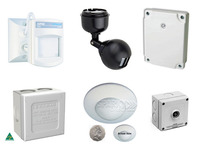

Search Results:
Search Results:
Search Results:
Search Results:
Sparky Direct is a trusted Australian electrical wholesaler supplying trade-grade sensor lighting for residential, commercial, and industrial projects. Whether you are fitting out a driveway, a commercial carpark, or a multi-tenancy building, our sensor lights range covers PIR, microwave, dual-technology, and smart-connected options from brands including Clipsal, Matelec, Ensa, Robus, and Theben. Fast Australia-wide delivery, competitive trade pricing, and technical product specifications available on request.
Sensor lights combine a standard light fitting with an automatic trigger that activates the lamp only when needed. This reduces energy waste and improves convenience and security. There are several detection technologies used across different product types, each suited to different environments and applications.
PIR sensors detect changes in infrared radiation emitted by moving bodies — typically a person or animal moving through the detection zone. The sensor compares the infrared signature of an intruding object against the ambient background temperature. PIR sensors work in line-of-sight, meaning the sensor must have a clear view of the detection zone without obstructions. They are the most widely used sensor type in Australian residential and light commercial installations due to their reliability and cost-effectiveness. Detection zones typically span 6 m to 12 m for wall-mounted units, with some long-range outdoor models reaching 18 m or more.
Microwave sensors emit continuous electromagnetic pulses and detect the Doppler shift caused by a moving object. Unlike PIR, microwave sensors can detect movement through thin non-metallic surfaces such as partition walls, glass, and lightweight cladding. This makes them well suited to enclosed carparks, stairwells, storage rooms, and office spaces where obstructions are common.
Dual-technology sensors combine PIR and microwave detection, requiring both signals to trigger simultaneously before switching the light on. This significantly reduces false triggering caused by heat sources, air conditioning drafts, or small animals. These sensors are preferred in high-security applications, data centres, and any site where false triggers are unacceptable.
Photocell or photoelectric (PE) cell switches operate based on ambient light levels rather than motion. The sensor switches the circuit on at dusk and off at dawn, making them ideal for perimeter lighting, street lighting, and any external fitting that needs to remain illuminated throughout the night. Many products combine a PE cell with a PIR module, providing continuous low-level or full lighting according to time of day and occupancy.
Most sensor lights feature adjustable controls for hold-on time (the duration the light stays on after the last detected movement, typically 5 seconds to 30 minutes), lux threshold (the ambient light level below which the sensor becomes active), and sensitivity (the detection range and responsiveness). Correct adjustment of these settings is important for reducing nuisance triggering and maximising energy savings.
PIR sensor lights are the standard choice for residential driveways, garages, garden paths, and entry areas. They are cost-effective, reliable, and available in a wide range of formats — from standalone sensor switches paired with a separate floodlight, to integrated all-in-one wall-mounted units. IP ratings of IP44 and above are recommended for outdoor Australian conditions. Brands including Clipsal, Matelec, and Housewatch offer well-supported PIR ranges.
Microwave sensors are suited to enclosed spaces where PIR line-of-sight limitations are a problem. Common applications include underground carparks, covered walkways, stairwells, and office environments. Because microwave sensors can detect through thin surfaces, care is needed during installation to avoid unintended triggering from adjacent rooms or external movement. Many commercial ceiling-mounted sensor fittings in the Matelec and Theben ranges use microwave or dual-tech sensing for this reason.
Dual-tech sensors reduce false activation by requiring both PIR and microwave signals to be present simultaneously. They are the preferred option for high-security installations, server rooms, museum spaces, and any application where nuisance triggering causes operational problems. These units typically come at a higher price point but deliver significantly better performance in challenging environments.
Dusk-to-dawn operation uses a photocell to switch the circuit according to ambient light levels. These are commonly used for perimeter lighting, street lights, commercial signage, and any external area that requires continuous illumination after dark. Products such as the Ensa and Clipsal sunset switch ranges offer reliable, weatherproof photocell control for Australian outdoor conditions.
Solar sensor lights are a practical option for remote areas, sheds, rural properties, and locations where running mains cabling would be costly or impractical. They operate independently of the grid by storing energy in an internal battery during daylight hours. Limitations include reduced performance during extended overcast periods, lower lumen output compared to hardwired equivalents, and shorter product lifespans due to battery degradation. They are not generally recommended for high-security or primary illumination applications.
Smart sensor lights incorporate Wi-Fi or Bluetooth connectivity, allowing control via a smartphone app. Features can include remote on/off, scheduling, motion sensitivity adjustment, and integration with smart home platforms. Brands such as SAL Lighting and smart solution brands in our range offer app-controlled PIR sensor options. Refer to the smart light switch and smart solutions categories for related products.
A photoelectric cell — commonly called a PE cell, photo switch, or photocell — is a light-sensitive switching device that automatically connects or disconnects a lighting circuit based on ambient light levels. When natural light falls below a set threshold (dusk), the PE cell switches the circuit on. When daylight returns (dawn), it switches the circuit off. They are widely used across Australian residential, commercial, and street lighting installations as a simple, low-maintenance automatic switching solution.
PE cells contain a photoresistor or photodiode that changes electrical resistance in response to light intensity. This resistance change is used to trigger a relay or triac that controls the lighting circuit. Most PE cells are wired into the active conductor of the circuit and require a neutral connection; 3-wire variants are required for LED lighting loads to avoid flicker. All hardwired PE cell installations must be performed by a licensed electrician in compliance with AS/NZS 3000:2018.
PE cells switch based on actual ambient light conditions, making them more reliable than timers in locations where sunrise and sunset times shift significantly across the seasons — which is relevant across all Australian climate zones. Unlike PIR motion sensors, PE cells provide continuous illumination throughout the night rather than switching on only when movement is detected. In many applications, a PE cell and a PIR sensor are used together: the PE cell enables the circuit after dark, and the PIR controls whether the light activates at full brightness or remains at a standby level.
Several PE cell formats are stocked at Sparky Direct to suit different installation types. Plug-in or inline PE cells — such as the Ensa ENSA-LC3 corded daylight sensor — are suitable for temporary or non-hardwired applications. Surface-mount weatherproof PE cells — such as the HPM PE170/10 and the Ensa ENSA-LC1W — are designed for direct outdoor mounting on walls or poles with IP65-rated enclosures. Programmable PE cells — such as the HPM PE170R2 — allow the user to configure on/off timing offsets relative to dusk and dawn, providing additional control without a separate timer. Clipsal sunset switches such as the WS226SSR-3RG offer IP66 weatherproof protection and 3-wire LED compatibility in a format that replaces standard Clipsal bases.
Because PE cells must be positioned to sense ambient daylight, they are almost always mounted in exposed outdoor locations. An IP65 rating is the practical minimum for Australian outdoor installations; IP66 is preferred in high-rainfall regions or locations subject to direct water spray. The Clipsal WS226SSR-3RG and Ensa ENSA-LC1W are both rated IP66, making them well suited to exposed Australian conditions.
Older 2-wire PE cells draw a small leakage current through the load to power themselves, which can cause LED lamps to flicker or glow faintly when switched off. For any installation driving LED lighting, a 3-wire PE cell (active, neutral, and switched active) should be specified. Customers replacing older 2-wire PE cells on LED circuits should upgrade to a 3-wire variant — the Clipsal 750WPR5 Infrascan range and the Ensa ENSA-LC1W are common choices for this purpose.
PE cells are used wherever automatic dusk-to-dawn lighting operation is required: residential perimeter and driveway lighting, commercial carpark and façade lighting, street and public area lighting, signage illumination, pool and landscape lighting, and remote-area lighting on rural properties. They are also used in commercial refrigeration, gate motor controls, and other applications where a light-sensitive switching input is needed.
PE cells must be positioned where they can sense natural skylight without being affected by the light source they control. Mounting a PE cell where it can see the lamp it switches will cause short cycling — the cell detects the lamp light as daylight and switches off, then detects darkness and switches on again, repeating rapidly. The cell should face north or skyward, shielded from direct lamp illumination. Most PE cell datasheets specify a recommended mounting orientation; always follow the manufacturer's installation instructions.
Garages require reliable detection across the full parking area. Ceiling-mounted 360° PIR sensors work well for single garages, while wall-mounted wide-angle sensors cover larger double or triple garage spaces. A minimum IP44 rating is recommended for garages with access to the outdoors. Adjustable time delay settings are important here — a hold-on time of 1–5 minutes is typical to allow for unloading and entry into the house. Integrated floodlight sensor units from brands like Martec and SAL are popular for this application.
Driveways demand longer detection ranges — up to 12 m to 20 m — and high lumen output to adequately illuminate the area. LED floodlights with integrated PIR sensors are the standard solution. An IP65 or higher rating is recommended for exposed driveway locations subject to rain and dust. Consider twin-head spotlight sensor units such as those in the motion sensor range for adjustable beam coverage across wide driveway approaches.
Garden path lighting benefits from low-glare, directional PIR sensor lights mounted at appropriate heights to illuminate the walking surface without creating glare for neighbours. Solar sensor lights are commonly used here for paths away from the house, while hardwired low-profile outdoor wall lights with integrated sensors suit path edges adjacent to the building.
Commercial environments often specify ceiling-mounted microwave or dual-technology sensors to ensure reliable coverage in areas with varying occupancy patterns. Integration with Building Management Systems (BMS) may be required for larger projects. Compliance with NCC Section J energy efficiency requirements applies to new commercial fitouts. Products in the Theben and Matelec commercial ranges are suited to these applications, offering DALI-compatible and multi-zone options.
These environments require vandal-resistant fittings with IK08 or higher impact ratings, particularly in external areas and high-traffic corridors. Easy maintenance access and replaceable LED drivers extend product service life and reduce ongoing costs. High-efficiency LED modules reduce operating costs over the long term, which is important for budget-conscious councils and community groups.
The primary energy saving from sensor lights comes from reducing the operating hours of the lamp — lights only activate when a person is present, rather than running continuously. In commercial buildings with sensor-controlled LED lighting, energy savings of 20% to 60% compared to non-controlled continuous lighting are commonly reported, depending on the occupancy pattern of the space.
Combining LED technology with motion detection delivers compounding savings: LED fittings already use 70–80% less energy than older halogen or fluorescent equivalents, and adding sensor control reduces the hours of operation further still. In a warehouse or office corridor with intermittent occupancy, the combination of LED and motion sensing can reduce lighting energy costs by more than half.
Reduced maintenance cycles are another advantage. LED sensor lights typically have rated lifespans of 30,000 to 50,000 hours. Because the sensor reduces operating hours, the practical life of the fitting extends further still — reducing lamp replacement frequency and associated labour costs, which is a meaningful saving on commercial and industrial sites.
On a typical commercial office with corridor lighting running 12 hours per day, replacing fluorescent battens with LED sensor-controlled fittings can reduce lighting energy consumption by 50–70%. Payback periods of 2–4 years are common on larger installations, particularly when energy prices and replacement labour costs are factored in. Licensed electricians can provide site-specific assessments to quantify expected savings before specifying product.
When selecting sensor lights for a project, the following specifications should be reviewed to ensure the product is appropriate for the application.
Sensor lights are reliable products, but some common issues can arise from incorrect settings, poor mounting locations, or product faults. The following covers the most frequently encountered problems and their causes.
False triggers — where the light activates without a person being present — are most commonly caused by heat sources within the detection zone (air conditioning vents, heater exhausts, motor vehicles), reflective surfaces that redirect infrared radiation toward the sensor, or animals. Adjusting the sensitivity setting downward, repositioning the sensor head, or masking part of the Fresnel lens can help. In persistent cases, upgrading to a dual-technology sensor eliminates the majority of false trigger events.
Short cycling occurs when the light switches on and off rapidly. This is usually caused by the lux threshold being set too low (the sensor detects its own light output as daylight and switches off), or by a nearby light source interfering with the photocell. Repositioning the sensor away from the light source, or increasing the lux threshold setting, resolves most cases.
A sensor that is mounted too high, pointing too steeply downward, or obscured by an overhang will have a reduced effective detection zone. Manufacturer datasheets specify the recommended mounting height and detection pattern at that height. Always verify the detection zone at commissioning before handover.
If the sensor activates during the day, the lux threshold is set too high. If it fails to activate at dusk, the threshold is set too low. Most sensors have a small adjustment potentiometer or dial that can be calibrated on-site. Some sensors feature an automatic ambient light calibration on first power-up.
Water ingress into the sensor body or junction box causes erratic behaviour, LED flicker, or complete failure. Ensure the product IP rating matches the installation location, that cable entry glands are correctly tightened, and that the mounting orientation matches the manufacturer's recommendation (some sensors are rated for vertical mounting only).
Sensors mounted in direct sun can have their lux threshold affected by solar heating of the sensor body. Corner mounting provides better coverage than flat-wall mounting in many outdoor applications. Always consult the installation diagram in the product datasheet before finalising the mounting location.
Compliance Note: Any rewiring, circuit modification, or new installation of hardwired sensor lights requires a licensed electrician under Australian state and territory electrical licensing regulations. Incorrect installation of sensor lighting can create safety risks including electric shock and fire. If in doubt, consult a licensed electrical contractor.
The three main sensor technologies each have distinct performance characteristics. The table below summarises the key differences to assist in product selection.
| Feature | PIR | Microwave | Dual-Technology |
|---|---|---|---|
| Detection Method | Infrared radiation change | Doppler shift of microwave pulse | PIR + microwave combined |
| Line of Sight Required | Yes | No (detects through thin walls) | Yes (PIR component) |
| Best Environment | Residential outdoor, open areas | Enclosed spaces, carparks, offices | High-security, data centres, museums |
| Sensitivity to Small Movements | Moderate | High | Configurable |
| False Trigger Risk | Moderate (heat sources, animals) | Higher (wind, vibration) | Low (both must trigger) |
| Installation Complexity | Low | Moderate | Moderate to High |
| Typical Price Range | Lower | Mid-range | Higher |
Sensor lighting technology has evolved considerably in recent years, moving beyond simple on/off switching toward integrated, data-driven systems. The following developments are increasingly relevant to commercial and residential projects specified in 2026.
Some advanced sensor platforms now use machine learning to distinguish between habitual movement patterns — such as a regular commuter passing a sensor — and genuinely unusual activity. This reduces false security alerts in environments where consistent foot traffic patterns make standard PIR calibration difficult.
Digital sensitivity adjustment via app or web interface replaces the small physical potentiometers of older sensor products, allowing precise tuning of detection range, sensitivity, and hold-on time without returning to the installation site. This is particularly useful in multi-sensor commercial installations where settings need to be standardised across a building.
Smart sensor lights can be programmed to operate in sensor mode during certain hours and switch to continuous operation or off during others — for example, remaining on overnight in a commercial carpark without requiring motion to trigger, then returning to sensor-activated mode during the day.
Open-standard wireless protocols including Zigbee and Matter allow sensor lights to integrate with a wide range of smart home and building automation platforms without proprietary lock-in. This is increasingly specified in both residential and small commercial projects. Refer to the smart solutions category for compatible products.
Connected sensor lighting systems in commercial buildings can report energy consumption data by zone, allowing facility managers to identify high-use areas and validate energy savings from the installation. This data is increasingly used to support sustainability reporting and NCC compliance documentation.
Security floodlight camera combinations — such as those in the home security systems range — integrate PIR-triggered LED floodlights with a CCTV camera and microphone in a single unit. These provide both illumination and recording when motion is detected, and are controlled via a smartphone app. They represent a practical and cost-effective security upgrade for residential and small commercial properties.
The installation requirements for sensor lights in Australia depend on the product type and the nature of the installation. The following information is provided as a general guide.
All hardwired 230–240V sensor light installations, including the connection of new sensor switches to existing circuits and the installation of new circuits for sensor floodlights, must be carried out by a licensed electrician. This is a legal requirement under state and territory electrical licensing regulations across Australia. Homeowners and unlicensed persons must not perform this work. Compliance must be certified with the relevant electrical safety authority in your state or territory on completion.
Outdoor sensor light installations in Australia must comply with the IP rating requirements of AS/NZS 3000:2018 Wiring Rules and the applicable product standards. As a general guide: IP44 is the minimum for protected outdoor areas, IP65 for exposed outdoor locations subject to rain, and IP66 for locations subject to water jets or high-rainfall conditions. Always verify the product's IP rating against the actual installation environment.
Mounting height significantly affects the detection zone of a PIR sensor. Most wall-mounted residential PIR sensors are specified for mounting at 2.2 m to 2.5 m above finished floor or ground level. Ceiling-mounted sensors are specified for mounting heights of 2.4 m to 4 m depending on the model. Detection zones reduce in effectiveness when mounted outside the specified height range. Always refer to the manufacturer's installation documentation for the specific product being installed.
All electrical installations in Australia must comply with AS/NZS 3000:2018 Wiring Rules. This standard covers wiring methods, circuit protection, earthing, IP requirements for outdoor installations, and many other aspects relevant to sensor light installation. Compliance is verified by the installing licensed electrician, who is responsible for ensuring the installation meets the standard before connecting to the supply.
Cable entry points into outdoor sensor fittings should be sealed with appropriate cable glands rated to the product's IP rating. Unused cable entry knockouts should be plugged. Where a sensor fitting is mounted against an uneven or textured surface, a foam or rubber gasket (often supplied with the product) should be used to prevent water ingress at the back plate. Any silicon sealant used must be rated for outdoor use and compatible with the fitting material.
Sparky Direct is an Australian electrical wholesaler that has supplied licensed electricians and trade professionals since 2005. The sensor lights range covers residential, commercial, and industrial applications, with products stocked from trusted brands and technical specifications available for all items.
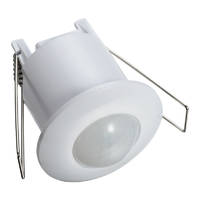
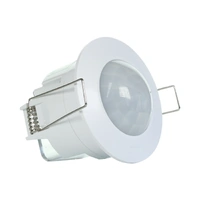
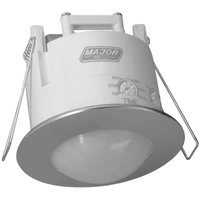
Matelec FMS-12064-A | 360 Degree Recess/Flush Mount Sensor
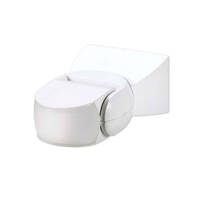
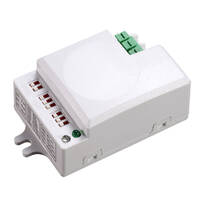
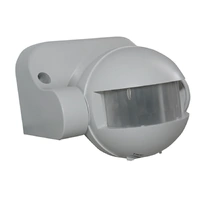
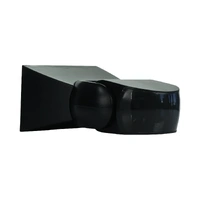
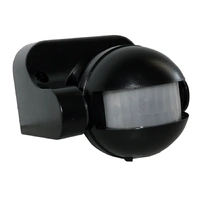
Matelec FMS-15000 | Adjustable 3 Wire Infrared Motion Sensor IP66
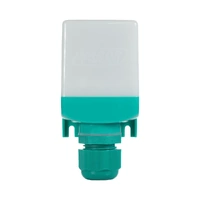
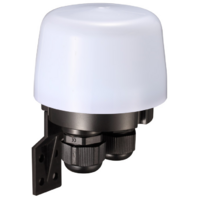
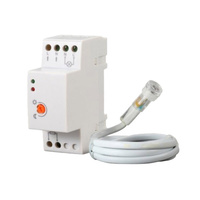
Cabac HSC110SS | Weatherproof Sunset Switch (PE Cell)

"Drop in" direct replacement for older outdoor unit. Works well.
Good price and was purchased to replace an equivalent Clipsal version. Ordered online with ease, delivered quickly to WA, no damage, installed a week later and working as expected.
Good quality product, works as described with good range.
Trusted brands • Expert advice • Fast Australia-wide delivery • Trade pricing
Shop Sensor Lights → Get Expert Advice →Correct positioning and adjustment help minimise false activation.
The main difference between a sensor light and a motion sensor lies in their functionality and purpose. A sensor light is a light fixture with a built-in sensor that responds to changes in ambient light levels, while a motion sensor is a device that detects physical movement. Sensor lights use light-level detection to control the on/off state of the light, while motion sensors detect movement and can trigger various actions or devices in response to that movement. However, it's worth noting that sensor lights often incorporate motion sensors as part of their functionality to provide both light and motion detection capabilities in a single device. Browse Motion Sensors.
Sparky Direct supplies sensor lights and PE cells Australia-wide, offering reliable lighting control solutions with convenient delivery.
They are securely packaged and delivered via standard courier services.
Unused items are generally eligible for return according to the seller’s returns policy.
Warranty coverage varies by manufacturer and typically covers defects in materials or workmanship.
Yes, sensors and PE cells are commonly sold as individual components.
Yes, fixed wiring and outdoor installations must be carried out by a licensed electrician.
They generally require minimal maintenance once installed correctly.
Brightness depends on the light fitting used with the sensor.
No, they operate automatically based on light levels.
Yes, they are available in designs that suit modern and contemporary styles.
Yes, they are commonly used for driveways, entrances, and pathways.
Sensors and PE (photoelectric) cells are control devices used to automatically switch lights on or off based on motion or ambient light levels.
Yes, they ensure lights operate automatically from dusk to dawn.
Yes, automatic lighting can deter unwanted activity and improve visibility.
They improve convenience, safety, and security by providing automatic lighting.
Yes, they are widely used in both homes and commercial properties.
Yes, they help reduce energy use by operating lights only when needed.
Most sensors allow adjustment of sensitivity, detection range, and time delay.
Yes, PE cells respond to ambient light levels, not direct sunlight.
Yes, many sensor lights are designed with weather-resistant ratings for outdoor environments.
They are commonly used in outdoor lighting, security lighting, pathways, car parks, and commercial buildings.
Quality sensors and PE cells are manufactured to meet relevant AS/NZS electrical and safety standards when installed correctly.
A PE cell detects daylight levels and turns lighting on at dusk and off at dawn.
A sensor light is a light fitting or system that activates automatically when motion is detected.